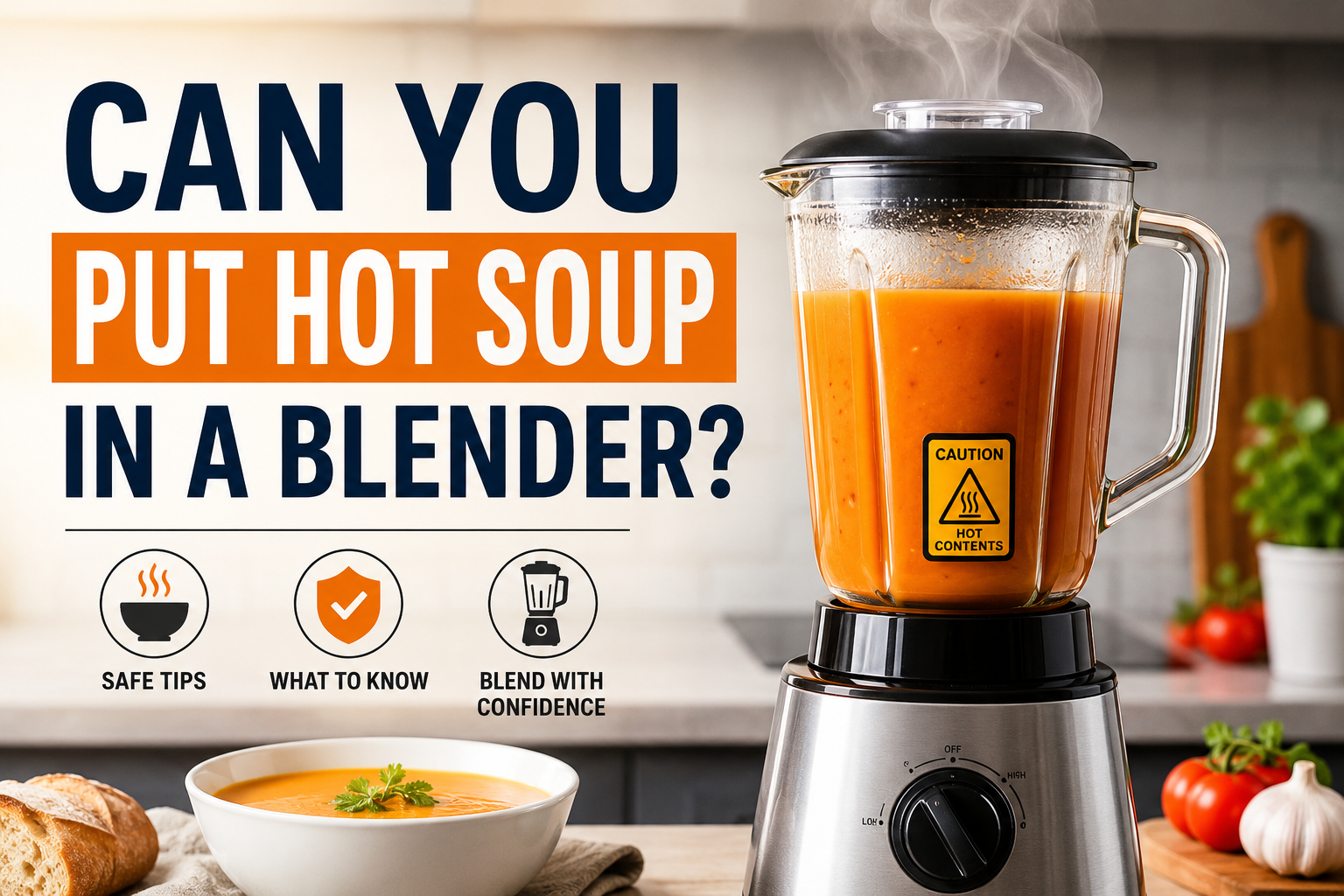

Yes, you can use a basic countertop blender to mix hot soup, but doing so right out of the pot without taking any safety precautions is one of the more typical ways individuals get second-degree burns and a ceiling covered with soup. The issue isn’t particularly with the soup itself. It’s the steam.
Why Hot Soup Can Turn a Blender Into a Volcano
Steam is continuously produced by the heat when hot liquid is sealed inside a closed blender jar. Since there is nowhere for the steam to escape, pressure increases inside the sealed container. You create a little pressure cooker with a loose-fitting lid by adding rotating blades that whip air into the mixture. Hot soup eventually explodes upward and outward when something gives, either the entire lid or the central cap.
Because of this, almost all soup-blending horror stories have the same plot: someone overfills the jar, tightens the lid, blends at the fastest speed, and the lid pops off in the middle of the blend.
The Real Risks
- Scalding burns from soup splashing out during blending, whether from a popped lid or an overflow.
- Lid blowouts, especially with a full jar, a tight seal, and high speed right from the start.
- Cracked or warped jars, especially ones made of glass, from rapid changes in temperature. Most standard blenders can handle liquids up to about 175°F. Going much higher than that, like with soup that has just been boiled, can damage the pitcher or void the warranty.
How to Blend Hot Soup Safely
- Let it cool slightly. You don’t need it to be lukewarm, but lowering the heat from high to low or letting it sit for 5–10 minutes will a lot less steam build up.
- Don’t overfill the jar. Do things one at a time. Filling the jar no more than halfway lets the steam and growing liquid have a place to go.
- Vent the lid. If you take off or leave a little bit of the small center cap, steam can escape instead of building up pressure. You can use a folded kitchen towel instead of your hand to cover the hole. This lets steam escape while still keeping splatters from happening.
- Hold the lid down. Keep a hand wrapped in a towel on top while you blend because steam can still push a lid that isn’t attached properly.
- Start low, then increase. Set the speed to the slowest setting at first or use short pulses to break up the soup gently. Once it’s moving smoothly, raise the speed. Sudden splash-outs happen when you jump right to high speed.
- Check your blender’s manual. High-end blenders like Vitamix, Blendtec, and others are often made to handle hot liquids. Some may even have a setting just for soup or a lid with vents. Before you make this a habit, you should check your cheap types because they might have a much lower safe temperature range.
A Simpler Alternative: The Immersion Blender
If you often mix hot soup, an immersion (stick) blender will keep you from having to deal with most of these risks. Since you blend right in the pot, there is no moving hot liquid, no lid that needs to be sealed, and no steam getting stuck anywhere.
A high-powered countertop mixer will make soup smoother, but for most soups, the difference isn’t that big, and it’s safer to use this method.
Bottom Line
It is possible to blend hot soup, and many people do it in their own kitchens. Just think of it as a slightly stressful situation.
Don’t overfill, let some air out of the lid, hold it down, and start slowly. You could also just use an immersion mixer instead of all the trouble.








1 comment