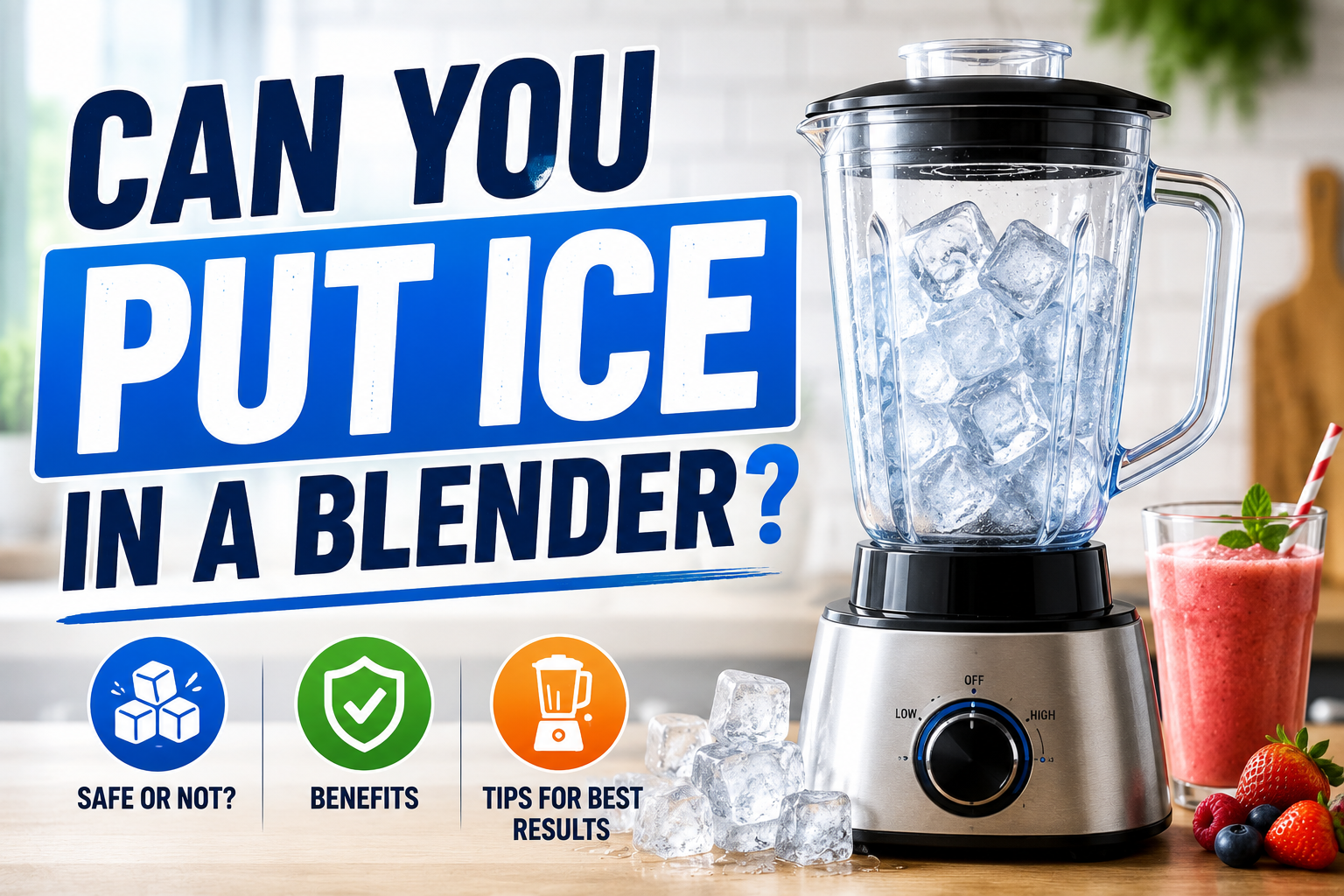
You can put ice in a blender. In fact, a lot of people do this to make smoothies and frozen cocktails.
“Can” and “should, without a doubt” aren’t the same question, though. It really depends on the blender you have whether or not it’s a good idea.
Not All Blenders Are Built for Ice
It’s hard and dense to crush ice, and it puts a lot of stress on the motor and blades. High-performance blenders, like Vitamix, Blendtec, and Ninja’s top models, have motors that are strong (often 1,000 watts or more) and blades that are made to cut through ice without stopping.
These take care of ice all the time.
Cheaper or less powerful blenders might not have been made with that in mind. If you push them too hard with a lot of ice, you could:
- Dulled or bent blades, especially with large, hard cubes
- Motor strain or burnout, particularly if you’re doing batch after batch without a break
- A stalled or “clunking” blender that just can’t get the ice moving
The fix isn’t to avoid ice altogether — it’s to blend smart.
Tips for Blending Ice Without Wrecking Your Blender
- Check your manual first. If the label on your mixer says that it can crush ice, you’re good to go.
- Take it easy if it doesn’t.
- Use smaller ice, not giant cubes. Small cubes from an ice tray or store-bought ice break down a lot faster than big pieces. If all you have is big ice, break it up or run it through short cycles first.
- Add liquid. If you just use ice, it will spin and bounce around the blades without much trouble. A little water, juice, or milk gives the blades something to hold on to and helps blend everything evenly. This is a big reason why smoothie and drink recipes always call for liquid in addition to ice.
- Don’t overfill. A blender packed to the top with ice strains the motor and blocks proper circulation. Blend in smaller batches if you need a lot.
- Pulse before you commit to full speed. Short pulses break ice into manageable chunks before you switch to a continuous blend, which is easier on both the blades and the motor.
- Let the motor rest between batches. If you’re making several rounds of frozen drinks, give the blender a short break so it doesn’t overheat.
- Watch your blades over time. Ice is one of the main reasons blender blades dull. If you notice your blends getting chunkier or slower over time, it may be worth sharpening or replacing them.
What About Blender Bottles and Personal Blenders?
Most small personal blenders and shaker-style blender bottles can handle ice, as long as they’re made of a strong material (like BPA-free Tritan or stainless steel) and aren’t too full.
The same rules still apply: use smaller cubes, a little liquid, and don’t put too much in it.
Bottom Line
Putting ice in a blender is normal and shouldn’t cause any issues with most machines.
The most important thing is to make sure that the amount and type of ice you put in the blender doesn’t exceed what it can handle. If you’re not sure what to do, start with smaller bits, a splash of liquid, and a few pulses before going full speed. This will protect both your drinks and your blender.








1 comment