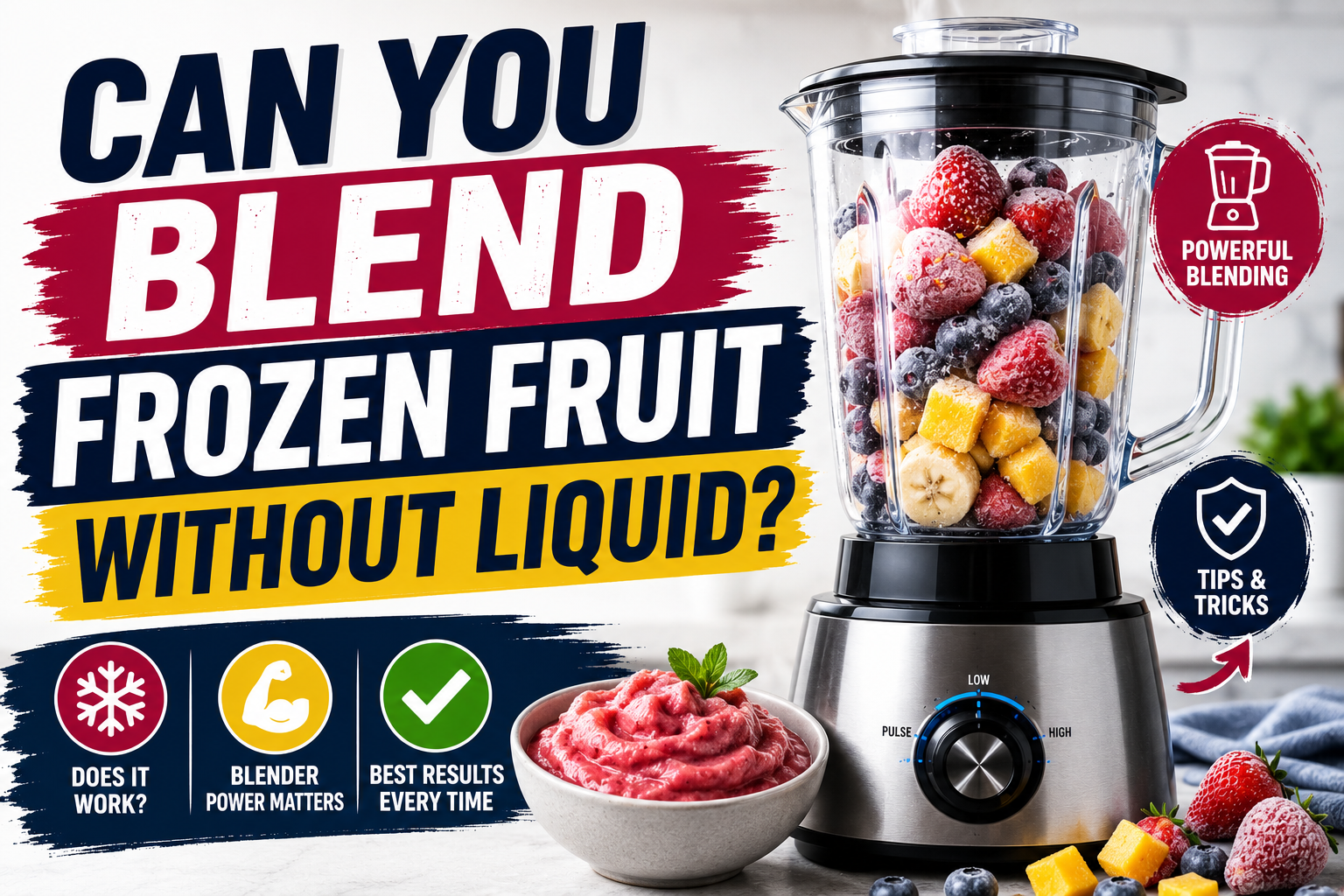

Yes, but that’s the hardest job you can give a mixer, and not all of them can handle it. If you skip the liquid, the smoothie bowl will have a thick, sorbet-like texture that people love. However, the blades will only be able to grab dense, rock-hard fruit. If both soup and ice are hard on a blender (see Can You Put Hot Soup in a Blender? and Can You Put Ice in a Blender? To take that challenge to the next level, you have to blend frozen fruit without any liquid.
Why It’s So Hard on a Blender
Liquid doesn’t just thin things out; it also makes the jar move, which lets the blades catch and process the stuff inside. Fruit that is frozen just sits there without it. Everything else stays stuck to the sides and doesn’t move while the blades cut a hole through the middle. This is why most people who try this end up having to scrape the jar down every few seconds or, even worse, hearing the motor struggling against a solid block of fruit that won’t move.
It’s not just fruit; we talked about the same problem with ice: frozen, dense ingredients are hard on motors and blades, and liquid is what usually makes the difference between a smooth blend and one that stops.
When It Actually Works
Blending frozen fruit with no liquid at all is realistic mainly if you have:
- A high-powered blender. Vitamix, Blendtec, and other high-wattage machines are made to work with frozen foods. They have the power to blend dense fruits that would stop a cheaper blender.
- A tamper. You can use the plastic tamper that comes with high-powered blenders to push fruit down into the blades while the machine is running. This keeps the fruit from getting “stuck to the sides” without adding any liquid..
- Something with a bit of moisture, even if not a true liquid. Like a spoonful of yogurt, a very ripe banana, or a bit of nut butter, these can help the blend move without making it too watery like juice or water would.
Tips for Blending Frozen Fruit With Little or No Liquid
- Cut fruit into smaller pieces before freezing. The motor doesn’t have to work as hard when smaller chunks are used instead of whole frozen strawberries or banana halves.
- Use the pulse function. Instead of asking the blades to keep cutting through a solid mass, short pulses make small pockets of movement that break down the fruit over time..
- Start low, then build up speed. One of the fastest ways to damage a motor is to go from low speed to high speed on frozen fruit that doesn’t have any liquid on it. Take it easy.
- Add a small amount of liquid if it stalls. You don’t need to add much to get a blend going again—just a splash of milk, juice, or water will do.
- Don’t overload the jar. A blender will get stuck if the jar is too full and there is no liquid to help things move around. Do things in smaller groups.
- Let the motor rest between batches. One of the hardest things to mix is frozen fruit that doesn’t have any liquid added to it. Treat it like you would crush ice one after the other, with a short break in between.
Order Matters Too
As a general rule, add anything soft or liquid first, mix for a short time to get things moving, and then add the frozen fruit. This way, you can make a smoothie without adding so much liquid. If you add frozen ingredients too early, they can turn into a solid mass that is hard to mix before the rest of the ingredients have a chance to do so.
Bottom Line
It is possible to blend frozen fruit without adding liquid. This makes the texture thick and sorbet-like, but it is hard on the blender. Go for it if you have a powerful machine with a tamper. Adding a little liquid (or something almost liquid, like yogurt) to a regular blender will keep the motor from having to work as hard and give you a smoother finish.








2 comments