A Breville espresso machine water leak can be particularly frustrating, particularly when water begins to accumulate beneath the machine, leak around the portafilter, or drip from the steam wand. While a small amount of condensation or water in the drip tray is acceptable, sudden or continuous leakage typically indicates that something needs to be examined.
The good news is that a significant number of Breville espresso machine leaks are the result of straightforward issues, including an incorrectly installed water tank, a loose connection, a blocked group head, a damaged seal, or an overfilled drip tray. The initial step in determining the appropriate solution is to determine the source of the water.
Why Is My Breville Espresso Machine Leaking Water?
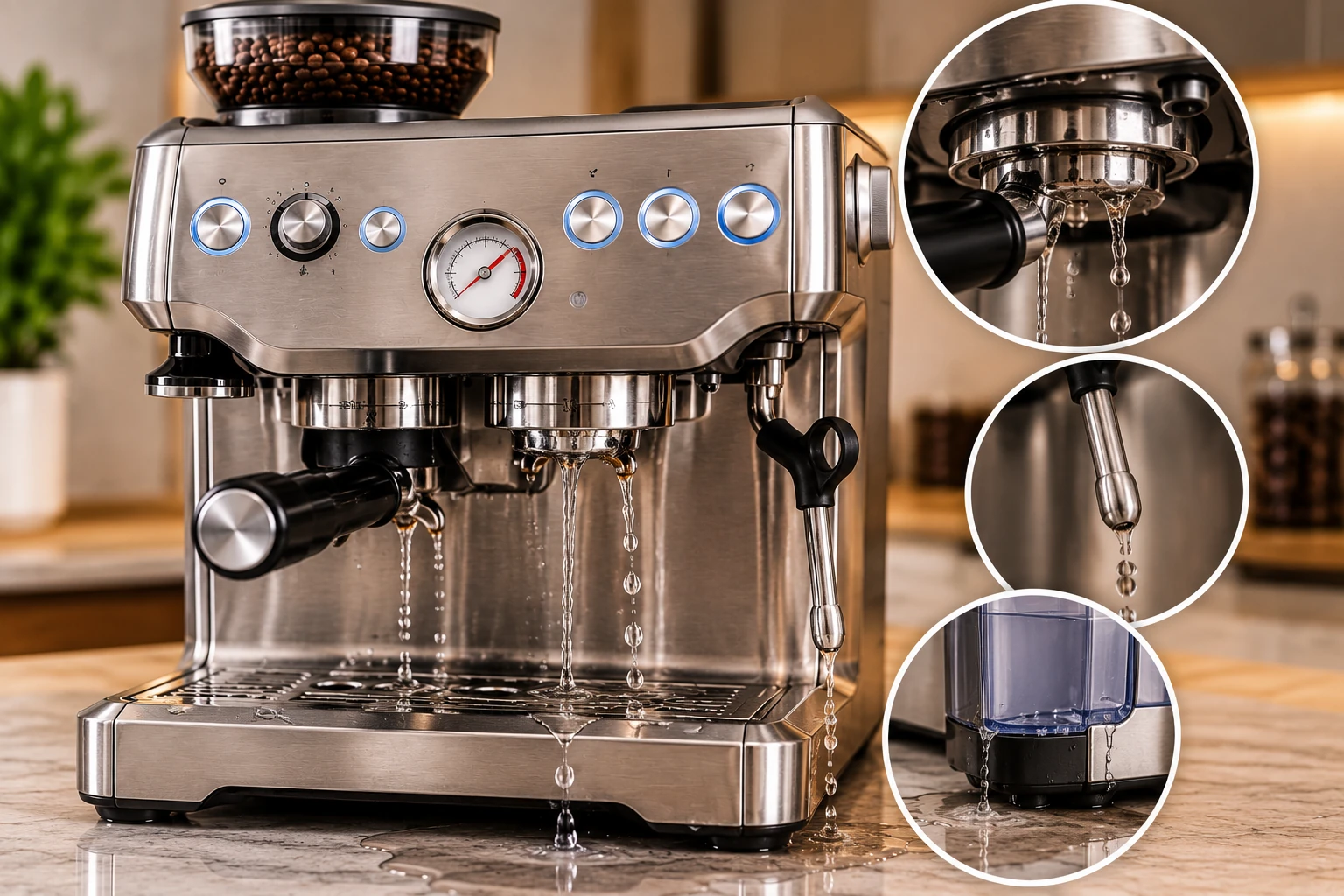
The leak’s location can serve as a significant indicator. The presence of water beneath the machine may suggest an issue with the water tank, internal tubing, pump connections, or another internal component. The group head, filter basket, or portafilter seal are the most probable culprits for water leaks around the portafilter.
The steam valve or wand may require cleansing or servicing if water is dripping from the steam wand when it is supposed to be closed. A machine that leaks exclusively during espresso extraction may have a distinct issue from one that leaks continuously while it is unused.
Turn off the machine, disconnect it, and allow the hot components to cool before commencing troubleshooting.
Breville Espresso Machine Leaking From the Bottom
Check the water reservoir and drip tray if your Breville espresso machine is leaking water from underneath.
Examine the water tank for any fractures or damage by removing it. Ensure that the vicinity of the tank valve is free of debris. Fill the tank to the maximum capacity and firmly reinstall it.
Additionally, it is imperative to empty the drip receptacle on a consistent basis. Water may flow onto the counter and appear to originate from within the machine if it is overfilled or improperly positioned.
An internal leak may be present if water continues to accumulate beneath the machine despite the proper installation of the tank and drip tray. Professional inspection may be necessary for internal tubing, fittings, seals, or other components.
Breville Espresso Machine Leaking From the Water Tank
A water tank that is not properly situated is a frequent cause of water accumulating in the machine’s rear or bottom.
Carefully inspect the connection point after removing the tank. Remove any coffee residue, mineral deposits, or debris that may be present in the vicinity of the valve and seating area.
Examine the tank for any visible fractures. Water can gradually escape through even the smallest crack.
Before brewing, fill the reservoir with water and observe the machine after reinstalling it. The tank or its valve may require replacement if water begins to leak promptly.
Breville Espresso Machine Leaking From the Portafilter
In the event that water escapes around the portafilter during the brewing process, verify that the portafilter is properly inserted and secured in the group head.
The portafilter may be unable to establish a proper seal if coffee grounds are present around the rim of the filter basket. Clean the basket, rim, and group-head area by removing the portafilter.
The seal can also be influenced by the quantity of coffee in the container. The portafilter may be unable to secure into the correct position if there is an excessive amount of coffee.
The group-head seal may be worn or damaged if the machine continues to leak around the portafilter despite being cleaned and using the correct dose.
Check the Group Head Seal
The seal between the portafilter and the machine is established by the group-head seal. The seal can become worn over time as a result of repeated use, pressure, and heat.
Water may be permitted to escape from the portafilter’s sides during extraction due to a compromised seal. You may observe that water is dripping from the edges of the coffee, as opposed to flowing through it as it would ordinarily.
If coffee residue is impeding a proper seal, cleaning the group head may occasionally resolve the issue. Replacement may be required if the seal is worn.
Breville Espresso Machine Leaking From the Steam Wand
During typical operation, a few droplets of water or condensation from the steam wand may accumulate, particularly after steaming milk. Nevertheless, the presence of continuous dripping when the steam control is entirely closed may suggest an issue.
Initially, verify that the steam control is fully closed. The steam wand and tip must be cleaned because dried milk residue can hinder functioning.
The steam valve or internal components may require inspection if the wand continues to leak after cleansing. It is advisable to refrain from applying excessive force to the control, as this can result in valve damage.
Clean the Steam Wand
The steam wand tip may accumulate milk residue within and around it. This can have an impact on the flow of water and the performance of steam.
Following the use of the steam wand, it is necessary to purge it in accordance with the manufacturer’s instructions and wipe the exterior with a damp cloth. Ensure that the steam tip remains unobstructed.
Clean the tip using the appropriate cleansing method for your Breville model if it is obstructed. Avoid the use of sharp objects or excessive force that could potentially damage the openings.
Check the Drip Tray
The drip tray is responsible for the collection of water that is generated during the normal operation and cleaning cycles. Water may spill over the borders and appear to be a machine leak if it becomes full.
Empty the drip tray before it reaches its utmost capacity and remove it on a regular basis. After cleaning the tray and its surroundings, it is important to ensure that it is reinstalled correctly.
If the tray fills more rapidly than usual, verify that the machine is discharging an excessive amount of water during the brewing or cleaning process. Another issue that necessitates investigation may be indicated by an abrupt increase in water collection.
Descale Your Breville Espresso Machine
Water flow and valves within an espresso machine may be disrupted by mineral accumulation. This can occasionally result in unusual dripping or leaking.
If your machine indicates that descaling is necessary, adhere to the manufacturer’s recommended descaling procedure for your specific model.
Execute the entire procedure by employing an appropriate descaling solution. Subsequently, adhere to the manufacturer’s instructions for machine rinse.
It is especially crucial to conduct regular descaling when using hard water, as mineral deposits can accumulate at a faster rate.
Breville Espresso Machine Leaking During Brewing
Pay close attention to the location of the water if the machine only leaks when you make espresso.
A sealing, basket, or group-head issue is typically indicated by the presence of water around the portafilter. An internal water-flow issue may be indicated by water emanating from beneath the machine.
Initially, verify the coffee dose, group head, filter basket, and portafilter. Ensure that the portafilter is securely secured in its designated location and that the basket is clean.
Stop using the machine until the cause of the leak is determined if it persists after washing and adjusting the coffee setup.
Breville Espresso Machine Leaking When Turned Off
It is imperative to promptly inspect a machine that continues to leak while it is turned off.
Begin with the water tank. Examine the tank, valve, and connection area by removing it. The tank or its connection may be held accountable for the leak if it ceases to occur upon removal of the tank.
If the tank is removed, the leak may be originating from an internal reservoir, hose, fitting, or other component if water continues to appear.
If you lack the necessary technical expertise, refrain from opening the machine to examine its internal components. Professional servicing is more secure for internal leakage.
Can a Water Leak Be Caused by Coffee Grounds?
Indeed. The seal between the portafilter and group head may be disrupted by coffee grounds and detritus. The surfaces may not seal properly due to the presence of fine grounds around the basket rim.
Maintain the cleanliness of the basket rim and group-head area at all times. Ensure that there are no loose coffee grounds lying around the edge of the portafilter before locking it in position.
Consistent dosing and proper distribution can also prevent extraction issues that may contribute to leakage around the portafilter.
When to Stop Using a Leaking Breville Espresso Machine
A minimal quantity of water in the drip tray is typical; however, an unexplained leak should not be disregarded.
Immediately cease operating the machine if water is infiltrating electrical components, the leak is substantial, the machine emits unusual electrical noises, there is a burning odor, or the machine repeatedly trips a circuit breaker.
Both electrical and mechanical issues can result from internal water leakage. In these circumstances, it is necessary to disconnect the machine from the power source and schedule professional service.
When to Contact Breville Support or a Technician
If you have assessed the water tank, overflow tray, portafilter, group head, and steam wand, but the machine continues to leak, the issue may be related to an internal component.
Internal hoses, connectors, valves, pumps, seals, and other components that are not intended for routine user maintenance can be inspected by a technician.
Before attempting any repair on your own, ensure that the warranty and service options are reviewed if your machine is still under warranty.
Final Thoughts
Various factors can contribute to a water overflow in a Breville espresso machine, including a worn group-head seal or internal component, an incorrectly positioned water tank, or a full drip tray.
Begin by pinpointing the source of the water. Water tank inspection, group head and filter basket cleaning, portafilter seal inspection, drip tray emptying, and steam wand cleaning. Descaling the machine may also be beneficial when mineral buildup is impairing water flow.
Professional inspection is the most secure course of action if the machine continues to leak water from underneath or if the leak appears to involve internal components. Regular cleaning, proper operation, and punctual descaling can help prevent future leaks and ensure that your Breville espresso machine functions properly.







