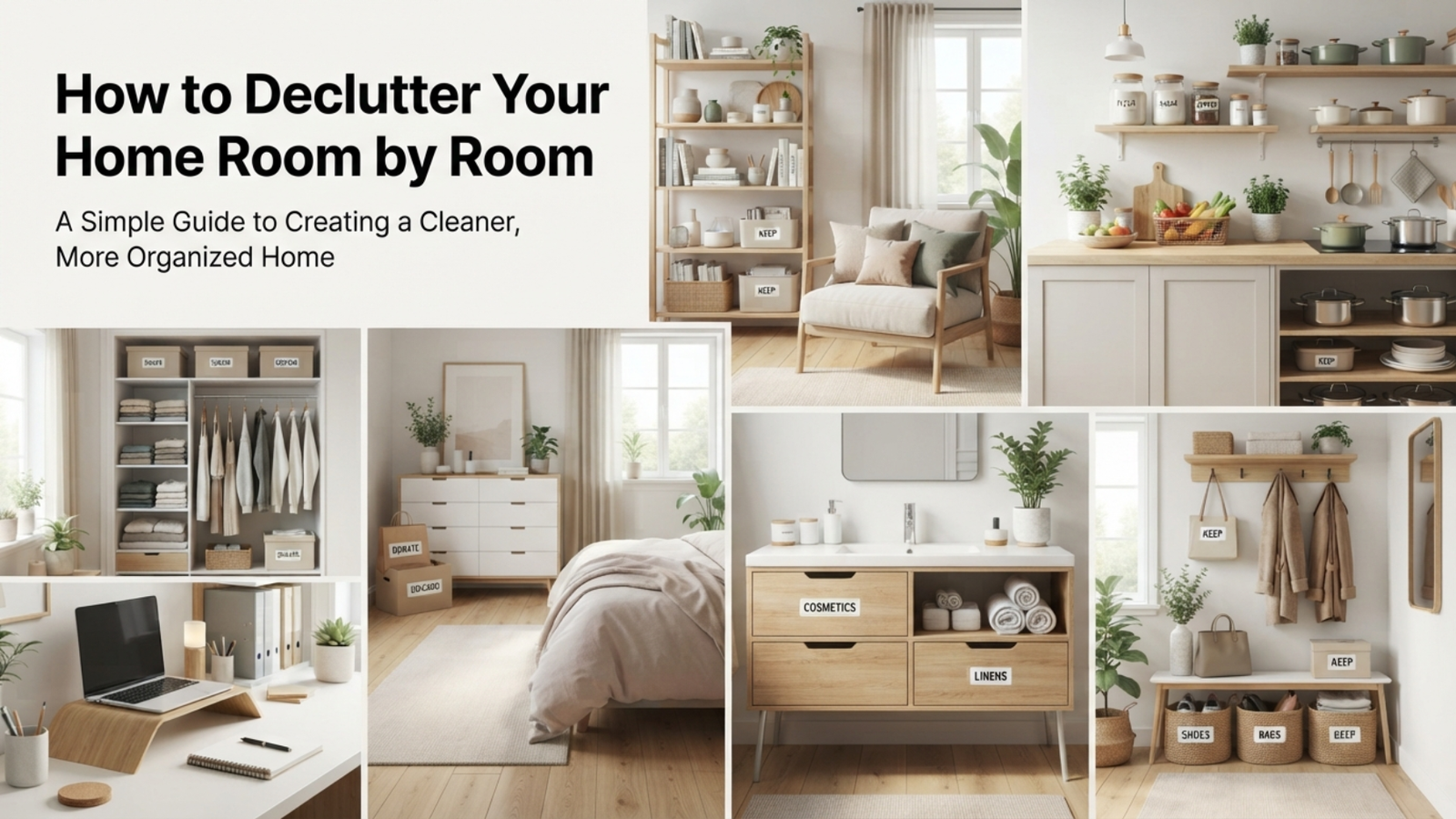
How to Declutter Your Home Room by Room
A neat home is beyond simply tidy—it brings peace, reduces stress, and boosts efficiency. (Hobbs, 2025) Tackling the whole house at once is daunting, so focus on one room at a time. This room-by-room guide breaks decluttering into achievable steps, helping you organize your space successfully and maintain it with ease.
Why Decluttering Matters
Decluttering brings more than a tidy look. It lets you save time finding things quickly. (Hobbs, 2025)
- Reduce stress caused by unnecessary mess. (Contributors, 2026)
- Make your space more functional.
- Clean more easily and quickly.
- Make room for items you really value.
- Support healthier daily habits.
Before starting, set up boxes labeled Keep, Donate, Discard.
Decluttering the Entryway
Your entryway sets the mood for your home.
Tips:
- Remove shoes, bags, and jackets that don’t belong.
- Install hooks for coats and backpacks.
- Use a shoe rack or storage bench.
- Keep only everyday essentials near the door.
- Store seasonal items elsewhere when not in use.
Decluttering the Living Room
The living room often becomes a catch-all for everyday items.
Tips:
- Remove magazines, old newspapers, and unnecessary décor.
- Organize remote controls in a small tray or basket.
- Store blankets in decorative baskets.
- Hide charging cables with cable organizers.
- Limit decorative items to avoid visual clutter.
Decluttering the Kitchen
An organized kitchen speeds up meal prep and makes mealtime more enjoyable.
Discard expired food.
- Donate duplicate utensils and unused gadgets.
- Organize pantry items into labeled containers.
- Keep countertops as clear as possible.
- Arrange cookware based on frequency of use.
Decluttering the Dining Room
The dining room should remain in use rather than be turned into a storage space.
Tips:
- Clear the unnecessary paperwork from the table.
- Store table linens neatly.
- Keep only essential serving dishes nearby.
- Organize cabinets by category.
Decluttering the Bedroom
A tidy bedroom helps you relax and sleep better. (Appleton, 2026)
Tips:
- Sort clothing into keep, donate, and discard piles.
- Organize closets by season and clothing type.
- Store off-season clothes in storage bins.
- Clear nightstands of unnecessary items.
- Use bed-under storage for extra linens or shoes.
Decluttering the Bathroom
Bathrooms usually collect expired and unused products.
Tips:
- Dispose of expired medications and cosmetics safely.
- Keep only daily essentials on countertops.
- Organize toiletries using drawer dividers or baskets.
- Fold towels neatly and donate worn-out ones.
- Store cleaning supplies in designated cabinets.
Decluttering the Home Office
A neat workspace increases productivity and focus. (Knight & Haslam, 2010, pp. 158-172)
Tips:
- Shred outdated paperwork.
- Digitize important documents when possible.
- Organize office supplies into containers.
- Manage cables using clips or organizers.
- Keep your desk surface clear except for daily essentials.
Decluttering Kids’ Rooms
Kids’ rooms quickly fill with toys and clothes.
Tips:
- Donate toys that are no longer used.
- Rotate toys to reduce visible clutter.
- Organize books on accessible shelves.
- Label storage bins with pictures or words.
- Involve children in organizing their own belongings.
Decluttering the Laundry Room
An organized laundry room makes chores easier.
Tips:
- Discard empty detergent bottles.
- Store cleaning products together.
- Add shelves for laundry supplies.
- Keep hampers sorted by color or fabric type.
- Remove items that don’t belong in the laundry area.
Decluttering the Garage or Storage Room
Garages often become storage for unused items.
Tips:
- Group tools, sports equipment, and seasonal decorations.
- Install wall-mounted storage and shelving.
- Dispose of broken or unusable items responsibly.
- Label storage containers clearly.
- Keep walkways free of obstacles.
Helpful Decluttering Strategies
Use the One-Year Rule
If you haven’t used something in a year, consider donating or removing it unless it’s sentimental or seasonal.
Work in Short Sessions
Spend 20–30 minutes decluttering at a time to avoid burnout.
Finish One Space Before Starting Another
Finish one area before starting another to keep momentum and see progress.
Avoid Buying Unnecessary Storage
Reduce clutter before buying storage—less stuff needs less storage.
Maintaining an Organized Home
After decluttering, tidy for 10–15 minutes daily.
- Return items to their designated places after use.
- Declutter one small area each month.
- Donate unused items regularly.
- Avoid impulse purchases that add unnecessary clutter.
Conclusion
Decluttering your home room by room makes the process less overwhelming and more effective. By focusing on one space at a time and building simple organizational habits, you can create a cleaner, more functional home that is easier to maintain. Remember, decluttering is not about flawlessness but about forming a space that supports your lifestyle and brings greater comfort and tranquility each day.