Small kitchens change how you shop for a blender. A great blender on paper can still fail your kitchen. It might not fit under your cabinets. It might eat up counter space you don’t have. might weigh too much to store away easily. This guide covers what to check, and which compact blenders actually earn their price.
What “Under 12 Inches” Means for a Blender
Blender dimensions matter in three specific ways. Check all three before you buy, not just one.
- Height with the lid on. This number determines whether the blender fits under your cabinets. Standard upper cabinets sit about 18 inches above the counter. Outlets and shelving often reduce that clearance further.
- Base footprint. This is how much counter space the motor base itself takes up.
- Total footprint with the pitcher attached. This number matters most if you’ll leave the blender out permanently.
“Compact” doesn’t always mean short. Some compact blenders stay narrow but grow tall. Always check the listed height with the lid on. Don’t trust the general size category alone.
What to Prioritize in a Small-Kitchen Blender
Choose a low-profile jar design. Blenders with a wider, shorter container tend to fit better under standard cabinets. You won’t sacrifice much capacity for that fit.
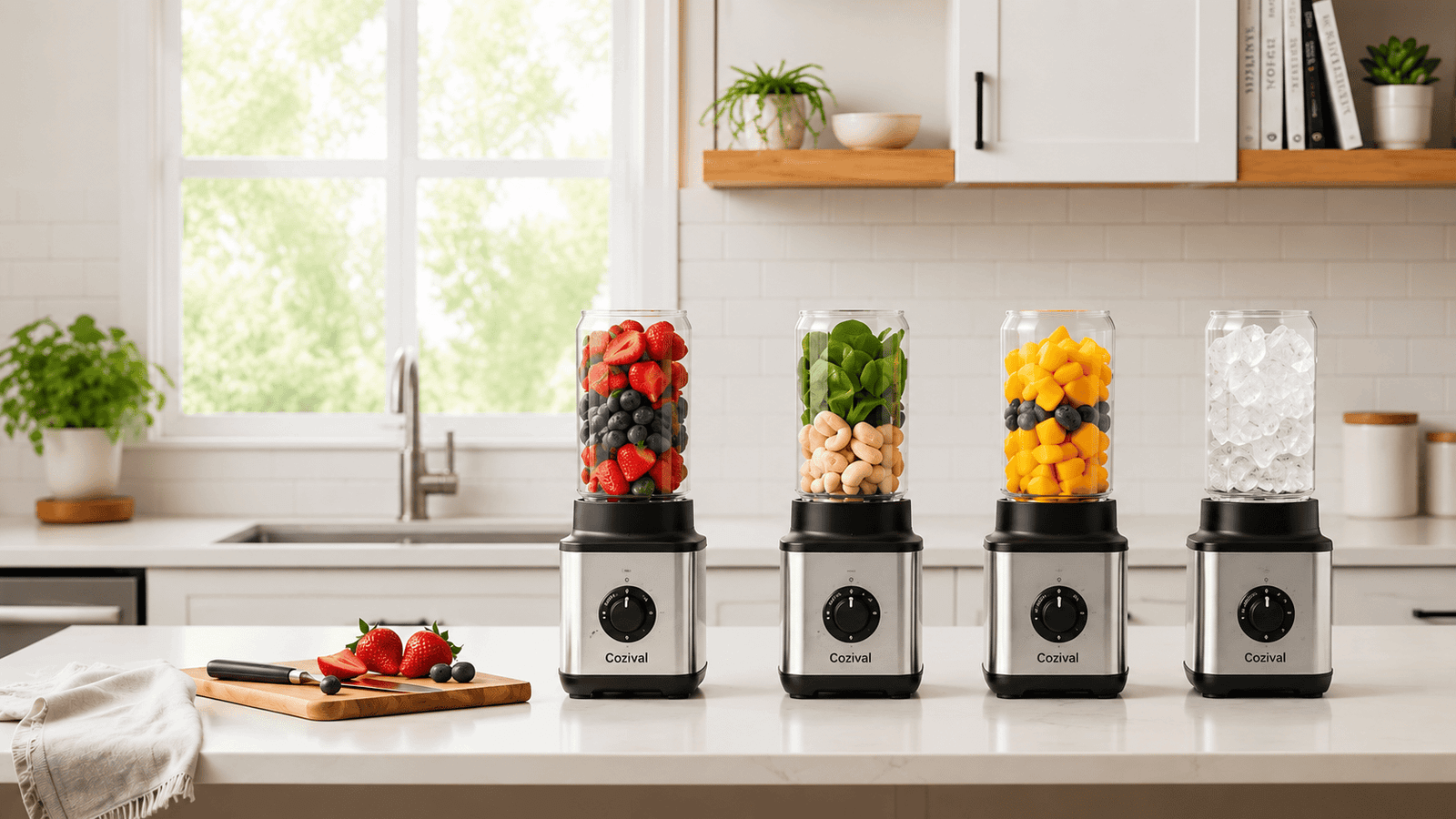
Consider a personal-size blender. If you mostly make single smoothies, a personal blender often wins on space. Many models double as a to-go cup. That cuts down on extra dishes too.
Pick detachable, stackable parts. Blenders with a few simple pieces store more easily in a cabinet or drawer. This matters most in kitchens where you can’t leave every appliance out.
Check cord length and storage. A shorter cord with built-in wrap storage works better in tight kitchens. A long, loose cord just adds clutter.
Compact Doesn’t Mean Weak
Don’t assume small blenders lack power. Motor strength depends more on price tier and design than on size. Manufacturers pack real power into small housings and containers. Several compact and personal-size blenders crush ice with ease. They also handle frozen fruit well. The real tradeoff with compact models is batch size, not blending power.
When a Personal-Size Blender Makes More Sense
Blending mostly for one or two people? Consider a personal blender over a compact full-size model. You’ll save counter space and cabinet space. Many personal blenders weigh less, so storage gets easier. You’ll also skip washing a large pitcher after a single serving.
The tradeoff is capacity. Personal blenders don’t handle large batches well. Skip them if you regularly blend soups for a family. Skip them for big-batch smoothies too. A compact full-size blender fits that need better.
Quick Buying Checklist
Confirm these details before you buy a small-kitchen blender:
- Measure your cabinet clearance, then check the blender’s height with the lid on
- Check the base footprint if the blender will live on your counter permanently
- Confirm the container is dishwasher-safe to cut down on dishes
- Check the cord length and whether it includes built-in storage
- Match the blender’s capacity to your typical batch size, not just its size category
Frequently Asked Questions
Do compact blenders blend as well as full-size ones? Usually, yes. Motor quality drives blending power more than housing size does. Many compact and personal-size blenders crush ice and blend frozen fruit well. The main tradeoff is batch size, not performance.
What height blender fits under standard kitchen cabinets? Standard upper cabinets sit about 18 inches above the counter. Real clearance often runs lower once you factor in outlets or shelving. Always measure your own space first. Then check the blender’s height with the lid on.
Is a personal blender enough for a small household? For one or two people making individual smoothies, yes. Need bigger batches for soups or a full family? A compact full-size blender will serve you better.
Does a smaller blender mean a shorter warranty? Not necessarily. Warranty length usually tracks the brand and price tier, not the blender’s physical size. Compare warranty terms directly instead of assuming size predicts quality.
Final Thoughts
Match the blender’s real dimensions to your actual cabinet clearance and counter space. Don’t rely on marketed size categories alone. Be honest about your typical batch size too. A personal blender might cover it, or you might need a compact full-size model. And don’t assume compact means weak — motor quality determines blending performance, not housing size.