
A stand mixer is one of the most requested — and most expensive — kitchen appliances people put on gift lists and wish lists, but it’s also one of the easiest to buy and barely use. Before you spend several hundred dollars on one, it’s worth knowing exactly what a stand mixer does better than a hand mixer, and just as importantly, where a hand mixer is genuinely enough.
Stand Mixer vs. Hand Mixer at a Glance
| Hand Mixer | Stand Mixer | |
|---|---|---|
| Best for | Cakes, cookies, whipped cream, light batters | Bread dough, large batches, sustained mixing |
| Price | Budget-friendly | Higher upfront investment |
| Storage | Minimal — fits in a drawer | Significant counter or cabinet space |
| Hands-free operation | No, you hold it the whole time | Yes, bowl and head stay fixed |
| Kneading dense dough | Not recommended | Built for it |
| Attachments | Beaters only (whisk sometimes included) | Paddle, whisk, dough hook, plus optional pasta/grinder attachments |
The Core Difference
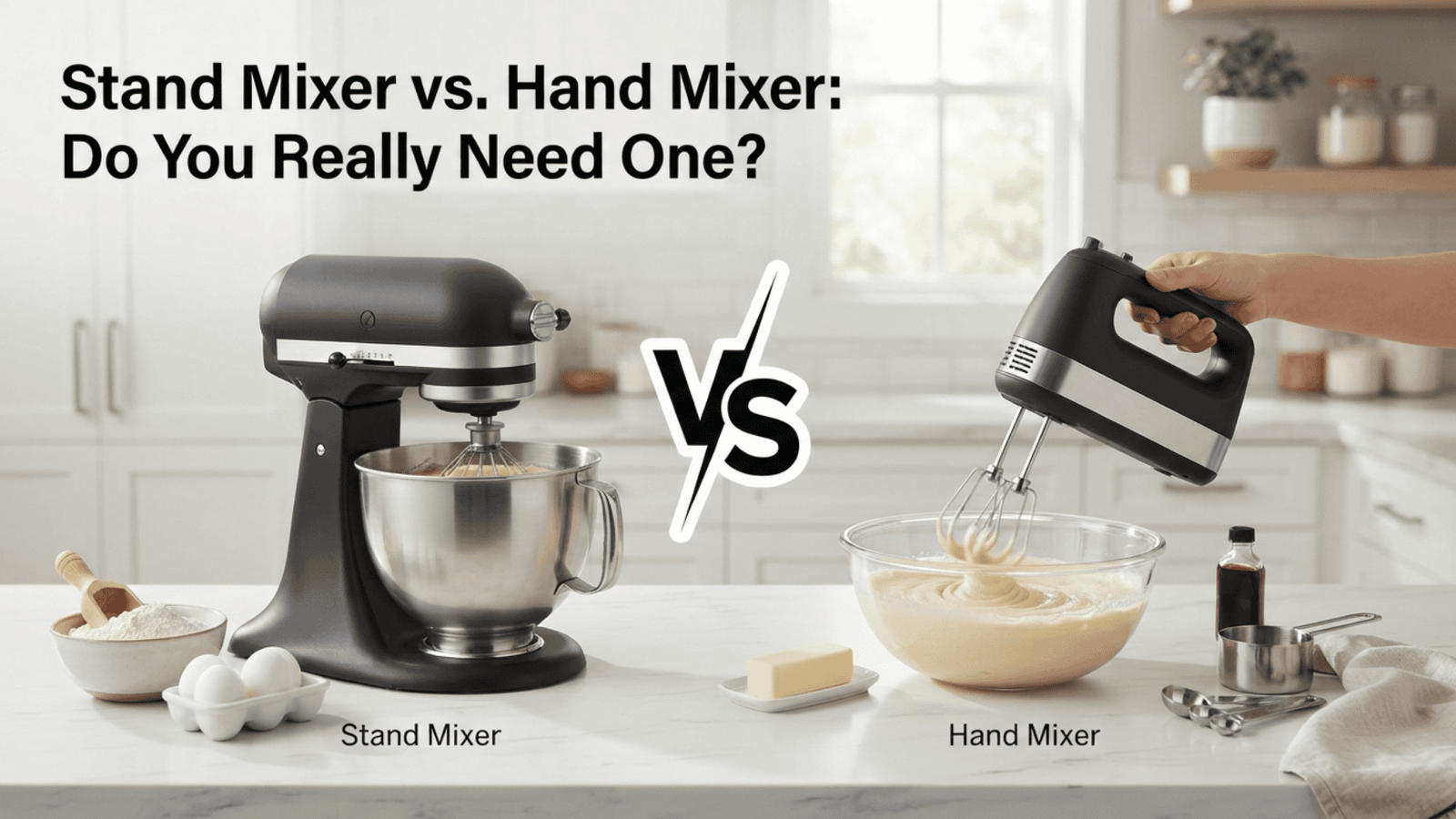
A hand mixer is a lightweight, handheld appliance with two removable beaters that you hold and move around the bowl manually. It handles short, light mixing tasks such as whipping cream, beating eggs, mixing cake batter, and preparing cookie dough.
A stand mixer is a countertop appliance with a fixed motor head and a bowl that locks into the base. It runs hands-free, uses interchangeable attachments (paddle, whisk, dough hook), and is built with a more powerful motor meant for sustained, heavy-duty mixing.
The difference isn’t just convenience — it’s what each machine is mechanically capable of.
Where a Hand Mixer Is Genuinely Enough
For most everyday baking — cakes, cookies, brownies, quick breads, whipped cream, boxed mixes — a hand mixer handles the job just fine. These recipes don’t require sustained heavy mixing or kneading, so the smaller motor in a hand mixer isn’t a real limitation.
Hand mixers also win on:
- Storage — they take up a fraction of the space a stand mixer needs
- Price — typically a fraction of the cost of even an entry-level stand mixer
- Flexibility — easy to use directly in a saucepan or a bowl of any size, since you’re moving the mixer rather than a fixed bowl
If you bake occasionally, make small batches, and rarely prepare bread dough from scratch, choose a hand mixer. It provides the right amount of power for that style of baking.
Where a Stand Mixer Actually Earns Its Price
Bread and pizza dough. This is the single biggest reason people upgrade. Kneading dough by hand or with a hand mixer takes significant time and effort. A stand mixer with a dough hook kneads dense dough automatically in a fraction of the time, and its powerful motor handles the resistance without the strain that a smaller hand mixer motor can experience.
Large batches. Stand mixer bowls are typically far larger than what you can comfortably work with by hand, which matters if you regularly bake for a crowd, meal prep in bulk, or run any kind of small baking operation from home.
Hands-free mixing. Because the bowl locks in and the head stays fixed, you can walk away, add ingredients gradually, or multitask while it runs — something a hand mixer can’t offer since it requires you to hold it the entire time.
Attachment ecosystem. Many stand mixer brands offer additional attachments — pasta rollers, meat grinders, food processors — that turn the base machine into a broader kitchen tool. This only matters if you’ll actually use those attachments, but for some households it becomes the appliance that replaces several smaller ones.
Where People Overspend
The most common mistake is buying a stand mixer for occasional cake-and-cookie baking, where a hand mixer would have done the same job for a fraction of the price and counter space. Stand mixers make the most sense when bread dough, large batches, or hands-free mixing are a regular part of your routine — not an occasional one.
Quick Decision Guide
Get a hand mixer if:
- You bake occasionally or in small batches
- Bread and pizza dough aren’t a regular part of your baking
- Counter space or storage is limited
- Budget is a bigger factor than convenience
Get a stand mixer if:
- You make bread, pizza dough, or other yeasted dough regularly
- You bake in large batches or for groups often
- You want hands-free mixing to multitask while it runs
- You’d use attachments beyond basic mixing (pasta, grinding, etc.)
Frequently Asked Questions
Can a hand mixer knead bread dough? Most hand mixers aren’t built for it. Dense bread dough puts a lot of resistance on the motor, and hand mixers are generally underpowered and not designed for sustained kneading — some may even overheat or burn out if pushed to knead dough regularly.
Is a stand mixer worth it if I only bake occasionally? Usually not. If you mostly bake cakes, cookies, or occasional recipes without dense dough, choose a hand mixer. It handles those tasks at a fraction of the cost and takes up much less storage space.
What’s the main functional advantage of a stand mixer besides power? Hands-free operation. Because the bowl and head stay fixed, you can add ingredients gradually or step away while it mixes — something that isn’t possible with a hand mixer, which requires you to hold and guide it the entire time.
Do I need a stand mixer for whipped cream or meringue? No. Both are well within a hand mixer’s capability, since they involve incorporating air into a light mixture rather than working against heavy resistance the way dough does.
Final Thoughts
The honest answer for most home bakers is that a hand mixer covers the majority of everyday baking just as well as a stand mixer, at a lower price and with far less counter commitment. The upgrade to a stand mixer earns its cost specifically around bread dough, large batches, and hands-free convenience — if none of those are a regular part of how you cook, you likely don’t need one yet.
for latest news you can visit our blog page