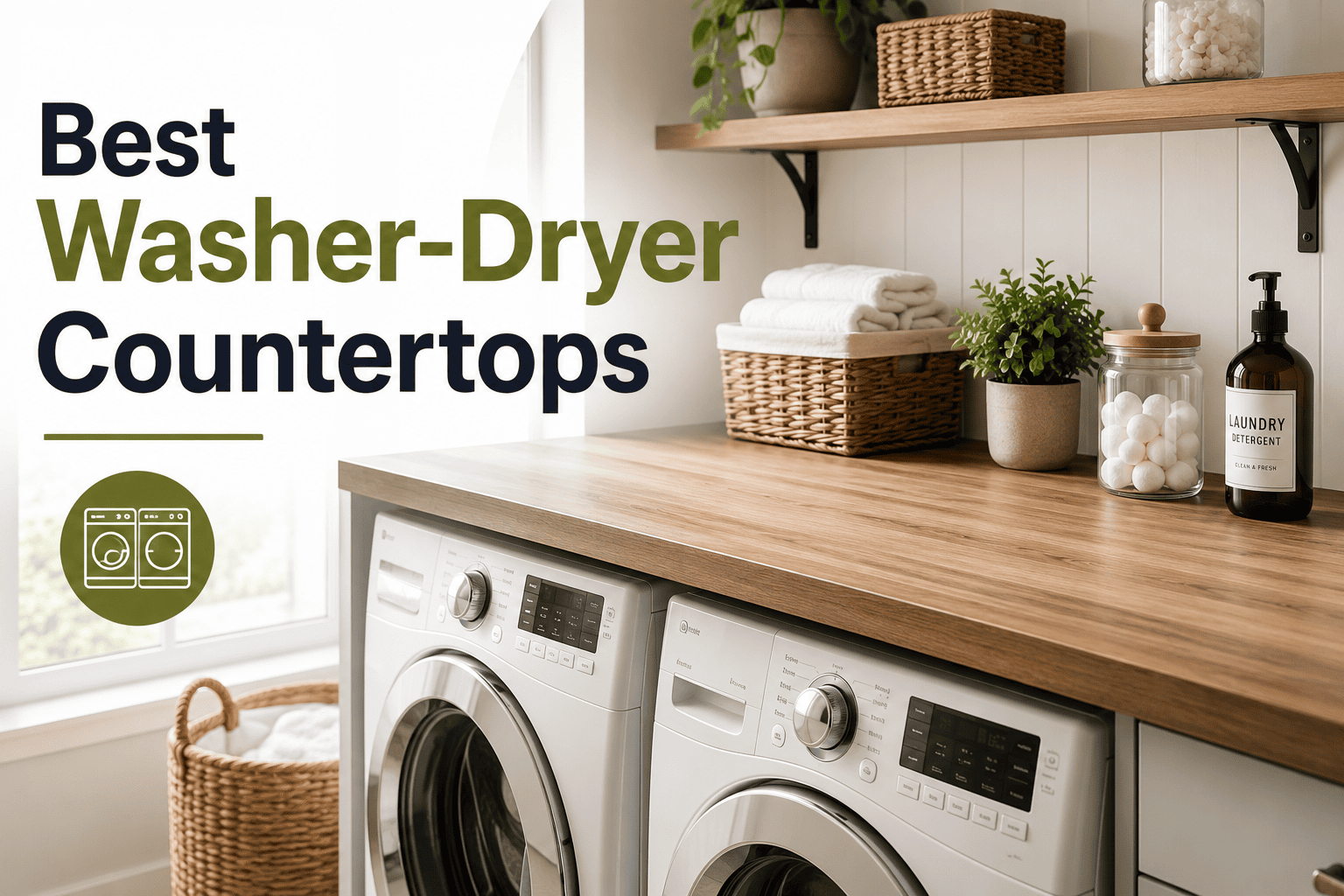
A stacked or side-by-side washer and dryer eats up a huge amount of usable space in a laundry room. A washer-dryer countertop turns that dead zone on top of your machines into a folding station, a spot to set a laundry basket, or extra counter space you didn’t have before. It’s one of the cheapest upgrades you can make to a laundry room, but not every countertop fits every setup — and the material you choose affects how it holds up over time.
This guide covers what actually matters before you buy, plus which countertops are worth considering in 2026.
What a Washer-Dryer Countertop Actually Does
A washer-dryer countertop is a rigid panel — usually wood, bamboo, or a laminate-wrapped composite — that sits on top of a front-loading washer and dryer, spanning the gap between them (or across a single stacked unit). It’s held in place by friction and non-slip padding, not permanent hardware, so it’s a fully reversible upgrade.
The main uses:
- Folding surface. Fold clothes right where they come out of the dryer instead of hauling a basket to another room.
- Storage surface. A spot for detergent, dryer sheets, a small hamper, or a plant.
- Visual cleanup. It hides the mismatched tops of two different machines and gives the room a finished look.
What to Check Before You Buy
1. Measure your machines first, not the countertop. Standard front-loading washers and dryers are usually 27–28 inches wide, and a side-by-side pair typically needs a countertop in the 54–60 inch range to span both with support on each side. Measure the total width of your machines, including any gap between them, before you shop. A countertop that’s too short won’t have enough surface resting on each machine to stay stable.
2. Confirm it’s rated for front-loading machines. Most washer-dryer countertops are designed to rest on the flat tops of front-loading units. They’re generally not compatible with top-loading washers, since there’s no flat, obstruction-free surface to set them on.
3. Material affects weight capacity and feel.
- Solid wood tends to be the most rigid and can typically support more weight, but it’s heavier to install and remove, and it needs to be kept away from standing water.
- Bamboo is lighter than solid wood, reasonably durable, and often the more budget-friendly option.
- Laminate over a composite core is usually the lightest and most water-resistant option, though it can feel less premium than solid wood or bamboo.
4. Check for non-slip padding underneath. This is what actually keeps the countertop from sliding during the spin cycle. Cheaper countertops sometimes skip this or use thin, low-quality pads that wear out fast — look for countertops that specifically call out non-slip or rubber pads in the description.
5. Decide if you need it to double as a laundry sorter or shelf. Some countertops are flat slabs only. Others add a lip, side rails, or a small shelf above for detergent and supplies. If your laundry room is tight, a model with a bit of vertical storage built in saves you from adding a separate shelf.
Top Washer-Dryer Countertops in 2026
1. OfficeSimpli Washer Dryer Countertop (California Walnut)
The OfficeSimpli countertop uses a laminate finish over a composite core, which keeps it lighter than solid wood while still giving a wood-look finish. It’s made in the USA and includes non-slip pads to help it stay put on top of the machines. It’s built in the standard 27.5″ x 54″ size, which fits most side-by-side front-loading pairs.
Best for: Buyers who want a wood look without the weight or price of solid wood, and who prioritize a US-made product.
2. ROYXEN Washer Dryer Countertop (Solid Wood, Walnut Color)
The ROYXEN countertop is built from solid wood rather than a laminate composite, which typically means a more rigid, heavier-duty surface. It’s designed to fit all front-loading washer and dryer pairs and includes extra room on top for laundry room organization. Solid wood construction generally holds up well over years of use, though it’s a heavier install than laminate or bamboo alternatives.
Best for: Buyers who want the most solid, furniture-grade feel and don’t mind the extra weight during setup.
3. Gashell Washer Dryer Countertop (Bamboo, Retro Brown)
The Gashell countertop is made from bamboo, which falls between laminate and solid wood on both weight and price. It has a classic brown finish that reads a little more casually than a traditional wood grain, and it has the regular 27.5″ x 54″ size. Bamboo is a naturally renewable material, which makes this a reasonable pick if sustainability matters to your purchase.
Best for: Buyers who want a lighter-weight, easier-to-install option without going all the way to a laminate composite.
Quick Buying Checklist
Before you buy a washer-dryer countertop, confirm:
- The combined width of your washer and dryer (plus any gap) matches the countertop’s length
- Your machines are front-loading, not top-loading
- The countertop includes non-slip padding on the underside
- The material (solid wood, bamboo, or laminate) fits your priorities for weight, water resistance, and budget
- Whether you want a flat slab or one with a raised lip/shelf for extra storage
Frequently Asked Questions
Do washer-dryer countertops work with top-loading machines? No. These countertops rest flat on top of the machine, which only works with front-loading washers and dryers. Top-loading machines don’t have a flat, unobstructed surface to support one safely.
Will a countertop damage the top of my washer or dryer? Not if it has proper non-slip padding. The padding both protects the machine’s surface and keeps the countertop from shifting during the wash and spin cycles.
How much weight can a washer-dryer countertop hold? It varies by material and model — solid wood generally handles more weight than laminate composites. Check the specific product’s weight rating before loading it up with heavy items like large baskets or storage bins.
Can I cut a washer-dryer countertop down to a custom size? Some solid wood and bamboo options can be trimmed, but laminate composite countertops are harder to cut cleanly without damaging the finish. If you need a non-standard size, check with the manufacturer before buying rather than assuming it’s cuttable.
Is bamboo or solid wood better for a laundry room? Both hold up well in normal household humidity. Solid wood is generally more rigid and can look more premium, while bamboo is lighter, often more affordable, and easier to install and remove.
Final Thoughts
Measure your machines before you shop, confirm you have front-loaders, and pick a material that matches how much weight you plan to put on top and how easy you want installation to be. Any of the three countertops above will turn wasted space above your washer and dryer into a real folding and storage surface — the right pick comes down to whether you prioritize weight, price, or a solid-wood feel.