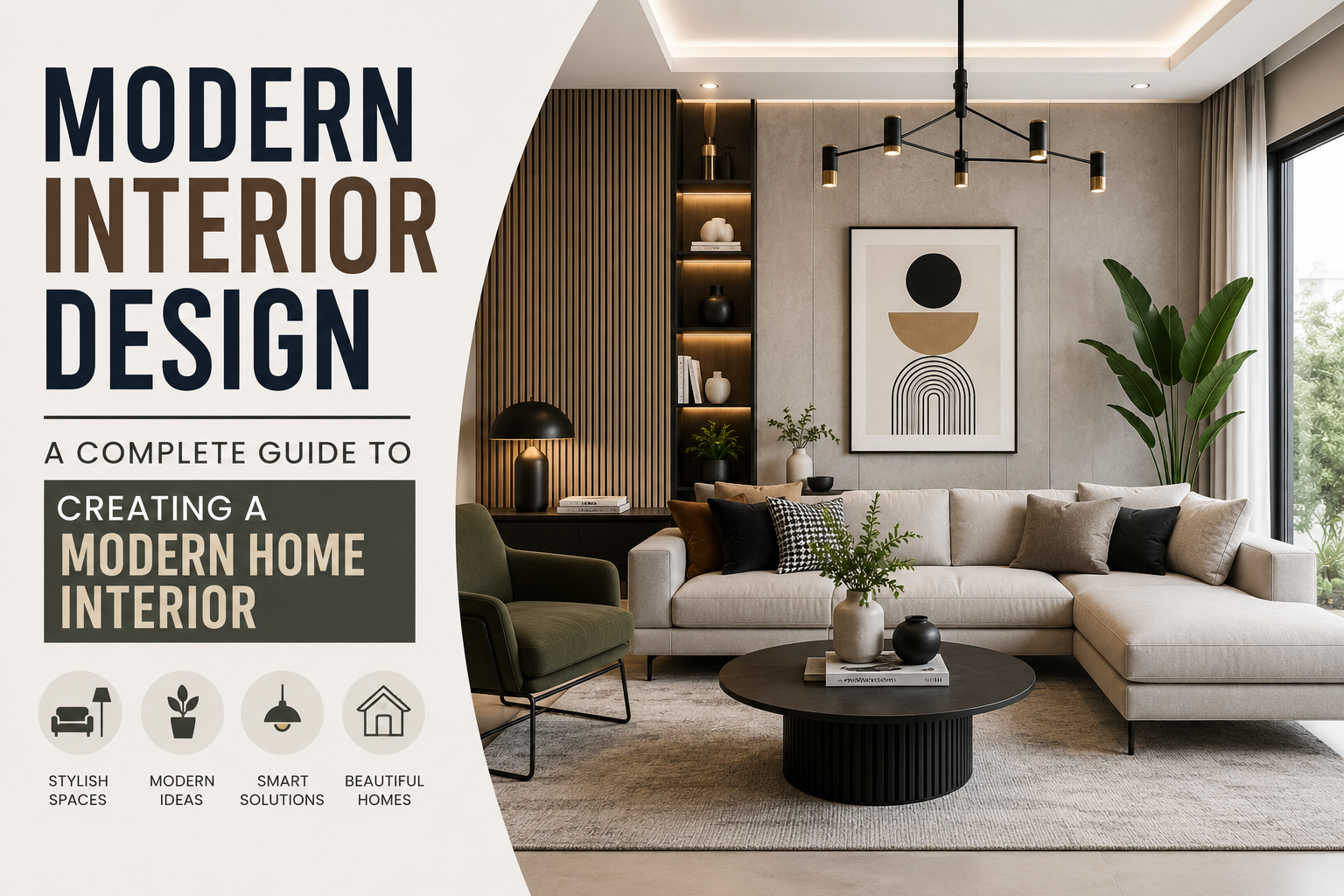

Modern interior design remains one of the most sought-after styles for homeowners who want clean lines, functional layouts, and a timeless aesthetic that doesn’t feel trend-driven. Whether you’re renovating an older property or starting from scratch, understanding the principles behind modern interior decoration can help you create a home interior design that feels both stylish and livable. This guide covers everything from color and materials to layout and lighting, so you can bring a modern house interior design to life in your own space.
What Defines Modern Interior Design?
Modern interior design traces its roots to early-to-mid 20th century architecture and design movements, and it continues to shape how modern homes interior spaces look today. Unlike more ornate or traditional styles, a modern interior focuses on:
- Clean, uncluttered lines — furniture and architecture with minimal ornamentation
- Every piece has a purpose; function is more important than decoration.
- Open floor plans — spaces that flow into one another rather than being closed off
- Neutral color palettes — punctuated by carefully chosen accent colors
- Natural materials — wood, stone, metal, and glass used honestly, without excessive embellishment
Understanding these core principles is the first step toward achieving genuine modern house interior decoration rather than simply copying a look.
Modern Interior Design vs. Contemporary Design
People often use “modern” and “contemporary” interchangeably, but they’re not quite the same. Modern interior design refers to a specific historical style — rooted in mid-century design — while contemporary design reflects whatever is current right now, which is constantly evolving. If you’re aiming for designs modern in spirit but want them to feel fresh today, blending mid-century modern furniture with newer materials and technology often achieves the best of both worlds.
Color Palettes for a Modern Home Interior
A defining feature of modern interiors is restraint in color. Common approaches include:
- Monochrome neutrals — whites, greys, and beiges layered through different textures
- Black and white contrast — a classic modern house interior look, often paired with wood tones
- Earth tones — warm terracottas, olive greens, and browns for a softer modern feel
- Single accent color — one bold color (navy, mustard, deep green) used sparingly against a neutral base
The goal with any modern interior decoration color scheme is cohesion — the eye should move smoothly through the space without visual clutter.
Furniture Choices That Define Modern Style Homes Interior
Furniture in a modern home interior design typically favors:
- Low-profile sofas and chairs with exposed or slim legs
- Geometric shapes — clean rectangles, circles, and simple curves rather than ornate carving
- Statement lighting — sculptural pendant lights or arc floor lamps as functional art
- Multi-functional pieces — furniture that adapts to smaller, open layouts
Iconic pieces from designers like Eames, Saarinen, and Mies van der Rohe still heavily influence modern house interior design today, and reproductions or inspired pieces are widely available at a range of price points.
Materials and Textures in Modern House Interior Design
While the color palette in modern interiors tends to stay simple, texture does a lot of the visual work. Common materials include:
- Wood — light oak or walnut for warmth against cooler surfaces
- Metal — matte black, brushed brass, or chrome accents in fixtures and furniture legs
- Glass and mirror — used for tables, partitions, and to bounce natural light
- Concrete and stone — often left exposed or honed for an industrial-modern edge
- Natural fiber textiles — linen, wool, and cotton in simple weaves
Layering two or three of these materials in a single room is a reliable way to avoid a space feeling sterile — a common risk when pursuing modern interior design without enough textural variety.
Layout and Space Planning
A modern inside house layout typically prioritizes:
- Open-plan living — kitchen, dining, and living areas flowing together
- Functional zoning — using furniture placement or rugs to define areas within an open plan, rather than walls
- Maximized natural light — large windows, minimal window treatments, and light-reflective surfaces
- Decluttered surfaces — built-in or hidden storage to keep countertops and floors clear
This emphasis on flow and function is central to what makes modern homes interior spaces feel more spacious than their square footage might suggest.
Lighting in Modern Interiors
Lighting is treated almost as sculpture in modern interior decoration. Look for:
- Statement pendant lights over kitchen islands or dining tables
- Recessed lighting for a clean ceiling line
- Floor and table lamps with simple geometric silhouettes
- Dimmable systems to shift a room’s mood from bright and functional to warm and relaxed
Room-by-Room Modern Home Design Ideas
Living room: A low sectional sofa, a sculptural coffee table, and one large piece of abstract art can anchor the entire modern house interior look.
Kitchen: Handleless cabinetry, an island with waterfall-edge countertops, and integrated appliances keep sightlines clean.
Bedroom: A platform bed, minimal nightstands, and layered neutral bedding create a calm, modern interior atmosphere.
Bathroom: Floating vanities, frameless glass showers, and matte black fixtures are hallmarks of a modern style house interior bathroom.
Common Mistakes to Avoid
- Over-minimizing — modern doesn’t mean empty; texture and a few personal touches keep the space from feeling cold
- Ignoring scale — furniture that’s too small or too large for the room disrupts the clean lines modern design relies on
- Too many accent colors — modern interiors rely on restraint; more than one or two accent colors can undercut the effect
- Skipping lighting layers — a single overhead light rarely does a modern home interior design justice
Final Thoughts
Whether you’re redesigning a single room or planning a full renovation, modern interior design succeeds when function, material honesty, and restraint work together. Start with a neutral base, choose a few statement furniture pieces, layer in natural materials and lighting, and let the architecture of the space do much of the visual work. With these principles in place, achieving a modern home interior that feels both current and enduring is well within reach.