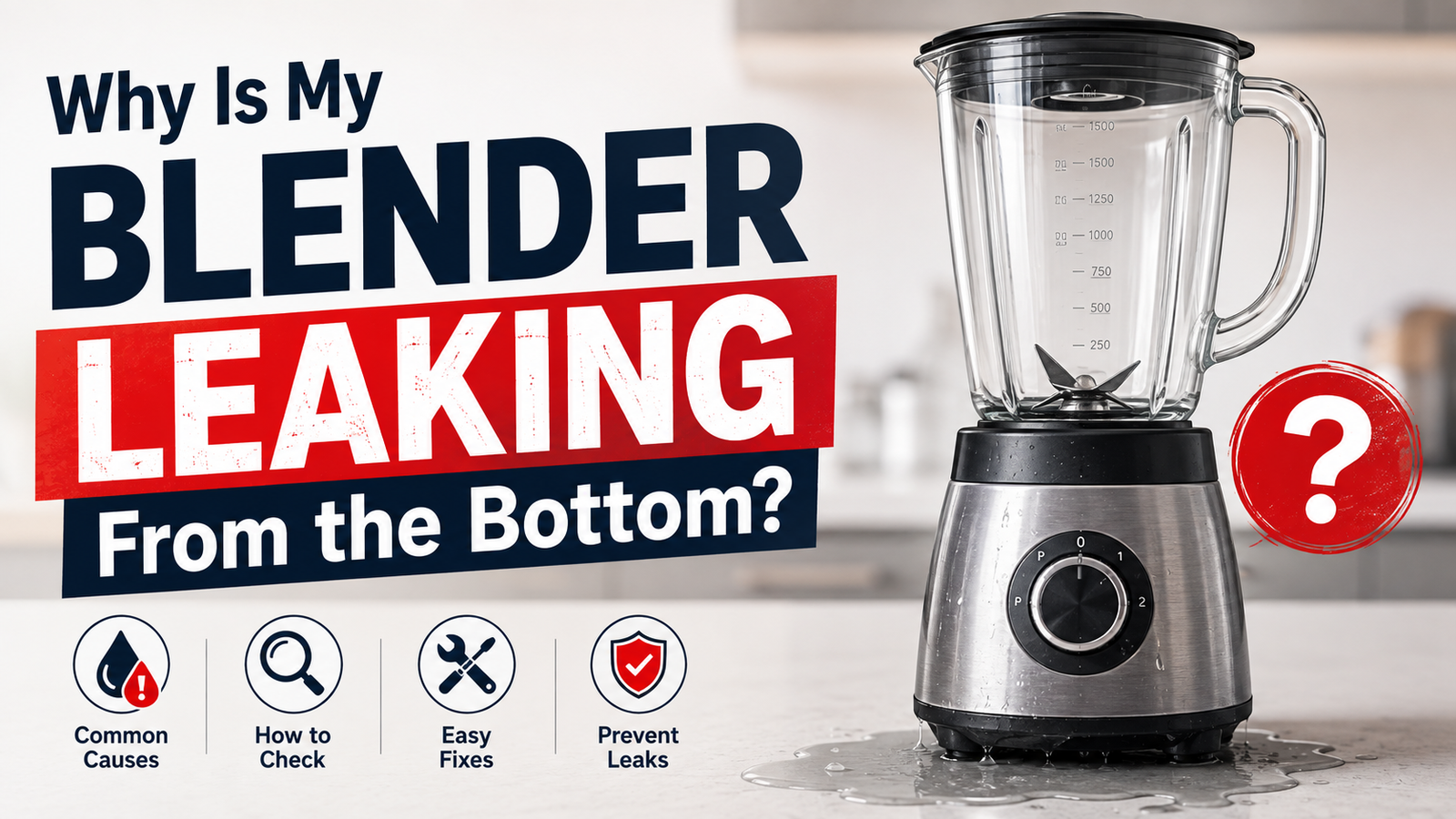

Why Is My Blender Leaking From the Bottom?
It’s not just messy when the bottom of the blender leaks; it’s usually a sign that something in the seal or base is worn out or wasn’t put together right. The good news is that it’s usually easy to figure out what’s wrong and fix it, often without having to buy a new blender.
Here is a list of the most common problems and how to fix each one.
1. A Worn or Missing Rubber Gasket
The sealing ring, which is another name for the gasket, is between the blade assembly and the pitcher’s base. Most blenders leak because of this one thing.
Signs it’s the problem:
- Leaking increases when blending thin liquids like water, juice, or soup
- The gasket looks flattened, cracked, stretched, or discolored
- You notice a gap or twist in the ring when you remove it
To fix it, take the blade section off and look at the gasket. Replace it if it’s broken, warped, or weak. Replacement parts are cheap and can usually be bought from the blender’s maker or a third-party seller. Before putting the parts back together, make sure the new gasket sits flat and even, not twisted.
2. Blade Assembly Not Tightened Properly
If the blade unit isn’t screwed in tightly against the pitcher base, liquid can seep out around the threads, even with a good gasket in place.
The fix: Disassemble the blade unit and pitcher, then reassemble it carefully, making sure the gasket is seated correctly and the base is twisted on firmly (but not over-tightened, which can crack the plastic threads).
3. Cracks in the Pitcher or Base
Over time, heat, drops, or dishwasher wear can cause small cracks, especially near the bottom seam or around the blade housing.
The fix is to look at the pitcher very carefully, including the bottom. If it’s made of glass, hold it up to the light. Put it over a sink and fill it with water. Watch out for drips. Usually, you’ll have to get a new pitcher if you find a crack in it. This is because broken plastic or glass can’t be used for food.
4. Overfilling the Pitcher
If you fill your blender too much, especially with hot liquids that expand, the liquid can push through the seals even if they’re in good shape. To fix this, check the max-fill line and blend in smaller amounts if you’re always going over it. For hot liquids, fill it even less than the max line to leave room for steam and expansion.
5. Blending Hot Liquids
When you blend hot soups or other liquids, pressure can build up inside the pitcher. This can cause liquid to leak out of any weak spots in the seal. To fix it, let hot liquids cool down a bit before blending them, take off the lid’s center cap (or vent it) to let steam out, and blend in short bursts instead of one long run.
6. Worn Base Seals (for Blenders With a Detachable Jar Base)
For personal or single-serve blenders, there is a separate base cup with its own seal that the jar locks into. The blade gasket and this seal both wear out.
How to fix it: Look at the base cup’s O-ring or seal for wear and replace it if it looks bad or squished.
7. Incorrect Reassembly After Cleaning
If you just took your blender apart to clean it, make sure that each piece went back together exactly the way it came out. Sudden leaks are often caused by a broken washer or a gasket that isn’t lined up right.
To fix it, take the blade unit and base apart completely and then put them back together step by step. Check your blender’s manual for the right order.
Quick Troubleshooting Checklist
- Inspect the gasket for cracks, warping, or a poor seal
- Make sure the blade assembly is screwed in tightly
- Check the pitcher for hairline cracks
- Confirm you’re not overfilling past the max line
- Let hot liquids cool before blending
- Reassemble carefully after cleaning
When to Replace vs. Repair
Most of the time, a cheap new part will fix the problem if the leak is caused by a worn gasket or a loose blade assembly. But if the pitcher is cracked or the leak stays even after replacing the gasket and putting everything back together properly, it might be time to get a new pitcher or blender. Preparing food in a cracked container is not safe.
Most bottom leaks can be traced back to one of these seven reasons, and most can be fixed in less than ten minutes.








2 comments