Why Does My Coffee Maker Make Bitter Coffee?
It’s possible that too much was removed from the grounds, including compounds that make coffee bitter.
Bitter coffee is mainly caused by time, temperature, or a dirty machine, not ratio.
1. The grind size is too small
More water can reach the surface of finer grounds, which speeds up the extraction process. This can pull out bitter chemicals from a drip machine before the brew cycle is over, especially if the grind is more like espresso than drip.
To fix this, use a medium grind for drip machines that are standard. When you grind at home, you want the grain to be like sea salt or coarse sand.#
2: The water is too hot
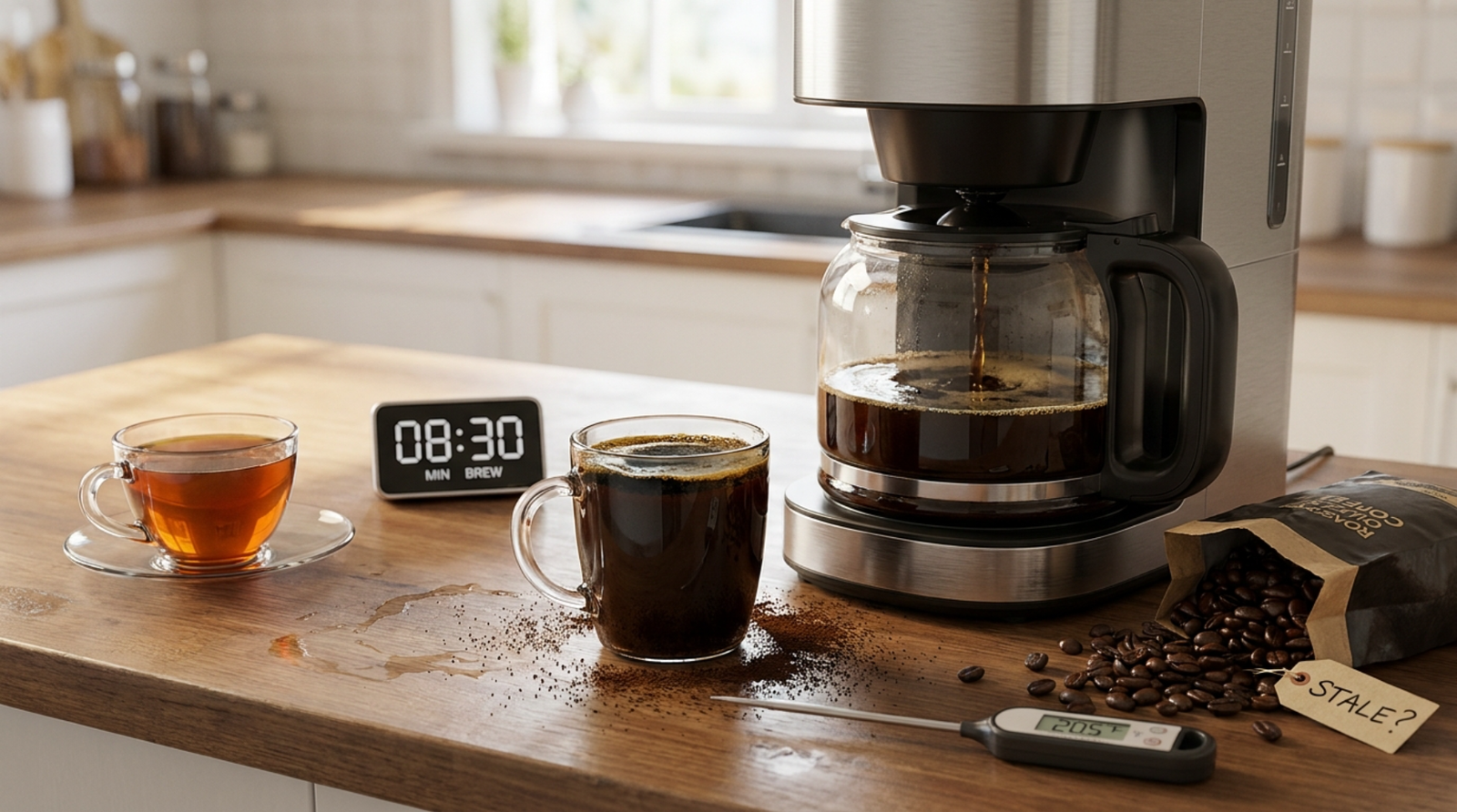
195°F to 205°F is the best temperature for brewing. If your machine gets hotter than that, either because the thermostat is broken or because of a design flaw, it can take out too many bitter compounds from the beans.
Fix: There isn’t an easy way to check the temperature of the water inside your machine without special tools, but if the water tasted bitter all of a sudden and your machine is older, you should have a repair expert look at the thermostat.
3. Old coffee oils got stuck in the machine
Over time, coffee oils cover the inside parts, mostly the carafe, brew basket, and tubing. No matter what beans you use, these oils can go bad and make every pot of coffee you make afterward taste bitter and old.
Fix: After each use, wash the carafe and any parts that can be taken off with warm soapy water. Also, clean the whole system once a month with a cycle that includes equal parts water and vinegar (or a machine-cleaning tablet).
4: Mineral buildup changes the chemistry of water
For one thing, limescale buildup makes your machine run more slowly. It can also change how the water mixes with the grounds, which can sometimes make the bitter flavors stronger in the final cup.
Fix: Remove limescale with a vinegar-water mix or a professional descaler every one to three months and then rinse with clean water twice.
5. The coffee warmed up for too long on the plate
Even if the coffee tasted fine right after it was brewed, it continues to “cook” slowly on a hot plate, breaking down ingredients and giving it a burned, bitter taste.
Fix: Drink coffee within 20 to 30 minutes of making it, or put it in an insulated carafe or thermos to keep it warm without being exposed to heat for a long time.
6. Putting in too much coffee for the amount of water
If there isn’t enough coffee, the coffee will be weak. If there is too much, the water will be too saturated, and the coffee will taste harsh, bitter, and over-concentrated, especially if the grind is fine.
Fix: Stick to a standard ratio of about 1 to 2 tablespoons of coffee to 6 ounces of water, and make small changes instead of big ones.#
7: Beans that are old or not very good
Old, badly roasted, or over-roasted beans (especially very dark roasts) naturally have more bitter compounds that can’t be fully hidden by brewing changes.
Fix: Buy whole beans in small amounts that you’ll use up in a few weeks, and if you normally use a dark or “bold” mix, try a medium roast instead.
8: The brew cycle is taking too long (slow brewing).
If your machine isn’t brewing as quickly as usual—more than 4 to 6 minutes—it could be because the water and grounds aren’t coming into contact with them for as long. This can pull out too many bitter compounds.
Fix: Mineral buildup or a mechanical flow restriction are likely to blame if your brew cycle lasts longer than normal. Our guide to sluggish coffee makers might help you diagnose and remedy this.
9: A water reservoir that is dirty or moldy
Mineral crust, mold, or bacterial buildup can happen in a tank that isn’t cleaned often. All of these things can give your water off, bitter tastes before it even gets to the grounds.
Fix: Clean the tank weekly with warm, soapy water and filtered water if buildup or unusual tastes persist.
10. Using water from the tap that has a lot of minerals in it
Hard water’s high mineral content can make coffee bitter.
Fix: Make a pot of coffee with either bottled or filtered water and taste the difference. A water filter pitcher or machine in-line filter may reduce bitterness.
Quick Fix for a Problem
After making coffee with fresh beans, a medium grind, and filtered water, don’t leave it on the warming plate. Instead, drink it right away. Taste differences are usually caused by beans, water, or timing, not the machine. It should be cleaned and descaling first if it’s still bitter.
The Bottom Line
The grind size, water temperature, machine buildup, or leaving the coffee out too long may have over-extracted it.
Fix grind size, ratio, and fresh beans before deep cleaning and descale the machine.
READ MORE ARTICLES 👇



1 comment