Understand common appliance error codes for washing machines, refrigerators, dishwashers, ovens, and microwaves
These days, home appliances use digital screens and error codes to show when something is wrong. Some kitchen appliances, like refrigerators, washing machines, dishwashers, ovens, and others, may show a code when a part fails, a sensor notices something is wrong, or the appliance can’t finish a cycle. Knowing these codes can help homeowners figure out what might be wrong, do some easy troubleshooting, and decide if they need to call a professional to fix their appliances.
But error codes aren’t always the same. Depending on the name and model of the appliance, the same code could mean different things. Before you try to fix or reset an appliance, you should always look at the owner’s manual.
What are error codes for appliances?
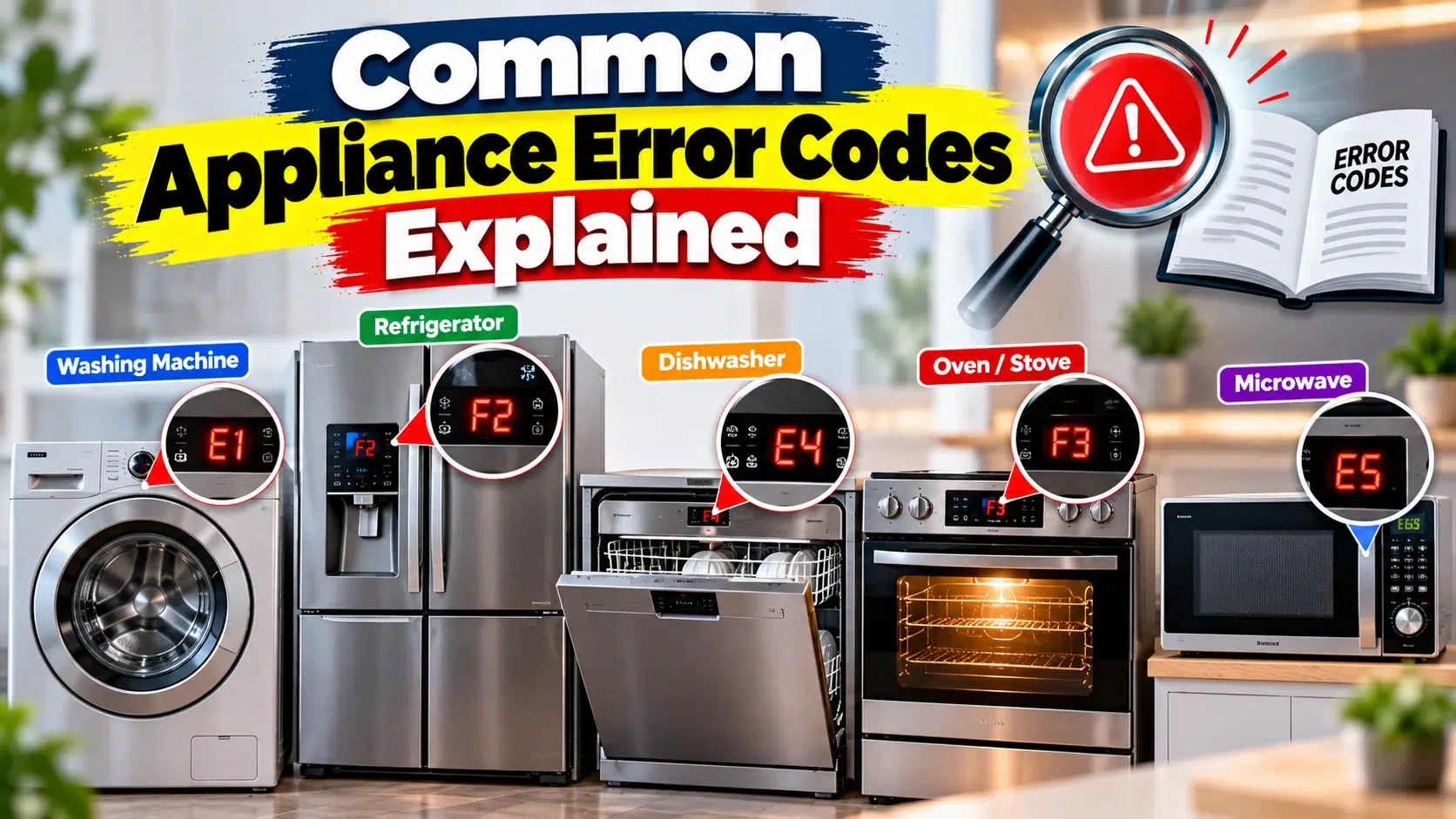
Error codes on appliances are groups of letters, numbers, or symbols that show up when the appliance detects a problem. A washing machine might show a code about water drainage, while a dishwasher might say there is a problem with the water supply. A fridge might show a warning from a temperature monitor, and an oven might show a problem with heating or controlling the temperature.
When something goes wrong, these codes help figure out what went wrong. They don’t always give a sure sign of a broken part because the same warnings can be caused by wiring issues, blocked parts, power outages, and sensor faults.
Error Codes Most Washing Machines Give
Error numbers often show up on washing machines that have to do with water supply, drainage, door locks, and load balance. If the machine can’t fill up in the time it’s supposed to, a water inlet warning may show up. This could happen if the water tap is closed, the inlet hose is bent, or the filter is full.
When water can’t leave the drum properly, drainage errors can happen. It could be a clogged drain filter, a hose that is blocked, or a broken drain pump. Some machines also show an error when the door isn’t closed all the way or when the load isn’t balanced enough to spin safely.
Different brands use different codes. Before you check the filters or tubes, turn off the machine and read the safety instructions that came with it. A technician may need to look at the pump, the inlet valve, the door lock, or the electronic controls if the problem still exists after basic checks.
Common Error Codes for Refrigerators
Error codes let refrigerators know when there are problems with their temperature monitors, fans, defrost systems, or the way their electronic parts talk to each other. A sensor-related code could mean that the device is getting a temperature reading that isn’t right. A fan warning could mean that air isn’t moving as it should, and a freezing system warning could mean that frost isn’t melting properly.
Some refrigerator alerts aren’t caused by a broken part but by simple working conditions. Performance could be affected by an open door, clogged air vents, or a short power outage. Make sure the doors close properly, that food isn’t blocking the vents, and that the appliance has enough airflow.
If the fridge isn’t keeping food cold enough, move any perishable items to a fridge that is and follow the manufacturer’s instructions. A qualified appliance technician should look at any error codes, noises, or temperature issues that don’t go away.
Typical Error Codes for Dishwashers
Error codes in dishwashers usually have to do with warmth, sensors, draining water, or water filling. If the water supply is cut off or the inlet hose is blocked, a filling mistake could happen. If the drainage light comes on, it could mean that the filter, drain hose, or pump is clogged.
Some dishwashers also show codes that mean there is a water leak or an issue with the water level. If you think there is a leak, stop the cycle and safely turn off the water and power by following the manufacturer’s instructions. Do not keep using a device that has leaks around the electrical parts.
For basic troubleshooting, read the user manual and make sure that the water is on, the door is shut safely, and the filter that can be reached is clean. If a device keeps giving you warnings, like when it says it has a leak or a problem with the heating system, you may need to get it checked out by a professional.
Codes that often show up on ovens and stoves
When their temperature sensors, heating elements, control boards, or door-lock systems have a problem, ovens and ranges may show error codes. If the oven gives you a temperature sensor warning, it could mean that it is picking up a strange reading. When the self-cleaning door lock doesn’t work right or an electronic control finds a problem, other errors may show up.
If an oven shows a mistake, you should turn it off and wait for it to cool down before doing any checks that are allowed. Check the manual for the exact code, and don’t take off any panels or mess with the wiring inside. Electric ovens can have dangerous electrical parts, and extra care needs to be taken with gas machines.
If you smell gas, don’t turn on any electrical switches or try to fix the appliance. Get out of the area and call the gas emergency service or a qualified professional from somewhere safe.
Common Error Codes for Microwaves
Error signs in microwaves can be caused by broken door switches, temperature sensors, keypads, or electronic controls. Some types may show a warning when the door isn’t closed all the way or when the control system notices something is wrong.
First, make sure the door can close properly and isn’t blocked. If the error still happens, follow the reset steps that came with the product, if they are available. Never take off the microwave’s top cover to look at what’s inside. Microwaves can keep dangerously high voltage even after being unplugged, so only trained professionals should do repairs inside the microwave.
How to Safely Fix an Error Code on an Appliance
When an appliance shows an error code, write down the exact code and what the appliance was doing when it showed up. For the right answer for your model, look in the user manual or on the manufacturer’s support website.
Next, only do the simple checks that the manufacturer says you should. Some of these are checking the water source, making sure the door is shut, clearing out an accessible filter, or making sure the appliance has power. If the manual says to reset the appliance, do it that way instead of constantly unplugging and plugging it back in.
Always turn off the power before doing any maintenance that needs to get to parts that can be fixed by hand, and when necessary, turn off the water supply. You should never turn off a safety switch, keep using a device that is leaking, or open electrical compartments unless you know what you’re doing.
When do you need to call a professional to fix your appliance?
If the error code comes back after the basic checks, if the appliance stops working, or if the warning is about electrical parts, heating systems, internal sensors, or a possible water leak, you should get professional help. If the device smells like burning, has sparks, broken power cords, gas smells, or trips the circuit breaker a lot, you should stop using it and get professional help.
The model-specific service information and diagnostic procedures can help a technician figure out what the real problem is. This is important because buying a new part based on an error code could be a waste of money if the real problem is a problem with the wiring, a blocked passage, or a bad connection.
How to Avoid Common Problems with Appliances
Many device problems can be avoided by giving them regular care. Follow the directions for cleaning accessible filters, look for damage in the hoses, keep the vents in your refrigerator clear, don’t overload your washing machine, and use the right detergent for your machine. Make sure that appliances have enough air flow, and clean and maintain them according to the manufacturer’s instructions.
It’s also helpful to have the model number and user manual for the device on hand. These details help you find the right error code reason and make the right repairs when they’re needed.
In conclusion
Error codes that are common in washing machines, refrigerators, dishwashers, ovens, and microwaves can help you figure out what’s wrong. The meaning of each code is different for each brand and model, but they can mean problems with the water supply, drainage, sensors, heating, or electrical controls.
For the safest and most accurate troubleshooting, follow the manufacturer’s instructions and only do the basic checks they suggest. If the problem persists or could be dangerous, call a qualified technician. Knowing the meanings of appliance error codes can help you fix your home appliances correctly and keep them working well.