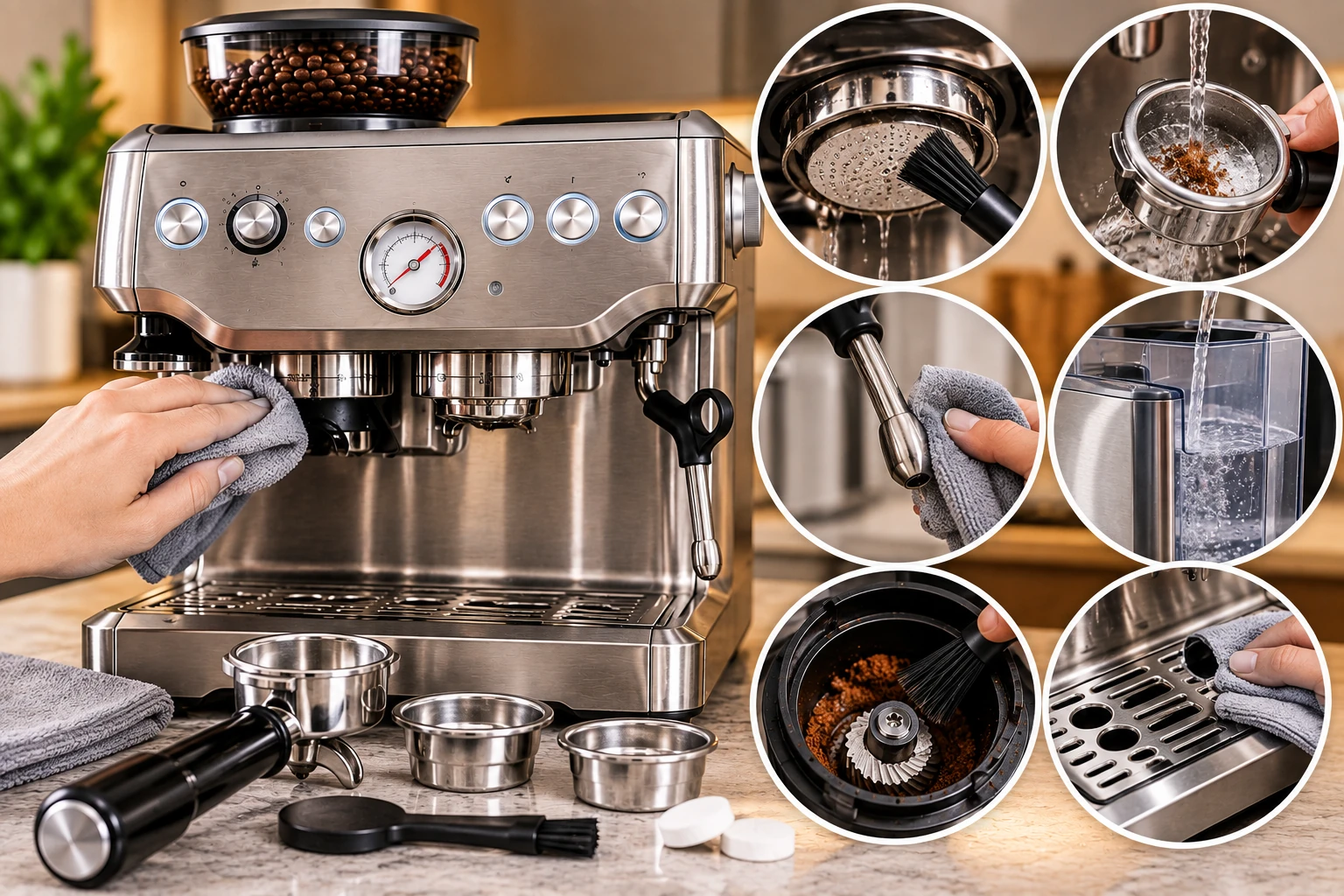

There is a Breville Espresso Machine Cleaning Guide that can help you keep your machine clean, get better coffee, and avoid common issues like slow water flow, bitter espresso, clogged filter baskets, and milk residue buildup. No matter if you have a Breville espresso machine with a built-in grinder or a separate espresso machine, it’s important to clean it regularly.
Minerals, coffee oils, fine grounds, and milk residue can get stuck in the machine over time. Cleaning these parts of your Breville espresso machine on a daily basis can make it work better and last longer.
Regular cleaning is an important part of maintaining any Breville espresso machine. For broader maintenance advice, see our Coffee Maker Maintenance: The Complete Descaling & Cleaning Guide.
Why Should You Clean a Breville Espresso Machine?
Every time you make espresso, a little bit of coffee is left behind. Around the group head, filter bin, portafilter, and other parts used for brewing, coffee oils can build up. When you use the steam wand, milk residue can also build up around the steam tip and wand.
Minerals from the water can also get stuck inside the machine. This buildup can stop the flow of water and make heating and filtration less effective.
Cleaning the system regularly gets rid of coffee and milk buildup, and descaling helps get rid of chemical buildup in the water system.
How Often Should You Clean a Breville Espresso Machine?
The rate is based on how often you use the machine. Cleaning the group head, portafilter, and steam wand should be something you do every day if you make a lot of coffee.
The coffee grounds container and drip tray should be cleaned and emptied often. To keep coffee oils from building up, the filter basket and portafilter also need to be cleaned often.
Following the care instructions for your specific Breville model will help you do a deeper clean. How often you descaling depends on how hard the water is and how often you use the machine, so make sure you follow the cleaning and descaling indicators or suggestions that came with your model.
Clean the Group Head
The group head is where the water goes through the coffee when the espresso is made. Around this area, coffee grounds can build up and make it harder for water to flow and seal.
If your model says to, turn off the machine and let the hot parts cool down enough to safely handle before cleaning.
Take off the portafilter and wipe off any coffee remains that you can see. Do a water cycle through the group head without coffee to get rid of any loose dirt.
To get a deeper clean, use only the cleaning products that the maker of your Breville model recommends and follow their instructions.
Clean the Portafilter and Filter Basket
The portafilter and filter basket are in direct touch with the coffee, so they can quickly pick up fine grounds and oils.
Take the filter basket out of the portafilter and use warm water to clean both parts. Get rid of the coffee residue around the basket and portafilter with the right cleaning brush.
Follow the manufacturer’s instructions carefully to clean the basket holes if they get clogged. Inconsistent espresso, slow extraction, or too much pressure can all be caused by a basket that is clogged.
Let the parts dry completely before using them again.
Clean the Steam Wand
Every time you steam milk, you need to clean the steam wand. If you leave milk residue on the wand, it can dry out quickly and be hard to get off.
Follow the directions that came with your Breville model to clean the steam wand after steaming the milk. Use a clean, damp cloth to wipe the outside of the wand while the residue is still new.
Watch out for the steam tip. If the holes get clogged, the steam may not work as well and the wand may make the water flow in strange ways.
If you leave dried milk on the steam wand for a long time, it can get harder to remove and could be bad for your health.
Clean the drip tray.
The drip tray collects water and small amounts of coffee residue while it is being used and when it is being cleaned.
Every so often, take out the drip tray and empty it before it gets full. If the care instructions for your model allow it, wash it with warm water and mild dish soap.
Also, clean the area around the tray because coffee grounds can stick to it and make the area smell bad.
Before putting the drip tray back in place, make sure it is completely dry and in the right place.
Clean the Coffee Grounds Container
Some Breville espresso machines with a built-in grinder have a place to put used coffee grounds.
Empty the jar often and rinse it to get rid of any coffee residue. Should you leave wet coffee grounds inside for too long, they may smell bad and become harder to clean.
Before putting the bottle back into the machine, dry it.
Clean the Built-In Grinder
As part of your regular maintenance, you should also clean the grinder if your Breville espresso machine has one built in.
Around the burrs, the grinder chute, and other parts of the machine, coffee grounds can build up. Fine particles and coffee oils can change the quality of the grinding and the amount that is used over time.
If you want to clean the grinder, turn off the machine and unplug it. Follow the directions for your particular model to take off the parts that can be reached, and then use the right grinder brush to get rid of any loose grounds.
Do not put water in the motor or blade area. Dry out any electrical parts that you take off and put back on correctly after cleaning.
Clean the Grinder Chute
Over time, the chute of the grinder can gather small pieces of coffee. This buildup could make the roots fall out of the chute unevenly or become squished together inside the chute.
Using the right cleaning brush, get rid of any small grounds that are easy to reach. Follow the care instructions that came with your Breville model to clean the chute.
Keeping the chute clear can help you get consistent coffee doses and lower the risk of the grinder getting clogged.
Clean the Water Tank
Also, you should clean the water tank often. Get rid of the rest of the water and wash the tank with clean water.
If you see mineral deposits around the tank, clean the area according to the care directions that came with the tank. Do not use strong chemicals that are not safe for the machine.
Before using the espresso machine, always fill up the tank with fresh water and make sure it is in the right place.
Descale Your Breville Espresso Machine
Cleaning gets rid of coffee and milk stains, and descaling gets rid of mineral buildup in the water system.
Salt and other minerals can get stuck in the machine from hard water. This buildup can make it harder for water to flow, heat, and be extracted over time.
When your machine tells you that it needs to be descaling, follow the steps that come with your Breville model. Complete the whole cycle and use the right descaling solution.
Following the manufacturer’s instructions, rinse the machine well with fresh water after descale.
What Is the Difference Between Cleaning and Descaling?
Cleaning and getting rid of scale are two different things.
Cleaning is mostly about getting rid of coffee grounds, oils, milk deposits, and other buildup on the surface or in the heating area. The process of descaling removes mineral buildup from inside the machine’s water system.
It’s possible that you’ll need to clean your machine more often while descaling it less often. When to do it relies on your machine, how often you use it, and the quality of the water.
How to Run a Cleaning Cycle
Some Breville espresso machines have an automatic cleaning cycle that can use a cleaning tablet or another method that has been approved by Breville.
Make sure you know how to use your specific model before you start the cycle. If needed, put in the right cleaning tool or tablet, and then follow the machine’s steps to start the cleaning program.
Do not use cleaning products for your home instead of the ones that come with your espresso machine. After the cycle is over, rinse the machine as directed before making the coffee.
Clean the Shower Screen
During extraction, the shower screen spreads water over the coffee puck. Coffee grounds can build up on the surface and change how the water moves through it.
Use the cleaning method that came with your Breville to get rid of any dust that you can see. Try not to break or bend the screen.
When you’re making espresso, a clean shower screen helps the water spread out more evenly.
How to Remove Coffee Oil Buildup
Coffee oils naturally build up on things that come in touch with espresso. If you smell strong stale coffee or taste bitter coffee even after changing the beans, it may be because the parts used to make the coffee are dirty.
Regularly clean the portafilter, filter basket, group head, and any other parts that can come into touch with coffee. For a deeper clean, use a cleaning product made for your Breville model that is allowed for espresso machines.
After cleaning, make sure all parts are well rinsed.
How to Clean a Breville Espresso Machine Without Damaging It
It is best not to use rough cleaners, harsh chemicals, or metal tools on surfaces and parts unless the manufacturer says to.
Electrical parts should not be submerged in water. Dry out the motor and any other electrical parts of the grinder.
Follow the directions for your specific machine when taking out burrs, filter baskets, screens, or other parts. Don’t force anything that feels stuck.
Cleaning often is important, but using the right method is even more important.
Signs Your Breville Espresso Machine Needs Cleaning
Several changes in how the machine works can mean that it needs to be cleaned. It’s possible that the pressure will change, the espresso will flow more slowly, or the coffee will taste bitter or old for no apparent reason.
It’s also possible to see less steam coming out of the wand, milk powder around it, uneven grinding, or a bad smell coming from the drip tray or coffee grounds container.
These symptoms don’t always mean that the machine needs to be cleaned, but they are good reasons to check and fix the parts that are affected.
When to Seek Professional Service
Cleaning your machine regularly can fix a lot of maintenance issues, but not all machine problems are caused by dirt or buildup.
If your Breville espresso machine leaks inside, won’t heat up, keeps tripping the circuit breaker, smells like burning, or keeps breaking down after being cleaned and descaling, you may need to have a professional look it over.
You should not open the machine to fix electrical or pressure parts unless you know what you’re doing.
Final Thoughts
Sticking to the steps in the Breville Espresso Machine Cleaning Guide can help your machine work well and your coffee taste new. Cleaning the group head, portafilter, filter basket, steam wand, drip tray, water tank, and grinder as directed by your model and how you use it is important.
Keep in mind that cleaning and descaling are not the same thing. Cleaning gets rid of coffee and milk buildup, and descaling helps get rid of chemical buildup in the water system.
You can keep your Breville espresso machine ready for your next cup of coffee by giving it regular care and using the right cleaning products. This will keep the water flowing well and prevent buildup.







