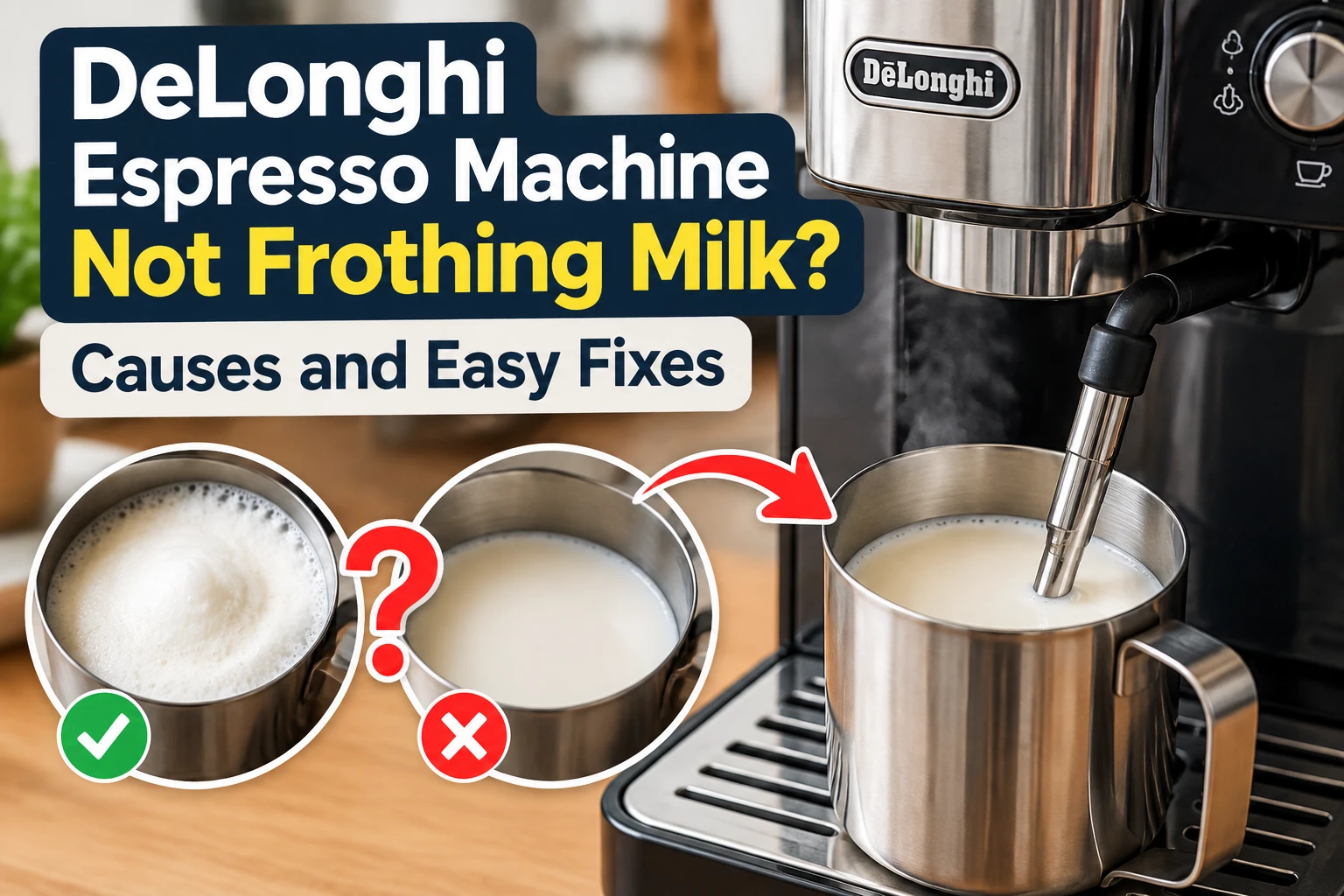

DeLonghi Espresso Machine Not Frothing Milk? Causes and Easy Fixes
With a DeLonghi espresso machine, you can make coffee at home that tastes like it came from a café. But it can be annoying when the milk frother stops making fluffy foam out of nowhere. There are a lot of problems that users have, like weak steam, no milk foam, watery froth, or a steam stick that only gives off hot water instead of steam.
If the frothing on your DeLonghi espresso machine isn’t working right, it’s probably because the steam holes are clogged, the milk temperature is wrong, the steam pressure is too low, parts are dirty, or you’re using the wrong frothing method. Most issues with milk foaming can be fixed easily at home by following a few easy steps.
If your DeLonghi espresso machine isn’t foaming milk, this guide will show you the most usual causes and how to fix each one.
Why Is My DeLonghi Espresso Machine Not Frothing Milk?
The steam wand on a DeLonghi espresso machine forces hot steam through it to make milk foam. While the milk is heated, the steam adds air to it, which gives it the creamy texture that cappuccinos and lattes need.
If the machine doesn’t make enough steam or the steam doesn’t go through the wand properly, the milk won’t get thick and foamy. Instead, it will stay flat and liquid.
Mineral buildup in the steam wand, dirty frothing attachments, using the wrong kind of milk, not heating the machine enough, or problems with the steam system are all common reasons why this happens.
The Steam Wand Is Blocked or Dirty
A steam wand that is stuck is one of the main reasons a DeLonghi espresso machine stops foaming milk.
There may be milk residue inside or around the steam tip after every use. Over time, dried milk particles get stuck in the small steam holes, making it harder for steam to move. If the machine can’t let too much steam escape, it might make weak foam or none at all.
To fix this, turn off the machine and let the steam gun cool down. Take off the frothing attachment if your model has one, and use warm water to clean everything. Carefully clear out the steam holes with a small cleaning pin or needle.
Once the wand is clean, run steam through it for a few seconds without milk to get rid of any leftover gunk.
The Machine Does Not Have Enough Steam Pressure
To foam milk, you need strong and steady steam pressure. If your DeLonghi machine isn’t fully hot, the steam it makes might not be strong enough to make foam.
After setting the machine to the right temperature, wait until it’s ready to froth milk. A lot of people start heating as soon as the coffee is brewed, but espresso machines need more time to build up steam pressure.
Start the machine up in steam mode and wait for the steam light to turn on. Then let out a little steam before putting the wand into the milk. This gets rid of the water that has collected inside the wand, which lets stronger steam into the milk.
You Are Using the Wrong Milk
What kind of milk you use makes a big difference in how good the foam is.
Proteins in milk help trap air bubbles, so milk with more proteins usually makes better microfoam. Most of the time, whole milk makes foam that is rich and creamy. Skim milk, on the other hand, can make more foam that is lighter in texture.
Plant-based milks like soy, almond, or oat milk may also work, but the results will depend on the brand. Some plant milks are made to work better with barista-style coffee and make better foam.
Use cold milk straight from the fridge and don’t fill the milk pitcher too much for the best results. Since milk expands when it foams, the pitcher should only be about two-thirds full most of the time.
The Milk Temperature Is Incorrect
When milk foams, temperature is very important.
The milk might not foam enough if it is too cold. The proteins in the milk break down when it gets too hot, so the foam goes away.
Most of the time, milk should be between 60°C and 65°C for espresso drinks. People often mess up by heating the milk too much, making it too hot to touch.
If you’re steaming by hand, stop heating the milk pitcher when it gets hot enough to hold for a few seconds.
The Frothing Technique Is Incorrect
Even if the DeLonghi machine is set up properly, bad technique can keep you from getting good foam.
When you first start foaming, the steam wand should be placed just below the top of the milk. This makes a soft sound like air being injected. Once there is enough air in the milk, drop the wand a little further into it to make a smooth swirling motion.
If the wand is too deep, it will only heat the milk and not add air. Microfoam that is smooth and creamy doesn’t form if it is too close to the top.
Positioning and practice make a big difference in the pattern that you get in the end.
The Steam Wand Needs Descaling
Minerals from the water can settle in espresso machines over time. This happens a lot in places with hard water.
If the internal steam system gets clogged, the steam pressure can drop, which can make it harder to foam milk. Clean the outside of the wand. If that doesn’t fix it, your DeLonghi machine might need to be descaling.
Use a descaler that DeLonghi recommends and follow the guidelines that come with your model. Descaling the machine on a regular basis helps keep the steam working well and makes it last longer.
The Steam Function Is Not Activated Properly
Before steam can come out of some DeLonghi espresso machines, you have to do certain things.
The steam wand might not get enough power if the machine is still making coffee. Make sure the machine is set to steam mode and wait for the steam-ready light to show up.
If your model has a steam button or dial, make sure it’s fully turned on before you try to foam milk.
The Frothing Attachment Is Damaged
A Panarello frothing attachment or something similar is used on a lot of DeLonghi machines. It’s easier to foam with these attachments, but they can get clogged or broken over time.
Take off the connection and look inside all the small holes. Thoroughly clean every part that can be taken off and put back on properly.
If the connection is broken or cracked, replacing it might get the frothing back to normal.
The Water Tank Level Is Too Low
To make steam, you need water. The machine might not be able to make enough steam if the water tank is almost empty.
Check the water tank and add more water if it’s empty. Also, check that the tank is properly put into the machine. If the tank is not in the right place, it can stop the flow of water.
How to Fix DeLonghi Espresso Machine Not Frothing Milk: Quick Troubleshooting Steps
First, clean the steam wand and get rid of any milk that is still on it. Before you foam, make sure the machine has hit steam temperature. Don’t heat up fresh, cold milk too much. Make sure that the steam stick is in the right place inside the milk pitcher. If the problem keeps happening, run a descaling cycle and check the frothing attachment for any clogs.
How often should you clean the DeLonghi Steam Wand?
After every time you foam milk, you should clean the steam wand right away. If you let milk residue dry, it gets harder to clean and can finally stop the flow of steam.
Depending on how often you use the machine, you should clean the removable frothing parts more thoroughly every so often.
How often you descaling depends on how hard the water is and how often you use the machine, but most people find that every couple of months is enough.
When Should You Contact DeLonghi Support?
If you clean, descale, and check the steam settings on your DeLonghi espresso machine but it still doesn’t foam milk, the problem may be with an internal part.
Some internal problems that could happen are a broken steam valve, a problem with the heating element, clogged internal tubes, or problems with the pressure. This kind of check may need to be done by a professional.
Final Thoughts
A dirty steam wand, a blocked frothing attachment, the wrong milk temperature, or not enough steam preparation are some of the most common reasons why a DeLonghi espresso machine won’t foam milk.
Your DeLonghi machine can keep making smooth, creamy milk foam for years if you clean it regularly, keep it in good shape, use the right milk, and steam it the right way.
If your machine stops foaming all of a sudden, clean it and check the steam before you think about fixing it. You don’t have to buy a new machine to fix most problems with milk foaming.