
Follow these essential appliance safety tips at home to prevent electrical fires, avoid shocks, protect your family
Home appliances help us cook, clean, store food, and do other things around the house that make daily life easier. But wrong use, poor maintenance, broken electrical connections, and faults that aren’t fixed can pose safety risks. Simple appliance safety tips can help keep your family safe, lower the risk of electrical fires, keep your appliances in good shape, and keep your family from getting hurt.
Knowing how to use a refrigerator, washing machine, microwave, dishwasher, oven, or air fryer safely is important no matter what you use them for. Many common home device dangers can be avoided by inspecting them regularly, installing them correctly, and fixing them when they break.
Read the Manufacturer’s Instructions Before Use
Each appliance comes with its own set of instructions for how to use it, safety tips, and upkeep suggestions. Before you use a new appliance, reading the manufacturer’s manual helps you understand how to use it, how much it can hold, how to put it, and any possible dangers.
Always follow the manufacturer’s instructions for how to use your device and only use accessories that are made to work with it.
You shouldn’t change electrical parts or use an appliance for something it wasn’t made for. If you’re not sure how a feature works, read the manufacturer’s instructions before playing around with settings you don’t know how to use.
Keeping manuals and warranty information in a place that is easy to get to can also help you find troubleshooting steps and get professional help when you need it.
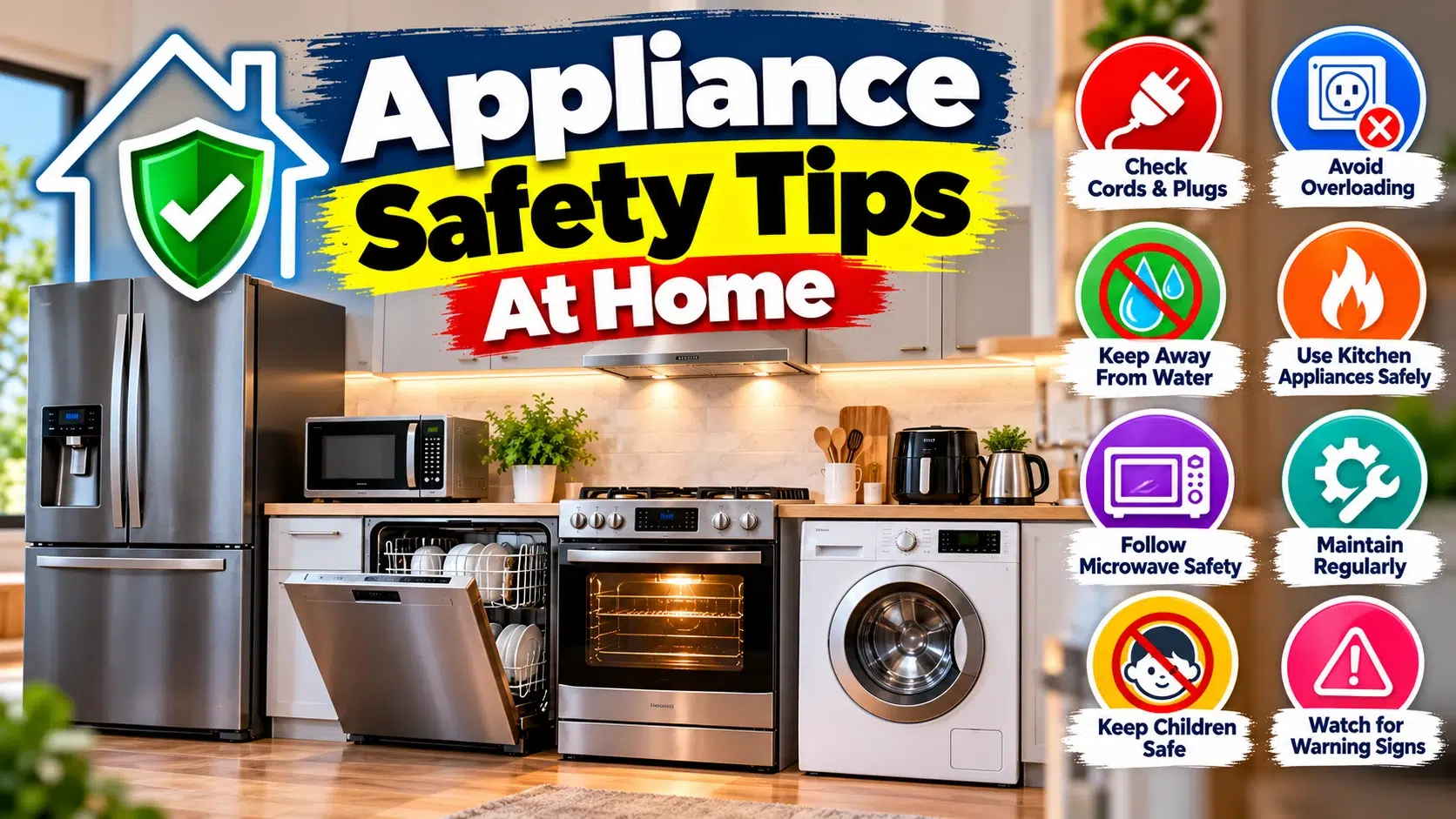
Inspect Electrical Cords and Plugs Regularly
Electrical cords and plugs that are broken can cause major problems, like fire and electric shock. Every so often, look at the lines that connect your appliances for cuts, exposed wires, melted insulation, loose connections, or signs that they are getting too hot.
Do not use a device that has a broken cord or plug. Don’t use regular adhesive tape to make temporary fixes, and don’t run cables under rugs or through places where they could get damaged or crushed. Electrical cords should not be near water, hot surfaces, or sharp edges.
If a plug or socket gets very hot, sparks, or smells like it’s on fire, stop using the appliance if it’s safe to do so and have a trained electrician look at it. Fixing broken electrical wires is not something that you should do on a regular basis.
Avoid Overloading Electrical Outlets
If you plug too many high-power devices into one outlet or extension board, the circuit could become overloaded. This could lead to overheating, circuit breakers tripping, or fire risks, especially when appliances like heaters, ovens, kettles, and microwaves use a lot of power.
Use outlets and electrical circuits that can handle the amount of power the device needs. When choosing extension cords or power strips, make sure you follow the manufacturer’s directions and any local electrical safety rules. Depending on how they are made and the rules in your area, high-power appliances may need their own circuits.
Do not ignore circuit breakers that trip over and over or use makeshift adapters to connect plugs that are not compatible. An experienced electrician can tell you if the circuit, outlet, or device needs work.
Keep Appliances Away From Water
Putting water and power together can be very dangerous. Plugs, power outlets, and other electrical items should not be near sinks, wet floors, bathtubs, or other wet areas.
Keep the base and cord of any countertop appliance you use dry while you use it, like a kettle, coffee maker, blender, or other appliance. If your hands are wet, don’t touch a plug or switch. Should water spill near an electrical appliance, you should not touch it or stand in the water while it is plugged in.
Proper grounding and residual-current protection, if required by local laws, can add extra safety to appliances that are put near sinks or in laundry rooms. If an appliance gets wet inside or seems electrically unsafe, turn off the power only if it’s safe to do so and get help from a professional.
Use Kitchen Appliances Safely
It’s important to be careful when using kitchen tools that have heat, electricity, moving parts, or sharp parts. Things that can catch fire, like paper towels, boxes, and cleaning cloths, should not be near hot appliances. Never leave a cooking gadget unattended when it needs to be watched.
Wear oven mitts when you touch hot cookware, and let cooking surfaces and heating elements cool down before you clean them. Keep kids away from ovens, stoves, kettles, and air fryers that are very hot. Make sure that the appliances are set up on stable surfaces that have enough space for air flow as directed by the maker.
Do not use a device that does not have any safety guards, doors that are broken, or controls that do not work. If a cooking appliance starts to smell funny, get too hot, spark, or shut down repeatedly, you should stop using it and get it checked out.
Follow Microwave Safety Precautions
Microwaves make it easy to heat food, but you need to use the right containers and make sure the door part isn’t broken. Only use cookware that says it’s safe for the microwave, and don’t put metal objects in it unless the maker says it’s okay.
If the door, hinges, latch, or seal on your microwave is broken, do not use it. Follow the manufacturer’s advice to keep the inside clean and get rid of any food residue. When you heat liquids, make sure you use the right containers and be careful when you take them off, because liquids that are too hot can suddenly spill or explode.
Never use a microwave that is empty unless the manufacturer says it’s okay to do so. Most importantly, don’t take off the microwave’s top shell or try to fix the high-voltage parts inside it yourself. Even after the device is unplugged, these parts can still carry a dangerous electrical charge.
Maintain Proper Ventilation Around Appliances
Many appliances make heat while they’re working and need enough airflow to be safe. Appliances that make heat, like refrigerators, freezers, ovens, dryers, and more, should have the space that their makers say they need.
Ventilation holes that are blocked can make things get too hot, work less well, or put extra stress on parts. Do not push appliances against walls too hard if doing so would stop airflow. Dust, boxes, curtains, and kept things should not be in the vents.
Gas appliances and equipment that burns fuel need extra care when it comes to ventilation and installation. Follow the manufacturer’s instructions and any local rules. Also, get a professional to look at it if you think there is a problem with the air or if you smell something burning that doesn’t smell right.
Clean and Maintain Appliances Regularly
Overheating, blockages, leaks, and mechanical problems are less likely to happen if you clean and maintain it regularly. As directed by the maker, clean the door seals on your refrigerator, clear out dust from areas where air can flow, and change the filters in your dishwasher regularly.
For dryers, make sure to clean the lint filter after every load and keep the exhaust system in good shape as directed. Lint that builds up can block airflow and make a fire risk. To keep residue and bad smells from building up, you should also clean the soap drawers, filters that can be reached, and door seals on your washing machine as directed.
Disconnect an appliance from power and turn it off before cleaning it if the manufacturer’s instructions say to do so. Let surfaces that are hot cool down, and never spray water or cleaning products straight into lights or controls. Professionals should be hired to do any repairs or maintenance on the inside that involve dangerous parts.
Keep Children Away From Dangerous Appliances
Children might not know how dangerous it is to touch hot surfaces, plugs, moving parts, or cleaning products. Put things away so they can’t be pulled down easily, and keep cords in place so kids can’t pull on them.
If the manufacturer offers child locks, use them. Also, keep an eye on your kids when they are near ovens, stovetops, blenders, food processors, and other potentially dangerous appliances. Keep detachable blades, sharp accessories, and cleaning chemicals for appliances out of reach of children.
Older kids should be taught that appliances are not toys and should only be used with permission and proper supervision. Do not think that a device is safe just because it is turned off; hot surfaces and some internal parts may still be dangerous for a while after they have been used.
How to Know When to Unplug a Device
For some appliances, like small countertop appliances that make heat or have controls that are easy to reach, unplugging them when they’re not in use may be a good idea. When taking a plug out, follow the manufacturer’s instructions and don’t pull on the line.
When the directions say to, always turn off a device before unplugging it. If the plug is broken, the outlet is wet, or there are sparks, don’t touch it. Instead, get help from a trained expert.
Large appliances, like refrigerators, usually need to be plugged in and running to do their jobs. Pay attention to how you use appliances correctly, keeping electrical connections in good shape, and disconnecting equipment as directed before cleaning or servicing it.
Learn to spot warning signs and make repairs right away
Strange sounds, burning smells, visible sparks, leaking water, broken insulation, and circuit breakers going off and on over and over again could all be signs of a problem with an appliance. If you ignore these warning signs, you could cause more damage or put people in danger.
If a device acts strangely, you should stop using it and look at the manufacturer’s instructions on how to fix it. Do not keep turning off and on a circuit breaker or restarting an appliance that keeps shutting down. If the problem is with the electrical wiring, gas, overheating, or parts inside the machine, you should have a qualified technician look it over.
When deciding which repair option to go with, make sure you understand the problem and how much it will cost. When older machines keep breaking down for safety reasons, it might be smarter to get a new one than to keep paying for repairs.
Prepare for Appliance Emergencies
Knowing what to do in an appliance situation can help keep people safe and keep property from getting damaged. Make sure everyone in the house knows where the electricity distribution board is and how to call for help in an emergency. Make sure smoke alarms are set up and kept according to the safety rules in your area.
If something electrical or grease-based catches fire, do not use water to put it out. If there is immediate danger, get out of the area and call 911. Use a fire extinguisher only if the fire is small, you know how to use it, and there is a clear way to get out of the building.
If you smell gas, stay away from flames and electrical switches, leave the area, and call the right emergency gas service from a safe place. Do not try to fix a gas leak by yourself.
Conclusion
Proper installation, careful use, regular upkeep, and quick attention to warning signs are the first steps to making sure your home appliances are safe. Check the cords, make sure the outlets aren’t overloaded, keep appliances away from water, make sure there is enough air flow, and follow the instructions from the manufacturer.
People who live in homes with kids should be extra careful around electrical hookups, moving parts, and hot surfaces. If a device breaks down badly, you should stop using it and get professional help instead of trying to fix it yourself, which could be dangerous.
You can help protect your family, cut down on avoidable dangers, and keep your home appliances working well for longer if you make appliance safety a regular part of your life.