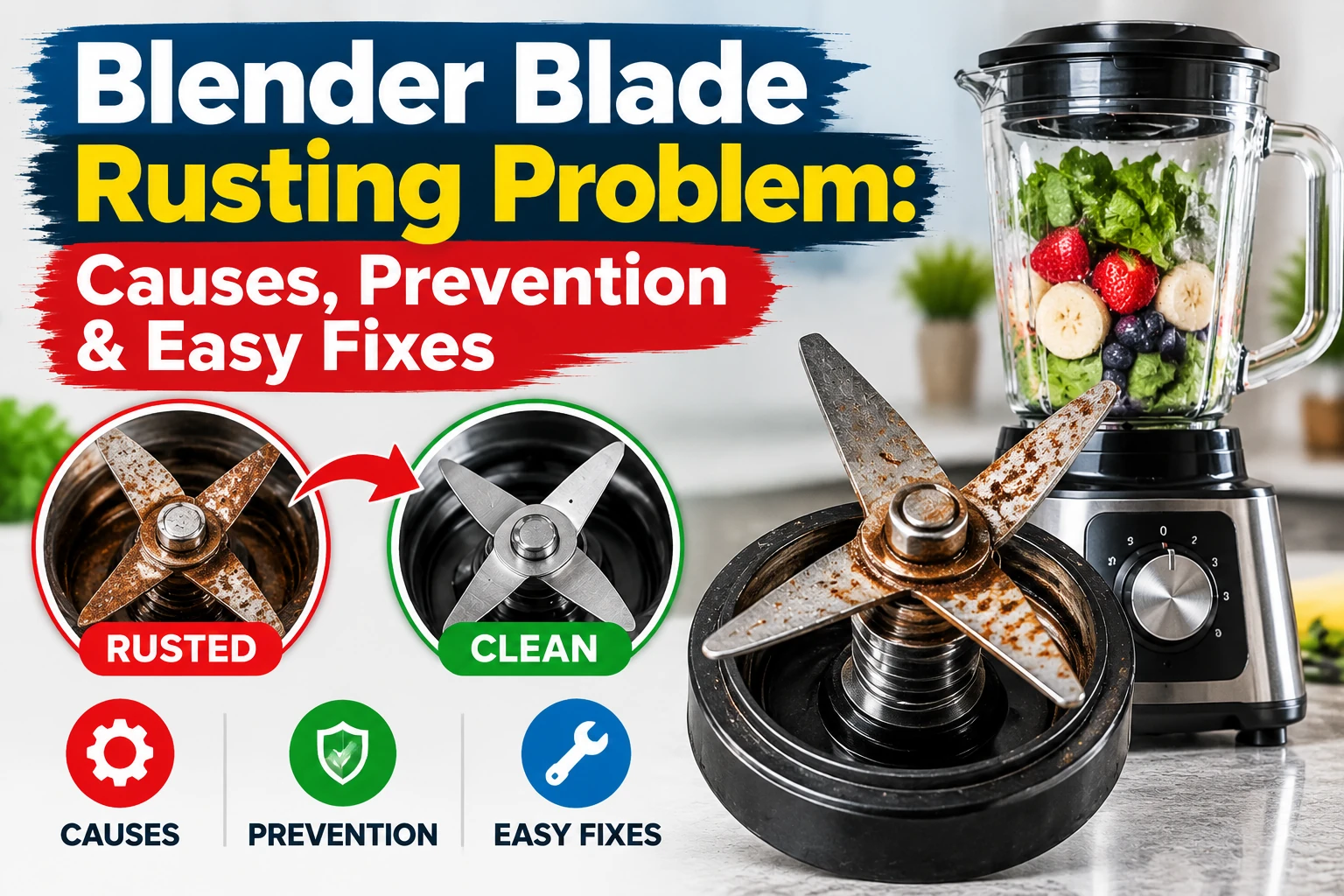

Blender Blade Rusting Problem: Causes, Prevention & Easy Fixes
A blender blade is one of the most important parts of your appliance. It is responsible for crushing, mixing, and blending ingredients smoothly. However, over time, you may notice rust spots, discoloration, or corrosion on the blender blades.
A rusty blender blade not only makes the blender less effective, but it can also be a sign that the blade assembly is breaking down. Rust can spread and weaken the metal, making the blades less useful if it is not treated.
Whether you use a Ninja, Vitamix, Nutribullet, Blendtec, Oster, or another blender brand, this guide explains Blender Blade Rusting Problem: Causes, Prevention & Easy Fixes.
Why Is My Blender Blade Rusting?
Blender blades usually rust because of:
- Long exposure to moisture
- Poor drying after washing
- Damaged protective coating
- Harsh cleaning chemicals
- Low-quality metal parts
- Food residue buildup
- Dishwasher damage
- Aging blade assembly
Let’s explore each cause and solution.
1. Leaving the Blade Wet After Cleaning
The most common cause of rust is moisture.
After washing, water can remain around:
- Blade edges
- Blade shaft
- Bearings
- Small gaps in the assembly
Constant exposure to water can eventually cause corrosion.
Fix:
After cleaning:
- Rinse the blade assembly.
- Shake off excess water.
- Dry it completely with a clean towel.
- Allow it to air dry before storage.
Never store a blender while the blade assembly is still wet.
2. Dishwasher Cleaning Can Cause Rust
Many people put blender parts in the dishwasher for convenience, but high heat and strong detergents can damage blade materials.
Some blender manufacturers recommend hand washing certain blade assemblies to protect components and extend their lifespan. Always follow the cleaning instructions provided by the manufacturer.
Example: Vitamix Cleaning & Care Guide
Dishwashers may:
- Remove protective coatings
- Cause discoloration
- Increase corrosion risk
- Damage seals
Solution:
Whenever possible:
- Wash blades by hand.
- Use mild dish soap.
- Avoid harsh dishwasher cycles.
Always check the manufacturer’s cleaning instructions.
3. Damaged Blade Coating
Some blender blades have protective finishes that help prevent corrosion.
Over time, this coating can wear away due to:
- Scrubbing with abrasive materials
- Hard cleaning brushes
- Frequent dishwasher use
- Normal wear
Once the protective layer is damaged, the metal underneath becomes more vulnerable.
Fix:
Avoid:
- Steel wool
- Abrasive cleaners
- Rough scrubbing pads
Use a soft sponge instead.
4. Food Residue Left on Blades
Small amounts of food can remain around the blade area after cleaning.
Common residue includes:
- Fruit acids
- Salt
- Dairy products
- Vegetable particles
These substances can accelerate corrosion.
Solution:
Clean carefully around:
- Blade edges
- Bottom of the blade assembly
- Sealing areas
A small brush can help remove trapped food particles.
5. Low-Quality or Worn Blade Material
Not all blender blades are made with the same quality of metal.
High-quality blenders usually use durable stainless steel, but cheaper replacement blades may corrode faster.
Signs of poor-quality blades:
- Rust appears quickly
- Metal discoloration
- Blade becomes dull
- Corrosion around joints
Fix:
Use genuine or manufacturer-approved replacement blade assemblies.
6. Using Harsh Cleaning Products
Strong chemicals can damage stainless steel surfaces.
Avoid:
- Bleach-based cleaners
- Strong acids
- Abrasive powders
These can weaken the metal surface and encourage rust.
Better Option:
Use:
- Warm water
- Mild dish soap
- Soft cleaning tools
7. Blender Blade Bearing Area Is Rusting
The blade assembly contains moving parts that may include bearings and seals.
Rust around this area can be more serious because it may affect rotation.
Signs include:
- Grinding noise
- Blade resistance
- Leaking from the bottom
- Difficulty spinning
If rust reaches internal components, replacing the blade assembly is usually the safest option.
Can You Remove Rust From Blender Blades?
Small surface rust may sometimes be removed.
Method:
- Mix baking soda with a small amount of water.
- Apply gently to the rusty area.
- Rub lightly with a soft brush.
- Rinse thoroughly.
- Dry completely.
Avoid aggressive scrubbing because it can damage the blade surface.
When Should You Replace a Rusty Blender Blade?
Replace the blade assembly if:
- Rust is deep or spreading
- Blade edges are damaged
- The blade is loose
- There is leaking around the base
- The blade does not spin smoothly
- Rust is near bearings or seals
A damaged blade can affect blending performance and may eventually damage the motor.
How to Prevent Blender Blade Rust
Follow these simple maintenance tips:
Dry After Washing
Never leave the blade wet after cleaning.
Clean Immediately After Use
Food residue can accelerate corrosion.
Avoid Harsh Chemicals
Use gentle cleaning methods.
Store Properly
Keep blender parts in a dry place.
Inspect Regularly
Check blades for:
- Rust spots
- Damage
- Loose parts
- Wear
Blender Blade Rust vs Normal Discoloration
Not every dark mark is rust.
Sometimes blades develop:
- Water stains
- Mineral deposits
- Food discoloration
Rust usually appears as:
- Orange or brown spots
- Rough texture
- Flaking metal
If you are unsure, clean the blade and inspect the surface carefully.
Is a Rusty Blender Blade Safe to Use?
A small surface spot may not immediately affect operation, but a heavily rusted blade should not be used.
Avoid using the blender if:
- Rust is peeling
- Metal is corroded
- Blade strength is affected
- Pieces of metal are coming off
Replacing a damaged blade is safer than risking further problems.
Final Thoughts
A blender blade rusting problem is usually caused by moisture, improper cleaning, dishwasher exposure, or worn protective coatings.
The best prevention is simple:
- Wash blades properly
- Dry them completely
- Avoid harsh cleaners
- Replace damaged blade assemblies when needed
Taking care of your blender blades helps maintain performance and extends the life of your appliance.
Whether you own a Ninja, Vitamix, Nutribullet, or another blender, regular maintenance can keep your blades sharp, clean, and rust-free.
Related Article:








1 comment