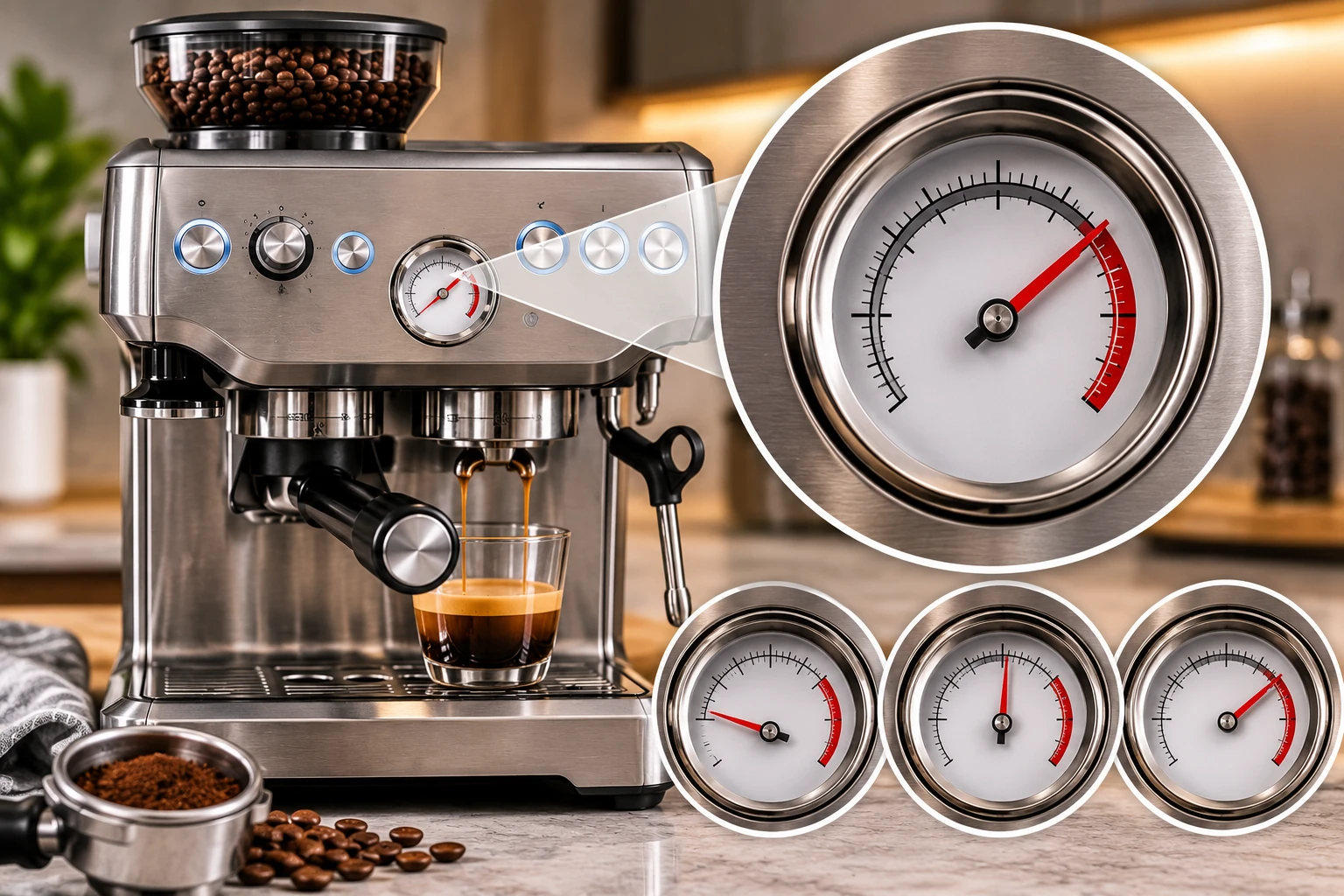
Breville Barista Express Pressure Gauge Problem: Causes and How to Fix It
If you’re having trouble with your Breville Barista Express pressure gage, you might see that it stays at zero, reads too high or too low, changes while the coffee is being extracted, or doesn’t move at all. The pressure gage tells you useful things about the espresso extraction process, but a strange reading doesn’t always mean the gage is broken. The good news is that it’s easy to fix many problems that are caused by pressure. You can often figure out what’s wrong before calling a professional to fix it by checking the coffee settings, cleaning the machine, and trying the water flow.
What Does the Breville Barista Express Pressure Gauge Show?
The pressure gage shows how much pressure is being created while the espresso is being brewed. The reading can tell you if the water is moving through the coffee puck with the right amount of resistance.
Please note that the gage is not the only way to judge the quality of the espresso. It should also be used to help fix problems. The amount of coffee used, the grind size, the tamping, the extraction time, and the amount of espresso made can also affect how good a shot is.
If the reading on the gage suddenly changes from what it usually shows, check the coffee setup first before you think the pressure gage has broken.
Breville Barista Express Pressure Gauge Stays at Zero
If you try to make espresso but the pressure gage stays at zero, the first thing you should check is that water is moving through the coffee.
If water flows freely through the group head but the gage doesn’t move when the oil is extracted, there may be a problem with the gage or its pressure pathway. When the portafilter doesn’t get much or any water, on the other hand, it could be because of something else.
Make sure the water tank is full and in the right place. Make sure the filter box is clean and that the portafilter is set up correctly.
Also, check the amount of coffee and how it’s ground. If the setting is wrong, it can change the pressure that is made during extraction.
Pressure Gauge Is Too Low
If water moves through the coffee puck too quickly, the reading may be low. Coffee that is ground too finely is often to blame.
When the grind is too big, water can move through the coffee quickly without being slowed down enough. It’s possible for the espresso to taste weak, thin, or not extracted enough.
Try making a small change to the grind to make it smaller, and then make another shot. You can see how the extraction works by making small changes over time.
Resistance can also be changed by how much coffee is in the basket and how it is spread out. Before you tamp, make sure the coffee is spread out evenly.
Pressure Gauge Is Too High
If the pressure gage goes up a lot while the coffee is being extracted, it means that the coffee may be resisting the water too much.
If the grind is too fine, it can stop the flow of water and make the pressure too high. The same thing can happen if there is too much coffee in the basket or if the coffee puck is too tightly packed together.
Check the amount and try a slightly coarser grind. Use even tamping pressure and make sure the coffee is spread out properly.
Water flow can also be slowed down by a clogged filter basket. Make sure the basket is clean, and then test the machine again.
Breville Barista Express Pressure Gauge Not Moving
Check to see if the machine is normally making water if the gage doesn’t move at all.
Without coffee in the portafilter, run water through the group head. Put the portafilter in place and try another extraction if the water flows normally.
If the gage doesn’t move at all when the machine is building up extraction pressure, the mechanism or link that holds the gage may need to be checked.
Please don’t try to take the machine apart unless you know how to do it properly. It can be hard to get to internal parts that are controlled by electrical or pressure systems.
Pressure Gauge Jumps Around
If the pressure gage moves quickly or changes during extraction, it could mean that the water flow isn’t steady.
First, look at the coffee grind and how it’s spread out. When coffee isn’t spread out evenly, it can make holes in the puck that let water flow through some places more easily than others.
A filter basket that is only partly blocked can also make the flow uneven. After cleaning the basket and group head, do the extraction again.
If the gage keeps acting strangely with different coffee and a clean machine, it might need to be looked at by a professional.
Clean the Filter Basket
One of the easiest things to miss when trying to figure out what’s wrong with the flow is a dirty filter basket.
Over time, coffee oils and small bits can get stuck in the basket’s small holes. Even if water can normally move through the basket, the pressure that pulls it out can change.
Take the basket out of the portafilter and clean it really well. Do what the instructions say to clean the Barista Express, and make sure the basket is empty before you use it again.
Check the Coffee Grind
One of the most important things that affects pressure is the coffee grind.
It’s possible for the pressure to stay low if the coffee is too “coarse.” If the coffee is too fine, water may have a hard time getting through the coffee puck, and the pressure may build up too much.
Instead of making a big change, slowly adjust the blade. After each change, take another shot and watch both the pressure gage and the result of the extraction.
Also, new coffee can act differently than old coffee, so changes in the beans can make your normal not work as they should.
Check the Coffee Dose and Tamping
How much pressure the water faces depends on how much coffee is in the basket. If you use too little coffee, the resistance may be low, but if you use too much coffee, the water flow may be slowed down.
Make sure you use the right basket and the same dose every time. Spread the coffee out evenly before you tamp it down to lower the risk of channeling.
Instead of focused on using the most force, tamp the coffee evenly. Too much pressure is not as important as being consistent.
Clean the Group Head
There may be coffee powder around the group head that can get in the way of the water flow and extraction.
Before you clean it, turn off the machine and let it cool down. Follow the manufacturer’s cleaning instructions and get rid of any coffee residue that you can see.
A clean group head helps keep the water flow steady and lets the portafilter seal properly.
Descale the Breville Barista Express
Mineral buildup can make the water move slower and damage the parts inside an espresso machine. Mineral buildups may cause the Barista Express to behave strangely during extraction if it hasn’t been descaled in a while.
Follow the steps that come with your machine to get rid of the scale. Make sure you use the right descaling product and finish the job.
After descale, follow the manufacturer’s instructions and give the machine a good rinse before using it again to make coffee.
Is the Pressure Gauge Actually Broken?
If a pressure gage doesn’t work even though water is flowing normally and the coffee puck is ready, it may be broken.
If you’ve tried different coffee, cleaned the filter basket and group head, made sure there is enough water, and changed the grind, but the gage is still acting strangely, either the gage itself or its pressure connection may need to be serviced.
A trained worker can look at the gage and the pressure parts that go with it without hurting the machine.
Can You Use the Breville Barista Express Without the Pressure Gauge?
Even if the pressure gage isn’t showing anything useful, the machine may still work. However, the gage is very helpful when making espresso.
Even if the gage doesn’t work, you can still judge the extraction by flow, extraction time, coffee dose, grind size, and taste. But if you want the machine to work as it should, you should check for a broken gage.
When to Contact a Professional
If cleaning, descaling, grinding, and testing the coffee dose don’t fix the pressure issue, consult an expert.
If the gage doesn’t work at all, the machine leaks, the pump acts strangely, or the machine has an electrical problem, you should get professional help.
Open the espresso machine only if you have previously repaired one. Electrical and pressurized parts inside the body can be dangerous.
Final Thoughts
If you’re having trouble with your Breville Barista Express pressure gage, it doesn’t always mean that the gage has broken. The coffee grind, dose, tamping, filter basket, or water flow can often change the pressure reading.
First, look for the most obvious reasons. Make sure the water tank is fitted correctly, clean the filter basket and group head, and slowly change the coffee grind. If the gage stays stuck or acts strangely after these checks, the pressure system and gage may need to be looked at by a professional.
Cleaning, descaling, and making espresso the same way every time can help keep the extraction stable and make the pressure gage easier to use as a troubleshooting tool.







