How to Store Coffee Beans (So They Actually Stay Fresh)
You can own a great burr grinder and a great coffee maker, and still end up with a flat, stale cup — if your beans have already lost their freshness before they hit the hopper. Storage is the quiet variable that undoes a lot of otherwise good coffee setups. Here’s what actually works.
The Four Enemies of Fresh Coffee
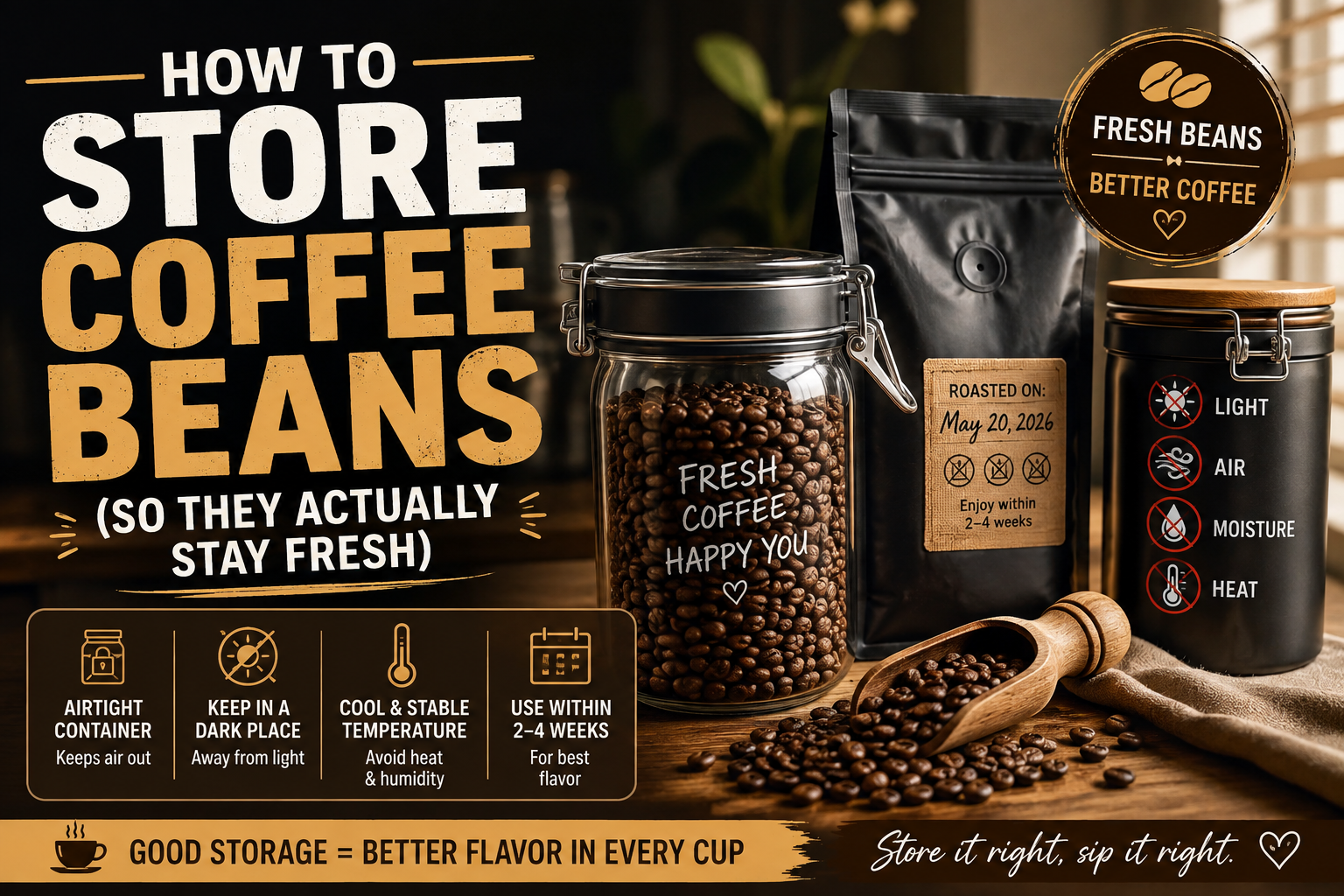
Once beans are roasted, they start degrading. Four things drive that process:
- Air (oxygen) — the main cause. Oxygen breaks down the oils and aromatic compounds in the beans, which flattens the taste and finally makes it stale or rancid.
- Moisture — Coffee is hygroscopic, which means it easily takes in water and smells from its surroundings. This can change the taste or, worse, lead to mold growth.
- Heat — It speeds up staling and can bring oils to the top of the bean, which makes it go rancid faster.
- Light —The smelly compounds that give coffee its flavor are broken down by sunlight, especially direct sunlight..
Every storage decision below comes back to minimizing exposure to these four things.
Use an Opaque, Airtight Container
Glass breaks down beans over time. Choose a jar made of ceramic, stainless steel, or powder coating that has a real airtight seal. To go even further, purpose-built canisters from companies like Airscape have an inner lid that can be compressed to push out extra air every time it’s closed. This is much better than a regular screw-top jar because it slows oxidation by a significant amount.
Size is also important. A container with a lot of empty room lets more oxygen reach the beans’ surface. Around 500ml is a good size for a container to keep a 12oz (340g) bag of beans in. Not a jar that holds a full kilogram.
Keep Beans Whole Until You Brew
If you can help it, never keep coffee that has already been ground. There is a lot more surface area for air to reach in ground coffee, and it can start to taste stale within 15 to 30 minutes of being ground. The most important thing you can do to make your coffee taste better is to buy whole beans and grind them right before you brew it. This is more important than almost every other storage tip on this page.
If you don’t have a grinder yet, our guide to getting a burr grinder has options for every price range.
Store Somewhere Cool, Dark, and Dry
The best place is in a cabinet or pantry that isn’t near your stove, dryer, coffee maker, or a window that gets a lot of sun. Heat sources and changes in temperature both speed up the staling process. Changes in temperature can cause condensation inside the container, which is the moisture you want to avoid.
For beans that you’ll use in a few weeks, all you need is water and a place out of direct light.
The Freezer Debate
People get lost on this one. If you’re going to use the beans every day, don’t put them in the freezer or fridge. Taking the container in and out of a cold place over and over again adds wetness and lets the beans smell everything else in there. You can freeze beans that you won’t be touching for weeks if you put them in small, airtight, one-time-use containers first, then freeze the ones you won’t use soon. Once a portion has thawed, you should never freeze it again.
Buy Smaller Amounts, More Often
Instead of getting a big bag “to save a trip,” buy enough for about one to three weeks at a time. The first few weeks after roasting are the best for coffee. If you buy beans in smaller batches more often, you can drink them when they are still near their best instead of beans that have been in a closet for two months. As a bonus, because you’re opening and closing a smaller container, it naturally limits how much air contact each batch gets.
Check the Roast Date, Not Just the “Best By” Date
Quality roasters print an actual roast date on the bag. Beans are generally best starting 24–48 hours after roasting, once they’ve had time to degas, and stay in a good flavor window for roughly two to four weeks after that. A “best by” date printed a year out isn’t a freshness indicator — it’s a shelf-stability guarantee. If a bag only has a best-by date and no roast date, that’s usually a sign it’s not from a specialty roaster.
Quick Freshness Checklist
- Opaque, airtight container — no clear glass on the counter
- Sized close to your bean quantity, not oversized
- Stored in a cool, dark cabinet, away from heat and light
- Beans kept whole; ground only right before brewing
- Purchased in small batches, ideally within a few weeks of roast date
- Freezer reserved for long-term backup, not daily-use beans
Frequently Asked Questions
How long do coffee beans actually stay fresh? Most whole beans taste their best within two to four weeks of the roast date, and are still reasonably good for a couple of months after that if stored well. Ground coffee has a much shorter window — ideally used within days.
Can I store coffee beans in the original bag? If the bag has a one-way degassing valve and reseals well, it’s a reasonable short-term option. For longer storage, transferring to a dedicated airtight, opaque container is more reliable.
Does refrigerating coffee beans keep them fresher? Generally no, for beans in daily use — condensation and odor absorption from a fridge tend to do more harm than the cooler temperature does good. Reserve cold storage for beans you’re not touching for weeks at a time, and portion them first.
Now that your beans are set up to stay fresh, make sure the rest of your setup matches: see our best burr coffee grinders guide and best coffee makers under $200 guide.