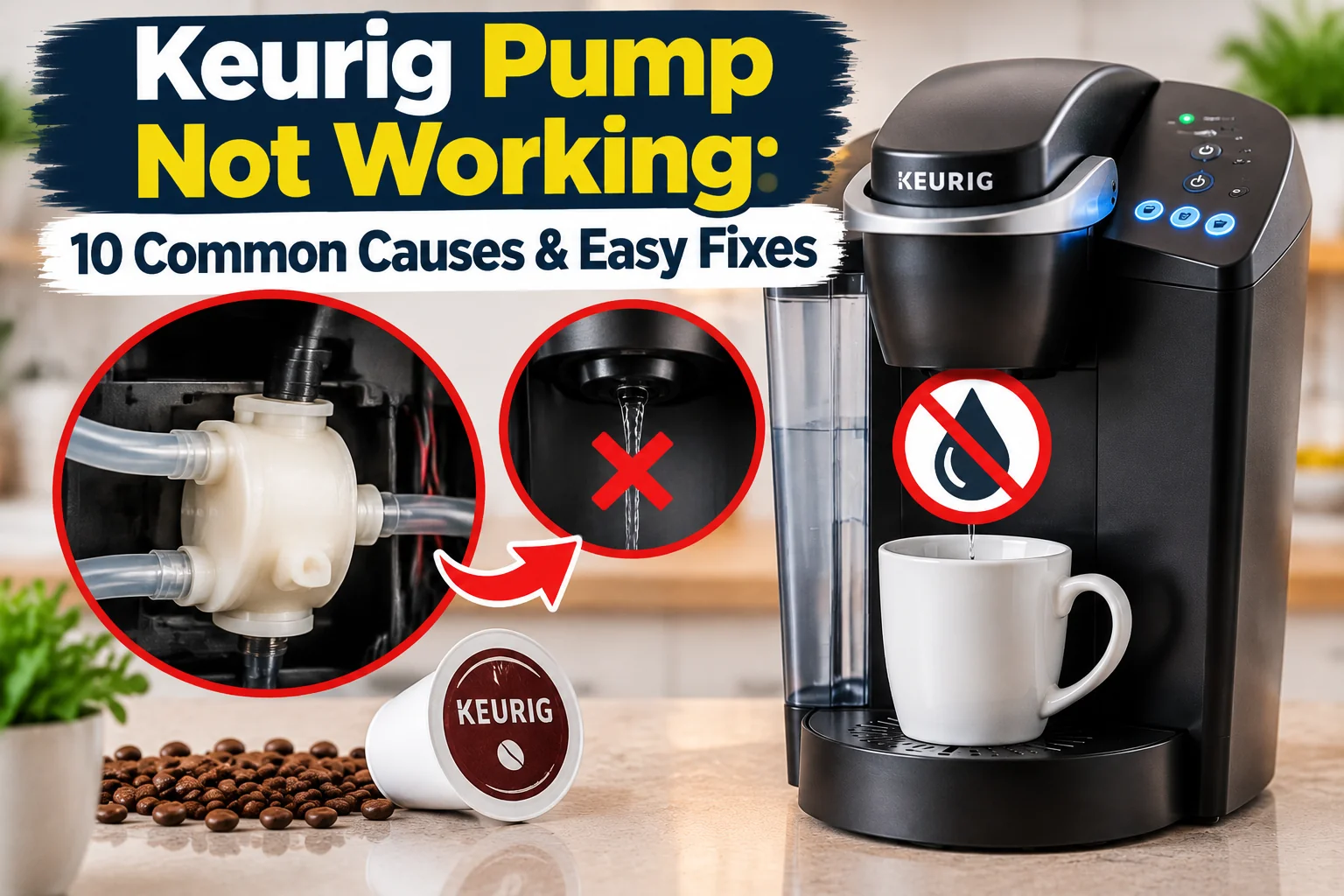
Keurig Pump Not Working: 10 Common Causes & Easy Fixes
If you turn on your Keurig coffee maker and the pump doesn’t work, it can be annoying. The lights may be on and the machine may hum, but no water comes out when you start the brew cycle.
It is the pump’s job to move water from the tank to the K-Cup pod through the heating system. The machine can’t make coffee right when the pump stops working.
Most of the time, a broken Keurig pump is due to air getting stuck in the system, mineral buildup, clogged needles, putting the tank in the wrong place, or a dirty water line. Find out why your Keurig pump isn’t working and how to fix it in this guide.
Why Is My Keurig Pump Not Working?
The most common causes include:
- Air trapped inside the pump system
- Empty or incorrectly installed water reservoir
- Mineral buildup blocking water flow
- Clogged entrance or exit needle
- Dirty water filter
- Pump needs priming
- Frozen or blocked water line
- Faulty pump motor
- Damaged internal tubing
- Control board or electrical failure
Let’s go through each problem and solution.
1. Air Is Trapped Inside the Keurig Pump
One of the most common reasons a Keurig pump stops working is trapped air.
When air enters the water line, the pump may run but fail to move water.
Signs of Air in the System:
- Humming noise but no water
- Pump starts and stops
- Small amount of water comes out
- Brewing cycle stops
Fix:
Try priming the Keurig:
- Turn off the machine.
- Remove the water reservoir.
- Fill it with fresh water.
- Reinstall it firmly.
- Open and close the pod holder.
- Run a brew cycle without a K-Cup.
Repeat the process if necessary.
2. Water Reservoir Is Not Installed Correctly
The Keurig pump cannot pull water if the reservoir is not seated properly.
Check:
- Water level
- Reservoir position
- Valve at the bottom of the tank
- Connection area
Solution:
Remove the tank and reinstall it firmly.
Make sure the bottom valve opens when the reservoir connects to the machine.
3. Mineral Buildup Is Blocking Water Flow
Hard water minerals can accumulate inside the Keurig over time.
Mineral deposits can block:
- Water tubes
- Pump inlet
- Heating chamber
- Internal passages
This reduces water flow and makes the pump appear faulty.
Fix:
Descale your Keurig.
Basic Descaling Steps:
- Remove the water filter.
- Empty the reservoir.
- Add Keurig descaling solution.
- Run brewing cycles without a pod.
- Flush with fresh water.
Regular descaling helps maintain proper water flow.
4. Clogged Entrance Needle
The entrance needle punctures the K-Cup and allows water to enter.
Coffee grounds can block it and prevent proper water movement.
Symptoms:
- Pump sounds normal
- Little or no water comes out
- Coffee grounds around the pod area
Cleaning Steps:
- Turn off and unplug the Keurig.
- Remove the pod holder.
- Clean the entrance needle carefully.
- Use a small cleaning tool or soft brush.
- Rinse thoroughly.
Be careful because the needle is sharp.
5. Clogged Exit Needle
The exit needle at the bottom of the pod holder can also become blocked.
A clogged exit needle may cause:
- Slow brewing
- No coffee output
- Pump noise without water flow
Fix:
Clean the exit needle opening and run a water-only brew cycle.
6. Dirty Water Filter
A clogged water filter can restrict water entering the pump.
If the filter is old or blocked:
- Pump may struggle
- Brewing may stop
- Water flow becomes weak
Solution:
Replace the water filter according to the manufacturer’s recommendations.
7. Keurig Pump Needs Priming
Sometimes the pump loses its ability to pull water after:
- Running the reservoir empty
- Cleaning the machine
- Moving the coffee maker
How To Prime:
- Fill the reservoir completely.
- Turn the machine off.
- Remove and reinstall the reservoir.
- Start a water-only brew cycle.
- Repeat until water flows normally.
8. Internal Water Line Is Blocked
Coffee residue and mineral deposits can build up inside the machine.
A blocked water line can prevent the pump from moving water.
Signs:
- Pump noise
- No water output
- Slow dripping
A thorough descaling cycle may clear minor blockages.
9. Pump Motor Has Failed
If cleaning and resetting do not help, the pump motor itself may be damaged.
Signs of pump failure:
- No pump sound at all
- Machine turns on but does not move water
- Burning smell
- Pump makes unusual noises
A failed pump usually requires replacement.
10. Control Board Problem
The Keurig control board controls:
- Pump activation
- Heating system
- Buttons
- Brewing cycle
If the control board fails, the pump may not receive power.
Symptoms:
- Lights work
- Buttons respond
- Pump does nothing
Professional repair may be needed.
Keurig Pump Makes Noise But No Water Comes Out
If you hear the pump running but no water flows, check:
- Water reservoir placement
- Air trapped in the system
- Mineral buildup
- Needle blockage
- Internal water blockage
In many cases, priming and descaling solve the problem.
Keurig Pump Not Working After Descaling
If your Keurig pump stops after cleaning or descaling:
Possible causes:
- Air entered the system
- Loose reservoir connection
- Remaining mineral debris moved into the water line
Try:
- Running multiple water-only cycles
- Removing and reinstalling the reservoir
- Checking the water intake valve
How To Prevent Keurig Pump Problems
Regular maintenance can prevent pump issues.
Use Filtered Water
Filtered water reduces mineral buildup.
Descale Regularly
Hard water areas require more frequent descaling.
Keep Needles Clean
Coffee grounds can restrict water flow.
Never Run Empty
Running the machine without enough water can introduce air into the pump.
When Should You Replace Your Keurig?
Consider replacement if:
- Pump motor has failed
- Internal repairs are expensive
- The machine is very old
- Multiple components are failing
Simple blockages and maintenance issues are usually repairable.
Final Thoughts
A Keurig pump not working does not always mean the coffee maker is broken. The most common causes are air trapped in the system, mineral buildup, clogged needles, or water flow problems.
Start with simple fixes:
- Check the water reservoir
- Prime the pump
- Clean the needles
- Descale the machine
Troubleshooting may not help if the pump still doesn’t move water. The internal pump or control system may need to be fixed.
Cleaning and maintaining your Keurig on a regular basis will help it work better and last longer.








2 comments