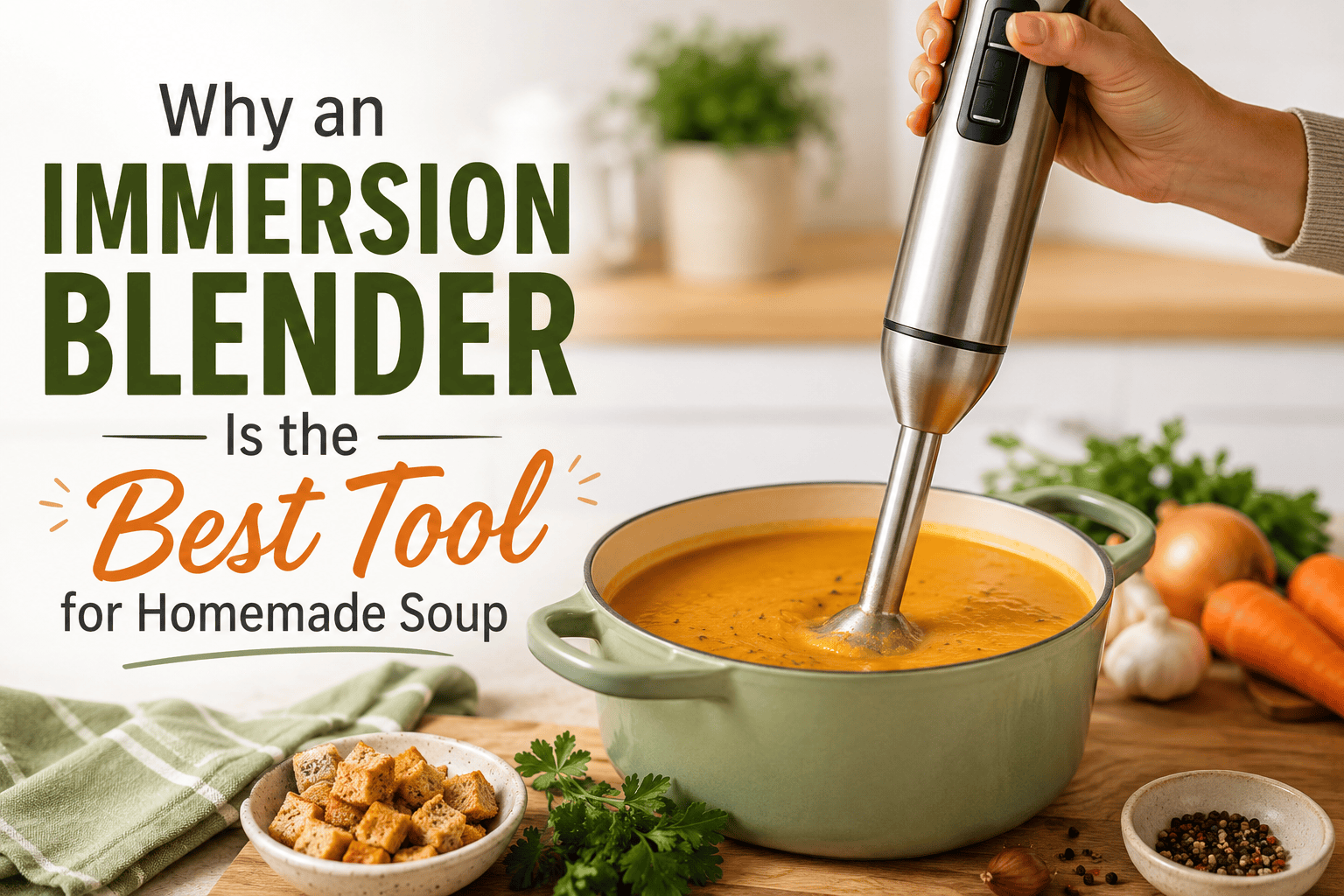
If you’ve ever wrestled a pot of hot soup into a countertop blender in batches, you already know why so many home cooks eventually switch to an immersion blender. Also known as a hand blender for soup, this simple tool lets you puree directly in the pot — no transferring, no mess, no waiting for things to cool down first.
What Makes an Immersion Blender Different
An immersion blender is essentially a motorized wand with blades at the tip. You lower it straight into your pot, turn it on, and move it around until everything reaches the texture you want. Because it works right where the food already is, it’s often called a soup blender, since blending soup is one of the most common — and most convenient — uses for it.
Compared to a traditional countertop blender, the appeal is obvious:
- No ladling hot liquid into a separate container
- No risk of pressure buildup from blending hot soup in a sealed jar
- Fewer dishes, since you’re using the same pot from start to finish
- Easy to control texture, from chunky to silky smooth, in real time
Immersion Blender vs. Hand Mixer for Soup
It’s worth clearing up a common mix-up: a hand mixer for soup isn’t quite the same tool as an immersion blender. A hand mixer uses beaters designed for whipping and mixing — think batter, whipped cream, or mashed potatoes — and it isn’t built to puree fibrous vegetables or handle hot liquid safely. An immersion blender, by contrast, is purpose-built for blending, with sealed motor housing and blades designed to move efficiently through liquid. If soup is the main job, a true hand blender for soup will give you smoother, more consistent results than a hand mixer ever could.
Best Uses for an Immersion Blender in Soup-Making
- Pureed vegetable soups — butternut squash, tomato, broccoli, and carrot soups all come out silky smooth with a few minutes of blending.
- Creamy soups without cream — blending cooked potatoes, beans, or lentils into a soup base adds body and creaminess without needing heavy dairy.
- Bisques and chowders — partial blending (leaving some texture) works especially well for chunkier styles like chowder.
- Sauces and purees beyond soup — the same tool doubles for baby food, salsa, hummus, and pan sauces.
Tips for Getting the Best Results
- Keep the blade fully submerged. Blending at the surface splashes hot liquid; keep the head under the soup at all times.
- Move slowly and tilt slightly. A gentle circular motion breaks down ingredients more evenly than holding it in one spot.
- Blend off the heat when possible. Turning off the burner first reduces splattering and gives you more control.
- Start on low speed. Ramping up gradually prevents soup from spraying out of the pot.
- Rinse immediately after use. Most immersion blenders have a removable blending arm that’s dishwasher-safe, making cleanup quick.
What to Look for When Buying One
- Wattage and power — higher wattage handles thicker soups and heartier vegetables more easily.
- Variable speed settings — useful for going from a rough puree to a completely smooth finish.
- Attachments — many models include a whisk or chopper attachment, adding extra versatility beyond soup.
- Ergonomic grip — since you’ll be holding it steady for a few minutes at a time, comfort matters more than it seems.
- Ease of cleaning — a detachable blending shaft makes rinsing far simpler than a fixed one-piece design.
Final Thoughts
For anyone who makes soup regularly, an immersion blender earns its place in the kitchen fast. It blends directly in the pot, handles hot liquids safely, and produces smoother results than trying to make do with a hand mixer for soup. Whether you call it a hand blender for soup or a soup blender, the tool solves the same basic problem: turning a pot of cooked vegetables into a creamy, restaurant-quality soup with minimal cleanup.







