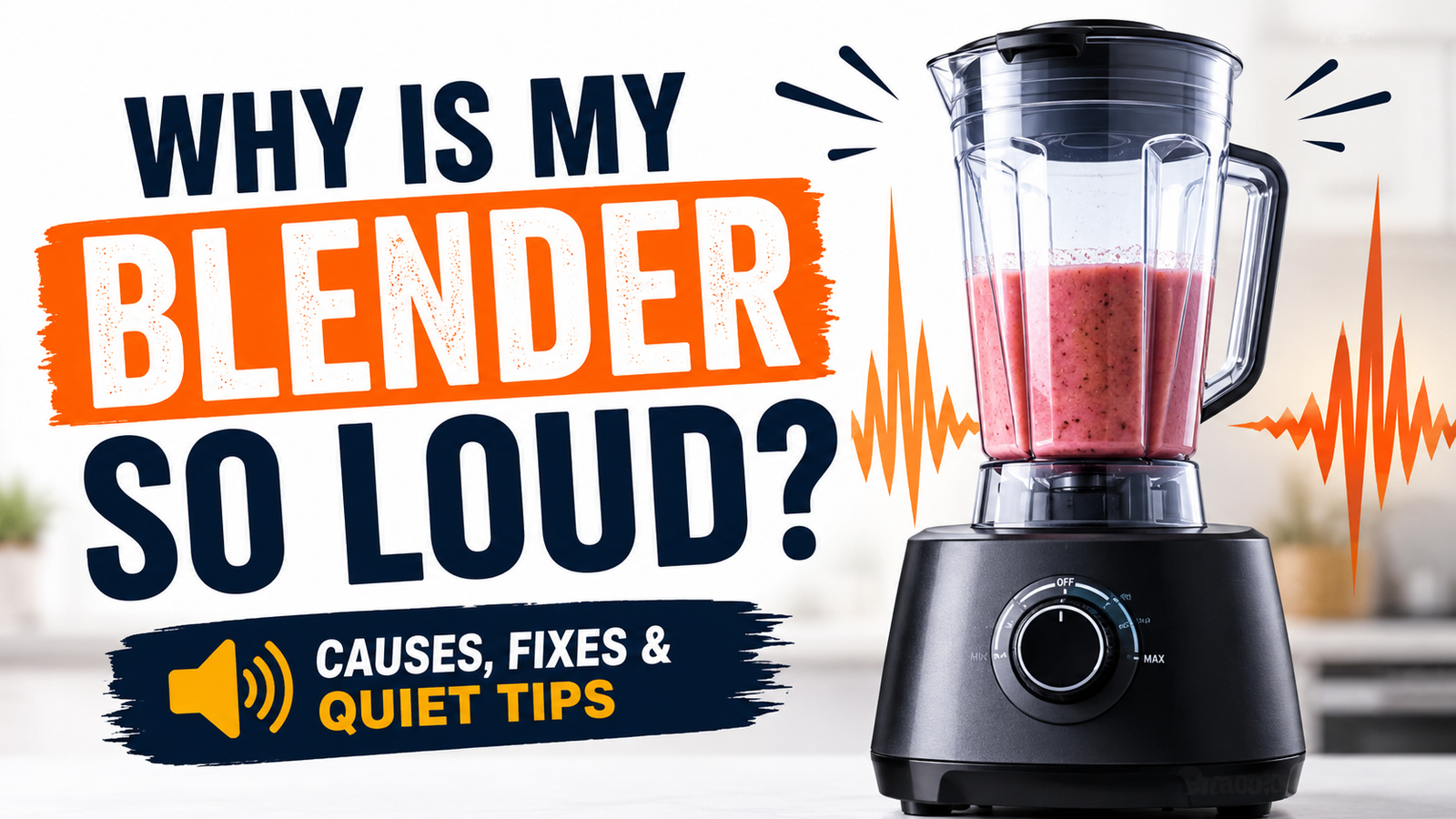

You’re not alone if you’ve ever started your blender first thing in the morning and woken up everyone in the home, even your neighbors. One of the most frequent complaints about kitchen appliances is blender noise. Fortunately, most loud blenders are not defective. They are either noisy by design or due to a few behaviors that can be changed.
Here are the actual causes of the racket and solutions.
1. It’s a Motor, Not a Whisper
In order to crush ice, fibrous vegetables, and frozen fruit, blenders need high-speed motors that frequently run at 20,000 to 30,000 RPM. Simply put, that kind of power is not silent. Generally speaking, a motor’s noise level increases with its power, particularly at higher speed levels. Your blender may be performing well if it sounds noisy.
2. Blade and Ingredient Collision
A lot of the noise you hear is from the blades hitting hard or frozen things like ice cubes, nuts, or frozen fruit. It’s not the engine at all. The hard bits bounce around the jar and make that loud clattering or grinding sound before they are totally broken up.
This is completely normal, especially in the first few seconds of mixing.
3. Cavitation (That Weird Whining Sound)
Cavitation is probably what you’re hearing if you hear a high-pitched whine while blending. This happens when the jar doesn’t have enough liquid. The blades spin through air pockets instead of moving easily through the liquid. Either add a little more liquid or use the tamper (if your blender has one) to push the ingredients back toward the blades.
4. Vibration From an Unstable Base
A loud buzzing or rattling sound is usually not caused by the motor but by vibration. If your blender is on a hard countertop, a hollow surface, or a base that isn’t level, every turn of the blade will send vibrations through the counter and make the sound louder.
A number of common culprits:
- Rubber feet that are worn, missing, or dirty
- A blender placed near the edge of the counter or on a thin cutting board
- Loose components (lid, jar, or base) that rattle during use
5. Loose or Worn Parts
With regular use, the jar, blade assembly, or gasket may become a little less tight over time. A jar that isn’t sitting right on the base or a blade assembly with worn bearings can make the motor sound more rattling, grinding, or rough than normal. This is something you should check if your mixer has become noticeably louder over the months instead of being loud from the start.
6. Overloading the Jar
When you put too many things in the jar, the motor has to work harder, which makes it noisier and puts more stress on the device. It’s easier to hear when you blend in smaller amounts, and the end result is smoother and more even.
How to Make Your Blender Quieter
- Place it on a towel or rubber mat to absorb vibration
- Add liquid before adding solids to reduce cavitation
- Cut ingredients into smaller pieces so blades don’t have to fight large chunks
- Check and tighten the jar and lid before each use
- Avoid overloading — blend in batches if needed
- Inspect rubber feet and replace them if worn down
- Use pulse mode for tough ingredients like ice, which can be quieter than sustained high-speed blending
When Loudness Might Signal a Problem
Occasional loud blending is normal. But watch for these signs that something may actually be wrong:
- A burning smell along with the noise
- Grinding that sounds metallic rather than the blades hitting ingredients
- Noise that’s accompanied by visible wobbling of the jar or base
- A sudden, significant increase in volume compared to when the blender was new
If you spot any of these, you should check the motor coupling or the blade assembly or contact the manufacturer because they could be signs of worn bearings or a motor that isn’t working right.
The Bottom Line
Most of the noise from blenders is caused by strong motors, blades that spin quickly, and hard ingredients hitting each other quickly. A little vibration control and smart blending habits can help, but it’s not possible to have a blender that is completely quiet. In fact, a bit of noise is often a sign that your blender can really crush through whatever you throw at it.








2 comments