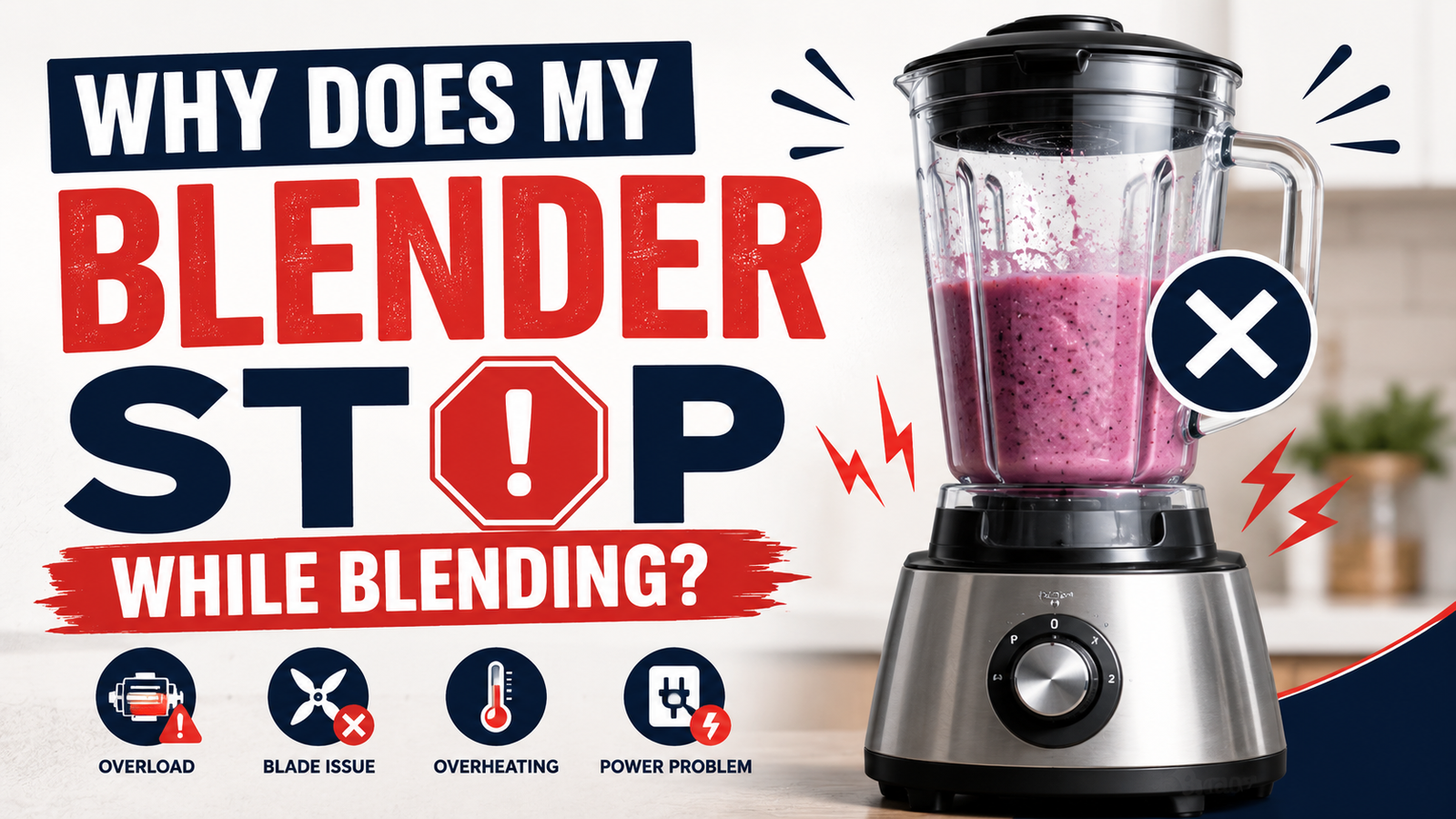

Why Does My Blender Stop While Blending?
Not having your blender work while you’re making a drink is one of the most annoying things that can happen. Before you think the worst, know that this is a common problem that can be caused by a few common things. Most of these things are easy to check at home.
Here’s what’s likely going on.
1. Overheat Protection Kicked In
A thermal safety switch is built into most current blenders, especially those with a lot of power.
By itself, the blender turns off if the motor gets too hot from heavy or long use. This keeps the blender from breaking. This is a good thing, not a bad thing.
Common triggers:
- Blending back-to-back batches without letting the motor rest
- Running the blender continuously for several minutes
- Blending very thick or dense mixtures that strain the motor
Remove the mixer from the wall, turn it off, and wait 15 to 30 minutes before using it again. Going forward, take a one- to two-minute break for the motor between heavy mixing sessions.
2. The Jar Isn’t Seated Correctly
The motor of many blenders won’t start unless the jar is properly locked onto the base. This is called a safety switch. As a safety measure, the blender may stop if the jar moves a little while it’s being blended. This can happen if the contents are very thick or heavy and shake the jar hard.
Fix: Turn off the blender, take out the jar, and put it back in tightly, making sure it clicks or locks into place. Then, start the blender again.
3. Lid Not Fully Secured
A lot of the time, the lid has its own safety monitor, just like the jar. If you don’t press it down all the way or if it pops loose a little while you’re blending, the motor may turn off by itself.
Fix: Firmly press the lid down and make sure the center cap is in place (if there is one) before turning the machine back on.
4. Overloading the Blender
If you fill the jar too full or blend things that are too thick, like nut butters that are very dense or frozen foods that don’t have much liquid, you could damage the motor. Some blenders will turn off by themselves so that the motor doesn’t burn out from too much resistance.
Fix:
- Blend in smaller batches
- Add more liquid to loosen thick mixtures
- Break large or frozen chunks into smaller pieces before blending
5. A Tripped Circuit or Power Issue
Sometimes it’s not the blender that’s broken, but the plug. High-power blenders can use a lot of electricity. If they’re on the same circuit as other machines, they can overload a power strip or trip a breaker.
To fix the problem, plug the blender straight into a wall outlet, not into an extension cord or power strip. If the problem still happens, check the breaker box.
6. Jammed Blades
The motor may stop or stall if something gets stuck between the blades, like a big ice cube, a stubborn piece of frozen fruit, or fibrous food like celery. This is done to avoid damage.
Fix: Turn off the mixer before checking it. Get rid of anything that’s in the way, cut the food up, and pulse a few times to clean the blades before doing a full cycle again.
7. Worn Motor or Electrical Fault
If your older blender stops more often, even when you use the right method, add light items, and make sure it doesn’t get too hot, it could be a sign of a deeper problem, like worn motor brushes, a failing capacitor, or a loose internal connection.
Signs this might be the cause:
- Stopping happens randomly, even on low speed with light contents
- You notice burning smells, sparks, or unusual sounds
- The blender doesn’t restart even after cooling down
Fix: At this point, it’s best to contact support or a repair technician rather than keep troubleshooting on your own — especially if there’s any smell of burning.
Quick Troubleshooting Checklist
- Let the motor cool for 15–30 minutes if it’s been running a lot
- Reseat the jar and make sure it’s locked in place
- Firmly secure the lid and center cap
- Reduce batch size or add more liquid
- Plug directly into a wall outlet
- Check for and clear any blade jams
- If issues persist despite all the above, contact support
The Bottom Line
Many blenders stop working for a simple reason that can be fixed: they get too hot, the lid or jar comes loose, or the jar is too full.
These safety features are built into your blender to protect the motor and make it last longer. If it stops suddenly, it’s probably just protecting itself and not broken. If the problem keeps happening when the product is used normally, you should either look into it more or get help.








3 comments