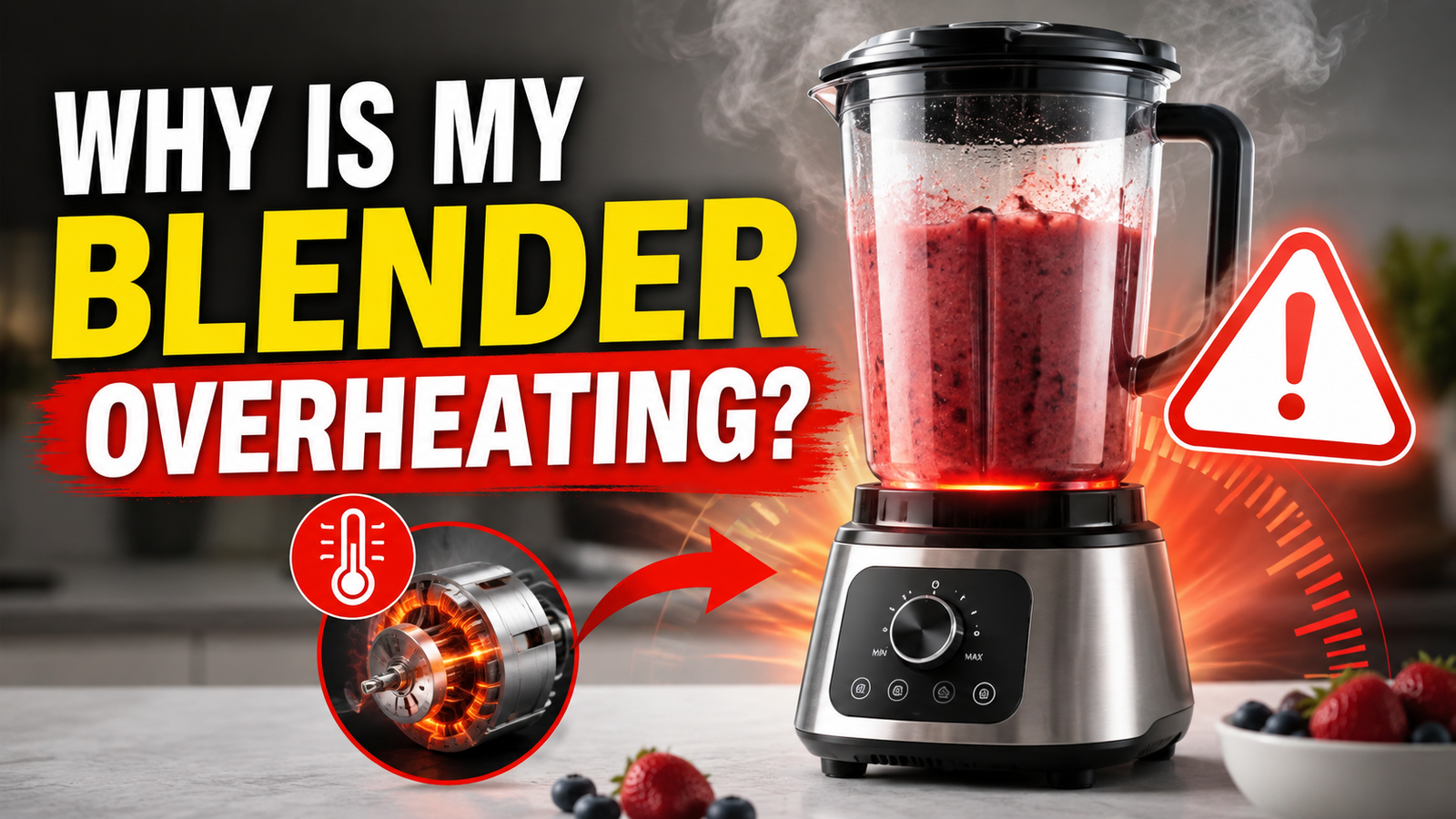

If your blender gets unusually hot, smells like burning, slows down, or shuts off while blending, the motor may be overheating. In many cases, the problem is caused by an overloaded blender, thick ingredients, blocked ventilation, or running the motor for too long.
However, repeated overheating can also indicate a mechanical or electrical problem.
This guide explains why your blender is overheating, how to fix it safely, when to stop using it, and how to prevent the problem from happening again.
Quick Answer: Why Is My Blender Overheating?
The most common reasons a blender overheats include:
- Overloading the blender jar
- Running the blender continuously for too long
- Blending thick or dense mixtures
- Using too many frozen ingredients or ice
- Jammed or obstructed blades
- Blocked ventilation openings
- Using a blender that is not suitable for the task
- Not allowing the motor to cool between batches
- A worn or failing motor or electrical component
If your blender becomes extremely hot, produces smoke, sparks, or a strong electrical or burning smell, stop using it and unplug it immediately.
9 Common Reasons Why Your Blender Is Overheating
1. You’re Overloading the Motor
One of the most common reasons a blender overheats is putting too much food into the jar.
Large quantities of frozen fruit, ice, nut butter, thick batter, or other dense ingredients can make the motor work much harder than normal.
When the blades struggle to move through the ingredients, the motor has to work harder and can generate more heat.
What to do:
- Reduce the amount of ingredients.
- Blend smaller batches.
- Add an appropriate amount of liquid when the recipe allows it.
- Avoid filling the jar beyond the manufacturer’s recommended level.
If your blender is also struggling to blend properly, see our guide on why your blender is not blending.
2. You’re Running the Blender for Too Long
Blenders are not necessarily designed to run continuously for several minutes.
Long blending cycles can cause heat to build up inside the motor. This is especially common when processing thick foods or hard ingredients.
Your blender’s manual may specify a maximum continuous operating time or duty cycle.
What to do:
- Use shorter blending cycles when appropriate.
- Use pulse settings for difficult ingredients.
- Allow the motor to cool between heavy blending sessions.
- Follow the operating instructions for your specific model.
Do not assume that every blender can safely run for the same amount of time.
3. The Blades Are Jammed or Obstructed
A piece of frozen fruit, ice, food, or another ingredient can become stuck around the blade assembly.
When the blades cannot rotate freely, the motor may continue trying to turn them. This creates additional resistance and heat.
What to do:
- Turn the blender off.
- Unplug it.
- Wait until it has cooled.
- Check the blade area according to the manufacturer’s instructions.
- Remove any accessible obstruction safely.
- Do not put your hands near moving blades.
If the blades remain difficult to rotate or the problem keeps returning, the blade assembly may need inspection or replacement.
4. The Ventilation Openings Are Blocked
Your blender’s motor needs adequate airflow to release heat.
Dust, crumbs, spilled food, or placing the blender directly against an obstruction can restrict ventilation.
A blocked ventilation area can cause heat to build up faster during operation.
What to do:
- Keep the blender base on a clean, stable surface.
- Keep ventilation openings clear.
- Remove dust and debris according to the manufacturer’s cleaning instructions.
- Avoid covering the motor base while the blender is operating.
Never immerse the motor base in water.
5. Your Blender Is Underpowered for the Job
Not every blender is designed for the same tasks.
A small personal blender may handle smoothies well but struggle with large quantities of ice, thick nut butter, frozen ingredients, or other demanding mixtures.
Using a blender beyond its intended capabilities can place excessive stress on the motor.
Check the manufacturer’s instructions to determine what your model is designed to process.
For general blender selection and usage advice, see our complete blender guide.
6. The Ingredients Are Too Thick
Very thick mixtures can prevent the ingredients from circulating properly around the blades.
For example, a blender may struggle with a thick smoothie containing mostly frozen fruit and very little liquid.
When the ingredients stop moving, the blades can encounter more resistance and the motor can heat up.
Try this:
- Add an appropriate amount of liquid if the recipe permits.
- Stop and redistribute ingredients if necessary.
- Process smaller quantities.
- Use the blender’s pulse function when appropriate.
Avoid adding excessive liquid just to make the blender work. Follow the recipe and your blender’s instructions.
7. You’re Using Too Many Hard or Frozen Ingredients
Ice and frozen foods can put significant mechanical load on a blender.
If your blender is not designed to crush large amounts of ice or process frozen ingredients, repeated heavy use can cause the motor to heat up.
For frozen fruit recipes, see our guide on whether you can blend frozen fruit.
If the problem specifically occurs when crushing ice, read why your blender won’t crush ice.
8. The Blender Doesn’t Have Enough Cooling Time
If you make several smoothies or batches back-to-back, heat can accumulate in the motor.
Even if the blender works normally during the first batch, repeated heavy use without sufficient cooling can eventually cause it to overheat or activate its thermal protection.
What to do:
Turn the blender off and allow it to cool before continuing. The appropriate cooling period varies by model, so follow the manufacturer’s instructions rather than relying on a universal cooling time.
9. The Motor or Electrical Components May Be Failing
If your blender overheats during light use, repeatedly shuts down, or becomes unusually hot even when the load is small, the problem may not simply be the ingredients.
A worn motor, damaged component, or other electrical/mechanical fault can cause abnormal heat.
At this point, avoid opening the motor housing or attempting electrical repairs yourself.
If the blender continues overheating, contact the manufacturer or a qualified repair professional. If it is still under warranty, check the warranty service options before attempting repairs.
How to Fix an Overheating Blender
If your blender becomes unusually hot, follow these steps:
Step 1: Turn It Off
Stop blending as soon as you notice excessive heat, unusual noise, or a burning smell.
Step 2: Unplug the Blender
Disconnect it from the power source and allow it to cool.
Step 3: Reduce the Load
If the jar is overloaded, use a smaller batch next time.
Step 4: Check the Blade Area
Once the blender is safely unplugged and cooled, check for accessible food or ingredients obstructing the blade assembly.
Step 5: Check Ventilation
Make sure the motor base has adequate airflow and that ventilation openings are not blocked.
Step 6: Adjust Thick Recipes
If the mixture is too thick, use an appropriate amount of liquid or process a smaller quantity.
Step 7: Avoid Excessive Continuous Operation
Follow the operating time and duty-cycle instructions provided with your blender.
Step 8: Stop Using It If the Problem Continues
If the blender overheats repeatedly despite normal use, it may require professional inspection or replacement.
Why Does My Blender Get Hot and Shut Off?
Many blenders have thermal protection designed to prevent motor damage when the unit becomes too hot.
If the motor temperature rises beyond a safe operating range, the blender may shut itself off.
This can happen after:
- Heavy blending
- Long operating periods
- Processing thick ingredients
- Crushing difficult ingredients
- Repeated batches without enough cooling
If your blender shuts off because of overheating, turn it off, unplug it, and allow it to cool according to the manufacturer’s instructions.
If it repeatedly shuts off during normal, light use, the blender may have an underlying problem.
For another common issue, see why your blender stops while blending.
Is It Normal for a Blender to Get Hot?
A blender motor can become warm during normal operation, especially when processing heavy ingredients.
However, excessive heat is different from normal warmth.
You should stop using the blender if you notice:
- Smoke
- Sparks
- A strong burning or electrical smell
- Repeated unexpected shutdowns
- Unusual grinding or whining
- Visible damage
- Extreme heat from the motor base
These symptoms can indicate a mechanical or electrical problem.
Why Does My Blender Smell Like Burning?
A burning smell can occur when the motor is under heavy strain, but it should not automatically be considered normal.
If the smell is strong, persistent, or accompanied by smoke, unusual noise, or excessive heat, stop using the blender and unplug it.
For a more detailed troubleshooting guide, read why your blender smells like it’s burning.
When Should You Stop Using an Overheating Blender?
Stop using your blender immediately if you notice:
- Smoke
- Sparks
- A strong electrical smell
- Burning plastic smell
- Visible damage to the power cord or base
- Repeated overheating during light use
- Grinding, whining, or other abnormal motor sounds
- The motor repeatedly shuts down unexpectedly
Do not continue running the blender to see if the problem goes away.
Unplug it and allow it to cool. If the problem remains, contact the manufacturer or a qualified technician.
How to Prevent Your Blender From Overheating
A few habits can reduce the risk of overheating:
Don’t Overfill the Jar
Stay within the maximum fill line and manufacturer’s recommendations.
Use Enough Liquid
For recipes that require liquid, use the amount recommended by the recipe and blender instructions.
Cut Large Ingredients Into Smaller Pieces
Smaller pieces can reduce the workload on the blades and motor.
Avoid Excessive Blending Time
Use the shortest appropriate blending cycle instead of running the blender continuously.
Keep Ventilation Open
Don’t cover the motor base or block its ventilation openings.
Don’t Exceed the Blender’s Capabilities
Check the manufacturer’s recommendations before regularly crushing ice, processing thick foods, or blending large quantities of frozen ingredients.
Allow the Blender to Cool
If you’ve just completed a demanding blending job, give the motor adequate time to cool before starting another heavy batch.
Frequently Asked Questions
A blender can overheat because of an overloaded jar, thick ingredients, frozen foods, blocked ventilation, excessive blending time, insufficient cooling, or a mechanical/electrical problem.
The motor may be overheating and triggering its thermal protection. Reduce the load, stop blending, unplug the unit, and allow it to cool according to the manufacturer’s instructions.
Smoothies containing large amounts of frozen fruit or very little liquid can place extra resistance on the blades and motor. Try smaller batches and use an appropriate amount of liquid.
A burning smell can occur when the motor is under heavy strain, but a strong or persistent smell may indicate a mechanical or electrical problem. Stop using the blender if the smell is accompanied by smoke, excessive heat, or unusual noise.
Some warmth during normal operation can be expected, particularly during demanding tasks. Excessive heat, smoke, burning smells, sparks, or repeated shutdowns are warning signs.
Avoid overfilling the jar, use appropriate liquid, process difficult ingredients in smaller batches, keep ventilation openings clear, follow the recommended operating time, and allow the motor to cool between heavy uses.
There is no universal cooling time for every blender. Follow the cooling instructions in your owner’s manual and do not restart the blender while it remains excessively hot.
If a blender repeatedly overheats during normal use after you’ve reduced the load and followed the manufacturer’s instructions, it may have a mechanical or electrical problem. Have it inspected or consider replacing it if repair is not practical.
Final Thoughts
If your blender is overheating, don’t automatically assume that the motor is failing.
In many cases, the cause is an overloaded jar, thick ingredients, frozen food, blocked ventilation, excessive blending time, or insufficient cooling between batches.
Start by reducing the workload, checking for obstructions, keeping the ventilation openings clear, and following your blender’s operating instructions.
However, smoke, sparks, a strong burning smell, visible damage, or repeated overheating should not be ignored. Stop using the blender and seek professional or manufacturer support.
A little prevention can go a long way toward keeping your blender running efficiently and extending its useful life.








3 comments