
Coffee Maker Making Weak Coffee? How to Fix It
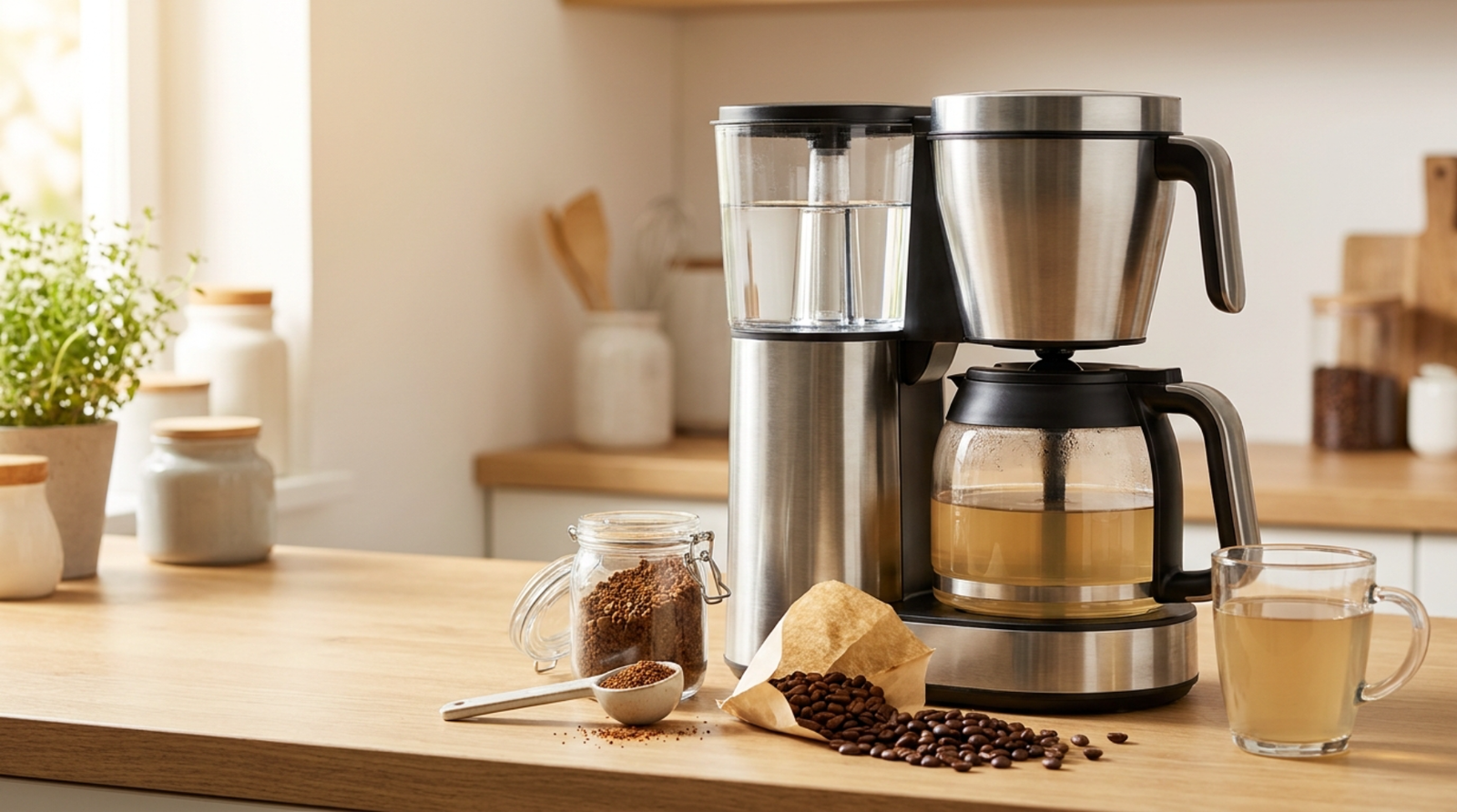
Coffee that is too weak and watery is one of the main complaints about drip machines. What’s frustrating is that it’s not always the machine that’s “broken.” Most of the time, it’s a mix of ratio, grind, and maintenance problems that you can fix quickly.
The wrong amount of coffee to water
This is the main reason why coffee tastes weak. It doesn’t matter how good your beans are if you use too little coffee for the amount of water. The coffee will not be fully drained.
Fix: For every 6 ounces of water, use about 1 to 2 tablespoons of ground coffee. Gradually move the strength up until you reach the level you want.
The grind size is too big
Because there is less surface area on coarser grounds that is wet, less taste and caffeine are extracted when water flows through them quickly in a drip machine.
Fix: For standard drip machines, use a medium grind that feels like sea salt. If you’re grinding at home, don’t use the French press’s sharpest settings.
Too much water is moving through too quickly
The water won’t have enough time to properly extract if the flow rate is too fast. This could be because of a worn valve, thinning internal tubes, or a machine that’s made to brew quickly.
Fix: Check the brew time on your machine. It should take about 4 to 6 minutes to brew a full pot. If it’s ending a lot faster, the extraction time might be shorter because of mineral buildup or a problem with the flow valve. Getting rid of the scale can sometimes fix this.
Coffee grounds or beans that are old or stale
Coffee loses oils and flavorings over time, especially after being ground and left out in the air. If you use the right amount of water and coffee, stale coffee will still make a weaker cup.
Fix: Keep coffee in a container that won’t let air in and keep it away from light and heat. For the best taste, use ground coffee within 1-2 weeks or whole beans within a month.
The water is not warm enough
Where 195°F to 205°F is best for coffee extraction. Limescale buildup on the heating element of your machine can make it work less well. If this is the case, the water may be too cool to pull the flavor from the grounds properly.
Fix: Clean the scale off of your machine often, especially if you have hard water. If descale doesn’t work and you think the heating element is broken, read our guide on how to fix coffee makers that won’t heat water.
Putting on the Wrong Filter
If the paper filters are too thick or have two layers, they can slow the water absorption unevenly or trap more oils and taste than they should, which makes the final cup weaker. On the other hand, grounds can get around proper contact time if filters are broken or torn.
Fix: Use the type of filter that your manual says to use (usually a standard basket or cone filter), and make sure it’s fully in place so that no folds are blocking the flow of water.
The machine needs to be descaled.
Mineral buildup can make it harder for water to flow through the tubing and spray head, which can affect both heating and extraction. This can make the grounds less evenly saturated and less extracted overall.
Fix: Use a vinegar-water solution or a commercial descaler to remove scale every one to three months, based on how hard your water is, and then rinse with clean water.
Spray Head Clogged or Dirty
The spray head smoothly spreads water over the coffee grounds. If it’s partly clogged with mineral or oil buildup, water may pool and flow through only some of the grounds instead of covering them all.
Fix: If your model lets you, take off the spray head and use a soft brush or stick to clean the holes. Then, give it a rinse.
Making a batch that is too big for your machine
Some machines work best with a certain number of servings. When you use a machine meant for smaller amounts to make a full pot of coffee (or the other way around), the water-to-grounds contact time can be off, which can dilute the result.
Fix: Look at the directions to see what batch size is suggested, and if you usually only need half a pot, try making smaller batches with a stronger ratio.#
Using store-bought coffee that has already been ground and is naturally weaker
Some store-bought coffee brands use a lighter roast or a blend that is meant to have a softer taste. If you swapped brands recently and noticed that the coffee isn’t as strong, it could be the bag itself instead of your machine.
Fix: To compare, try a different brand or a darker roast. If you want more control over the strength, you could also grind your own beans fresh.
Quick Fix for a Problem
If you need to find the problem quickly, make a cup of coffee with the usual amount of water and more coffee grounds than usual. If the strength goes up a lot, the problem is probably with the ratio or grind size. Most likely, the problem is technical, like temperature, flow rate, or a spray head that is clogged.
The Bottom Line
When coffee isn’t strong, it’s usually because of the way it was extracted, like the ratio, grind size, water temperature, or contact time. It’s not always because the machine itself is broken. First, try changing the amount of water to coffee and the size of the grind. If that doesn’t work, check for mineral buildup and clean the machine.
READ MORE ARTICLES 👇