
Coffee Maker vs Espresso Machine: Which One Is Right for You? Compare taste, cost, brewing time, and features to choose the best coffee machine for your home.
A lot of people can’t go through the day without coffee, whether they like a fresh cup in the morning or a drink to relax with in the afternoon. Picking the right coffee machine can greatly improve the ease of use, taste, and general quality of the coffee. People often choose between regular coffee makers and espresso machines. Both machines make coffee, but they do it in different ways and give you different perspectives.
Knowing the differences between a coffee maker and an espresso machine can help you pick the one that fits your budget, lifestyle, and coffee tastes the best. Each machine has its own benefits, whether you like a big cup of regular coffee or a strong espresso with a thick crema.
What Is a Coffee Maker?
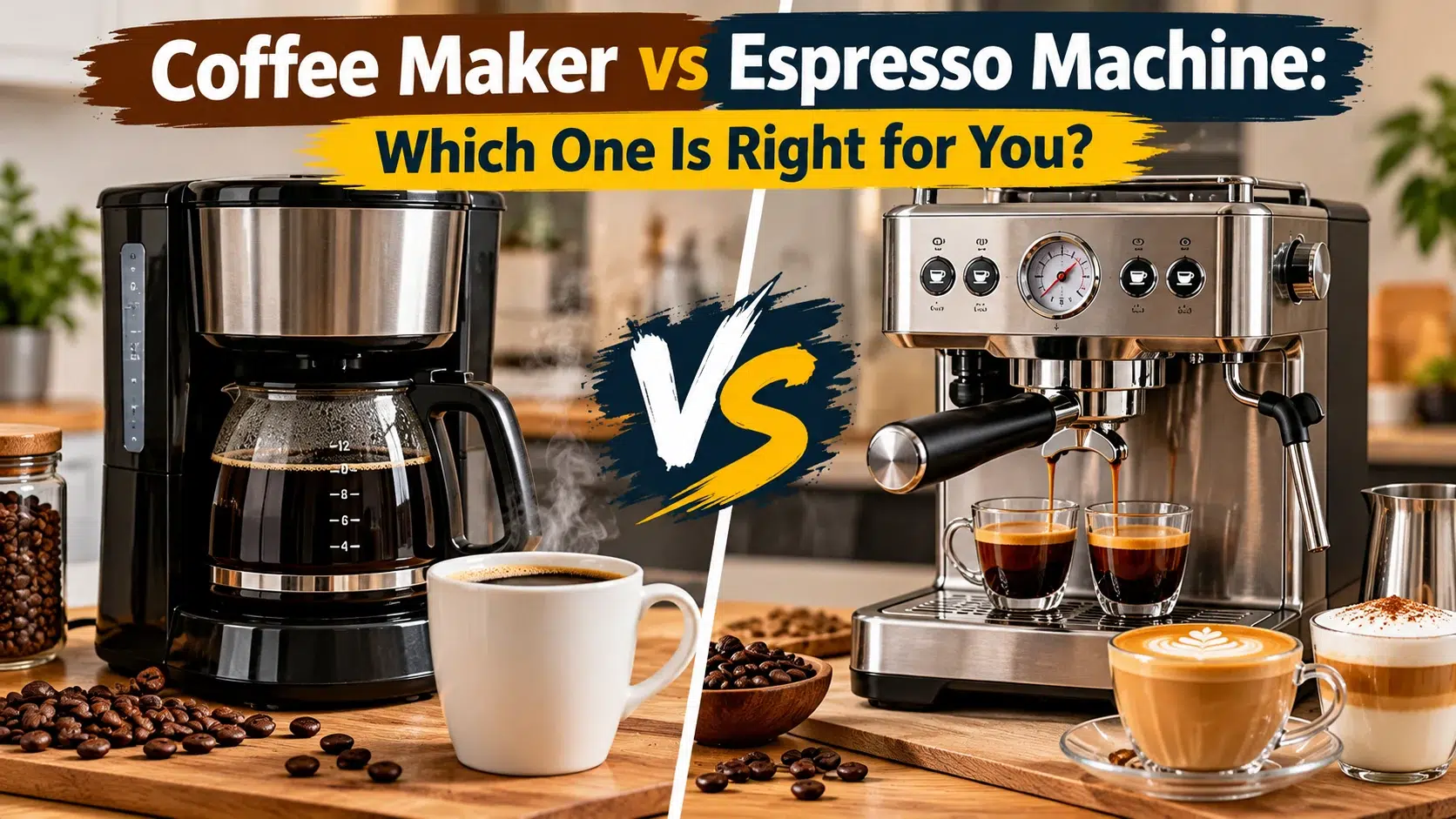
A coffee maker is a home appliance that grinds coffee beans and pours hot water over them to make coffee. People love traditional drip coffee makers because they are simple to use and can make several cups at once. People who drink a lot of coffee during the day can use them at home, in the office, or anywhere else.
The water in most drip coffee makers is heated and then poured over ground coffee that is in a filter. After being brewed, the coffee drips into a glass or thermal carafe. Depending on the model, this is where it can be given right away or kept warm for a short time.
One great thing about a coffee maker is how easy it is to use. Most of the time, users need to add water, put coffee grounds in the filter, and start the boiling cycle. A lot of them also have customizable timers, automatic shutoff, and brewing settings that can be changed.
Most of the time, coffee makers make more coffee with a lighter body than espresso machines. The end result is a drink that people who like to sip coffee slowly will enjoy. However, regular drip coffee makers don’t usually make the crema and flavor that are associated with espresso.
What Is an Espresso Machine?
Putting hot water through finely ground coffee under pressure is how an espresso machine makes concentrated coffee. This way of brewing makes a small, strong drink with a deep taste and, if the conditions are right, a layer of crema on top.
There are different kinds of espresso makers, such as manual, semi-automatic, automatic, and super-automatic models. Each type gives you a different amount of power and ease of use. Fully automatic machines can make the brewing process easier, while manual and semi-automatic machines usually need more work from the user.
Espresso is often the base for well-known coffee drinks like Americanos, cappuccinos, lattes, and macchiatos. A lot of espresso machines come with a steam wand that can be used to heat and foam milk, which is helpful for people who like to drink coffee-like drinks at home.
But making good espresso can take more care than making coffee in a regular coffee maker. Size of the grind, amount of coffee used, tamping, water temperature, and time of extraction can all change the end result. To get consistent results from some machines, you may also need to use extra tools, like a burr grinder.
Coffee Maker vs Espresso Machine: Main Differences
The main difference between a coffee maker and an espresso machine is how the coffee is made. A regular drip coffee maker moves hot water through coffee grounds by gravity. An espresso machine, on the other hand, uses pressure to get a stronger drink out of the beans.
This difference affects how each device makes drinks, how long they take to brew, how much they serve, and what kinds of drinks they can make. Most of the time, drip coffee comes in bigger amounts and has a lighter body. Espresso is usually served in smaller amounts because it has a stronger flavor and a fuller texture.
For beginners, coffee makers are usually easier to use because they don’t need as many changes to be made during the making process. People who use espresso machines can make a wider range of specialty drinks and have more control over the extraction process, but they may take longer to learn how to use.
Cleaning and maintaining the equipment is also different. The carafe, filter basket, and water tank of most coffee makers need to be cleaned and descaling every so often. Depending on how they are made, espresso machines may need the portafilter, group head, steam wand, and other parts to be cleaned more often.
Taste and Coffee Quality
When deciding between a coffee maker and an espresso machine, taste is one of the most important things to think about. If you want to make the best coffee, you shouldn’t assume that one appliance will always make the best coffee.
Most of the time, a regular coffee maker makes a drink that is smoother and less concentrated than espresso. It’s great for people who like a balanced cup of coffee that they can drink over a long period of time because it uses more water than coffee grounds.
When you use an espresso machine, you get a stronger drink with stronger flavors and a fuller mouthfeel. Espresso can taste like chocolate, nuts, fruit, or caramel, depending on the beans, how they are ground, and how they are extracted. Because it is so strong, you can mix it with milk without losing any of the coffee taste.
Coffee quality rests on many things, such as how fresh the beans are, how dark or light they are roasted, how consistent the grind is, how good the water is, and how it is brewed. A well-used coffee maker with new beans can make great coffee, but an espresso machine that isn’t set up right could make coffee that tastes bitter or sour.
A drip coffee maker might be better for making black coffee every day. An espresso machine gives you more options for making specialty drinks and coffees with a lot of caffeine.
Brewing Time and Convenience
When picking a coffee machine for daily use, how easy it is to use can make a big difference. The majority of coffee machines are made to be easy to use. The machine takes care of most of the boiling process itself after the water and coffee grounds are added.
A regular drip coffee maker can make several servings at once, which is helpful for families or people who drink a lot of coffee during the day. Programmable models can also start brewing at a set time, so when users wake up, their coffee is already ready to go.
The ease of use of espresso machines varies a lot. Automatic and super-automatic machines make espresso with little work on your part, while regular and semi-automatic machines need more work. Users may have to measure the coffee, grind the beans, make the coffee puck, watch the extraction process, and clean the machines after each use.
Even though making espresso is pretty quick, the whole process of getting ready might take longer if you include grinding, steaming milk, and cleaning up. People who like coffee may enjoy having more control, but it might not be right for everyone.
A standard coffee maker is usually the better choice if speed and ease of use are important to you. If making coffee is a regular part of your life, an espresso machine might be more enjoyable for you.
Cost Comparison
The price of a coffee maker or espresso machine is based on its brand, features, capacity, and build. Drip coffee makers are usually less expensive than espresso machines, which makes them a good choice for low-income families.
Most traditional coffee makers don’t need as many extra parts. Depending on the type, you might only need coffee grounds, paper filters, and some simple cleaning tools. Some types come with filters that can be used more than once, which can cut down on the need for single-use parts.
When you first buy an espresso machine, it might cost more, especially if it has a built-in grinder, advanced temperature controls, or milk preparation that is done automatically. Machines that don’t have one may also need a separate burr grinder.
Costs that keep coming up can include coffee beans, cleaning supplies, descalers, new filters, and regular maintenance. People who like espresso may also buy extras like a tamper, a precision scale, or a milk pitcher.
When you compare prices, you should look at both the buying price and how much coffee you usually make. A basic coffee maker might be a great deal for someone who just wants simple coffee every day, while an espresso machine might be worth the extra money for someone who often makes drinks with espresso at home.
Which Machine Is Better for Different Coffee Drinks?
What kind of drink you like should affect your choice. For regular black coffee, breakfast coffee, and bigger servings that can be enjoyed all day, a traditional coffee maker works well.
If you want to make espresso shots or drinks with espresso as the base, you should use an espresso machine. Cappuccinos, lattes, flat whites, and Americanos are some of these. A machine with a steam wand gives you more options for making drinks with milk.
It’s important to know that some coffee makers have specialty brewing settings and can make drinks that taste like concentrated coffee. Drip coffee makers, on the other hand, don’t make real espresso because they don’t use the same pressurized extraction method.
Is a big mug of black coffee your best drink? A drip machine should work for you. More often than not, an espresso machine that can foam milk is the better choice if you like cappuccinos or lattes.
Cleaning and Maintenance Requirements
Cleaning coffee appliances on a regular basis helps keep the coffee’s flavor, stops residue from building up, and keeps them working right. Maintenance is needed for both coffee makers and espresso machines, but the tasks depend on how they were made.
If you have a drip coffee maker, clean the carafe, filter basket, and other parts that can be taken off often. After brewing, pour out the used coffee grounds and let parts that can be washed dry before putting them back together. Mineral layers can build up inside the water-heating system over time, especially in places with hard water, so descaling is important on a regular basis.
It’s possible that espresso machines need more detailed upkeep. Around the group head and portafilter, coffee oils and fine grounds can build up. For machines with steam wands, the wand needs to be cleaned after each milk steaming session so that milk residue doesn’t get hard.
Even if an automatic espresso machine has cleaning and descaling programs, users should still follow the directions that came with the machine. Water filters, brew groups, and other parts of some models need to be cleaned or replaced on a regular basis.
Follow the safety advice that came with each appliance and turn them off when it’s time to clean them. Using the right cleaning products and sticking to a regular schedule can help keep the appliance working well and make it last longer.
Energy Efficiency and Kitchen Space
The size of your kitchen and how much electricity you use may also affect your choice. There are small coffee makers that are easy to fit on most tables. Larger drip models may take up more room, but they can make enough coffee in one run for a group of people.
There are small espresso machines and bigger ones with grinders and milk systems built in. With these extra features, the countertop may need to be cleaned more often and more thoroughly. Check the available space and decide if you need room for accessories before you buy one.
The amount of energy used by an appliance depends on its power rating, heating system, how often it is used, and its standby features. Drip coffee makers with warming plates may keep using electricity to keep the coffee hot, and espresso machines may keep using electricity to heat water and keep the machine at the right temperature.
Automatic shutoff and energy-saving standby modes are some of the features that can help you use less power than you need to. To save energy, it makes sense to turn off appliances when they’re not in use and follow the manufacturer’s instructions.
There are times when neither type is automatically more energy-efficient. Which is the better choice relies on how much coffee you make, how long the machine stays on, and what features it has.
Which One Should You Buy?
Which one to get depends on how you like your coffee, how much money you have, and how you use your machine every day.
An old-fashioned coffee maker is a good choice for people who want cheap, simple coffee in large amounts. It works great for busy homes, businesses, and people who just want a regular black coffee without having to spend a lot of time making it.
An espresso machine is better for people who like strong coffee, like to try out different ways to make coffee, or like to make drinks like cappuccinos and lattes all the time. Although some models need extra tools and care, it can give you more control over taste and extraction.
If you’ve never made coffee at home before, a simple coffee maker might be the best place to start. If you like specialty coffee and want to make drinks like those in coffee shops at home, you might want to buy an espresso machine.
Compare the machine’s brewing power, how easy it is to clean, features, warranty, and total cost of ownership before you buy. It’s more important to pick an appliance that works with the way you live than to get the most expensive one.
Conclusion
Espresso machines and coffee makers can both make good coffee, but they are best used for different things. A regular coffee maker is easy to use, makes bigger amounts, and is convenient. An espresso machine, on the other hand, makes stronger coffee and lets you make a wider range of specialty drinks.
Which one is best for you relies on how you like your coffee, how much time you have, and how much money you have to spend. The best appliance for your home will depend on how you like your coffee, how much it costs, how easy it is to clean, and how much space you have in your kitchen.
The right coffee machine can make your daily coffee routine more fun, whether you like a simple cup in the morning or a carefully made latte.