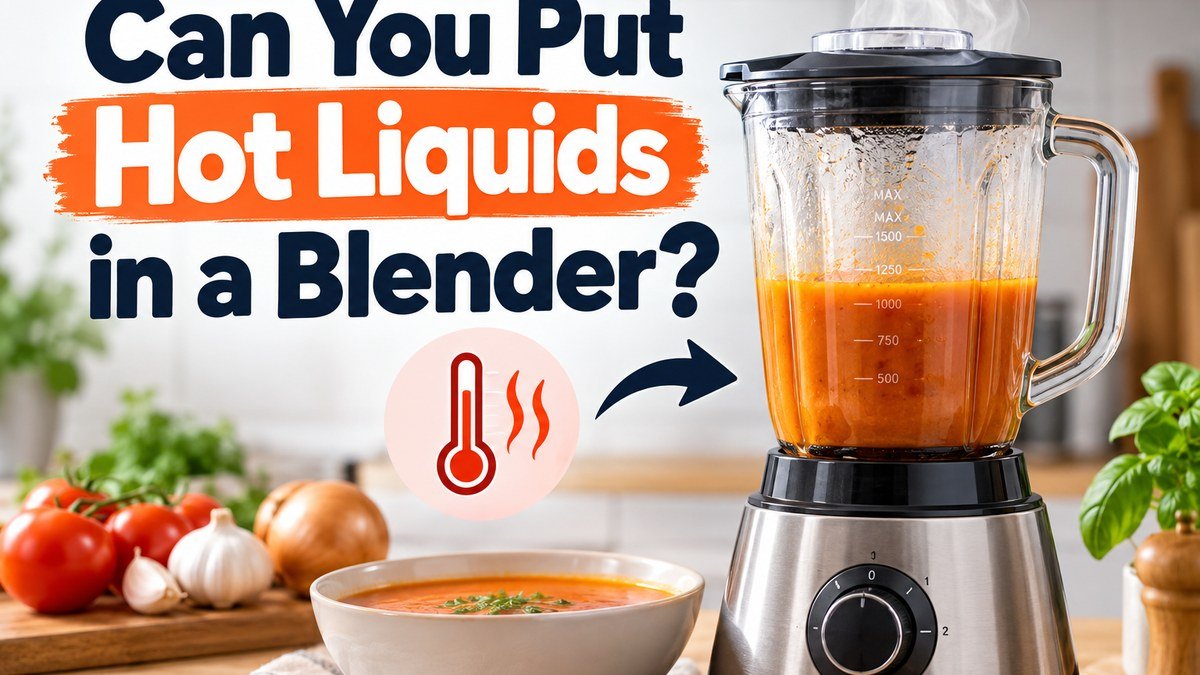
Can You Put Hot Liquids in a Blender?
If you like to blend things at home, like soups, sauces, smoothies, and other recipes, you may have wondered if you could put hot liquids in a blender.
In short, yes, but not all the time. It can be dangerous to mix hot liquids in the wrong kind of blender, fill the container too much, or seal it too tightly, since heat turns into steam and steam turns into pressure.
You can blend hot liquids, but be careful not to make these mistakes. This help will also tell you what to use if your blender isn’t made for hot ingredients.
Can You Put Hot Liquids in a Blender?
Yes, some blenders are made to handle hot liquids, but you should always check the directions from the maker first.
Blending hot soups and sauces safely is usually possible with high-powered blenders that have heat-resistant containers and air systems that are specially made for the job. However, many regular home blenders are only meant to be used with cold or room-temperature foods.
It’s not just the temperature of the liquid that matters. What’s really wrong is steam and pressure.
When you put hot liquid in a blender container that is covered, the heat can make steam. The steam can’t get out of the jar while the blender is running, so pressure builds up inside it. This much pressure can pop the lid off and spray hot liquid all over the place.
That could cause major burns.
Why Are Hot Liquids Dangerous in a Blender?
There are several reasons why blending hot liquids requires extra care.
1. Hot liquids produce steam
The movement of the blades can release more steam when you blend a hot liquid. If the blender jar is tightly closed, the steam can raise the pressure inside.
2. Pressure can force the lid off
It’s possible that a blender lid that looks tight isn’t really made to handle the pressure of hot steam.
The lid may come off or open if the pressure gets too high.
3. Hot liquid can splash unexpectedly
The blades of a blender make a strong swirl.
When moving hot soup or sauce around, the liquid can splash out of the holes or escape when the lid is taken off.
4. Overfilling makes the problem worse
Too much stuff in a blender container means there isn’t much room for steam to grow. This makes it more likely that pressure will build up and leak.
Can You Blend Hot Soup in a Blender?
Yes, as long as you use a blender that is made for hot liquids and follow the directions that come with it.
One of the things people blend the most is hot soup. After cooking, you may need to blend soups like pumpkin soup, lentil soup, veggie soup, creamy tomato soup, and more.
If the soup is too hot for your blender, you might want to wait until it cools down before putting it in.
An immersion blender is another easy choice. This type of blender can often be used right in the pot where the food is being cooked. This keeps you from having to move hot soup from one dish to another.
How to Blend Hot Liquids Safely
If your blender manufacturer says that hot liquids are suitable, follow these precautions.
1. Read the manufacturer’s instructions
This is the most important step.
Different blenders can handle different temperatures and have different jar styles. You shouldn’t think that if one blender can handle hot soup, so can any other.
2. Allow boiling liquids to cool slightly
Do not put liquid straight from a rolling boil into a blender unless the manufacturer says it is okay to do so.
The amount of steam that is made can be lowered by letting the liquid cool for a few minutes.
3. Don’t fill the blender completely
Make sure there is a lot of empty space at the top of the trash can.
When working with very hot liquids, working in smaller batches can help you keep better control and lower the risk of overflow.
4. Use the ventilation system correctly
Some blenders made for hot liquids have a vent or a center cap that can be taken off that lets steam escape.
Do not block a vent that is meant to let steam out.
On the other hand, don’t take off or loosen any part of the lid unless the blender’s instructions say it’s okay to do so.
5. Start at a low speed
Start mixing on a low setting and slowly raise the speed.
Starting at full speed right away can make the hot liquid inside the container move very quickly.
6. Keep the lid secure
If the manufacturer says to hold on to the lid while you blend, do so firmly.
You should also keep your hands and face away from the blender’s lid while it’s going.
7. Use caution when opening the blender
After mixing, let it sit for a moment and be careful when you take the lid off.
If you open the lid, hot steam might come out.
Can You Put Boiling Water in a Blender?
Most of the time, you shouldn’t put boiling water into a blender unless the maker of the blender says it can handle it.
A lot of steam is made when water boils, and pressure can build up quickly in a blender container that is covered.
Check the blender’s highest temperature first if you need to blend something that has boiling water in it.
Make sure the liquid is cool before you blend it if you’re not sure.
Can You Put Hot Food in a Blender?
It is different for each blender and food.
Most of the time, equipment made for hot ingredients can be used to safely blend hot cooked vegetables, sauces, soups, and other soft foods. Temperature is important, but it’s not the only thing that matters.
The food should also have enough liquid in it for the blades to work, and the container shouldn’t be too full.
Always do what the manufacturer of your blender says to do.
What Happens If You Put Hot Liquid in a Regular Blender?
Putting hot liquid into a mixer that wasn’t made to handle it can lead to a number of issues.
Pressure buildup from steam is the most important problem. The pressure could make the lid come off, letting the hot liquid escape.
Depending on how the blender is built, too much heat could also damage the container, seals, lid, or other parts.
That’s why the safest thing to do is easy:
Before you mix anything hot, make sure you follow the directions on the package.
What Should You Use Instead of a Blender for Hot Liquids?
If your blender isn’t designed for hot ingredients, you have a few alternatives.
Immersion blender
An immersion blender can be used directly in a pot or heat-safe container, making it particularly useful for soups and sauces.
Food processor
Some food processors have different temperature limitations, so check the manufacturer’s instructions before using one with hot ingredients.
Let the food cool first
You can also allow the cooked food to cool to a safer temperature, blend it, and then reheat it afterward if your recipe allows.
Common Mistakes to Avoid
When blending hot liquids, avoid these mistakes:
- Don’t assume every blender can handle hot liquids.
- Don’t fill the blender jar to the top.
- Don’t seal hot liquid inside a container that isn’t designed for pressure or steam.
- Don’t start immediately at maximum speed.
- Don’t ignore the manufacturer’s temperature limits.
- Don’t place your face directly over the blender while opening it.
- Don’t blend boiling liquids in an unsuitable blender.
Hot Liquids in a Blender: Quick Safety Checklist
Before blending hot ingredients, ask yourself:
Is my blender rated for hot liquids?
If not, don’t use it for hot ingredients.
Is the container properly vented?
Follow the manufacturer’s instructions for the lid and vent.
Is there enough room in the container?
Never overfill it.
Can I blend the ingredients in smaller batches?
Smaller batches can provide better control.
Have I started at a low speed?
Gradually increase the speed rather than starting at maximum.
Frequently Asked Questions
Yes, if the blender is designed for hot liquids. Otherwise, allow the soup to cool before blending or use an immersion blender.
There isn’t one universal temperature limit. The maximum safe temperature depends on the blender’s design and manufacturer specifications. Check your specific model’s instructions.
Only if your blender is specifically designed to handle boiling or very high-temperature liquids. Otherwise, allow the soup to cool first.
They can potentially damage components that aren’t designed to withstand high temperatures. More importantly, hot liquids can create dangerous steam pressure inside an unsuitable container.
A properly designed hot-liquid blender may require the lid to remain on while using a designated vent. A standard sealed blender can be dangerous because steam may build up pressure. Always follow the manufacturer’s instructions.
An immersion blender can be a convenient option because you don’t have to transfer hot soup into a separate blender container. However, you should still follow the manufacturer’s instructions and use appropriate caution around hot food.
Final Thoughts
So, can you mix hot liquids?
The answer is different for each blender.
Some models are made to blend hot soups, sauces, and other things that are already hot. Others are only meant for foods that are cold or at room temperature. The most dangerous thing about hot liquids is the steam pressure, which can let the hot stuff out without warning.
Check your blender’s guidelines before adding hot ingredients. Make sure the container isn’t too full, that it has the right ventilation system, and that you start at a low speed.
If your blender isn’t made to handle hot liquids, you might want to use an immersion blender or let the food cool down before blending it.
When it comes to hot food and kitchen equipment, a few extra safety steps can help you enjoy your recipes without taking any extra risks.








5 comments