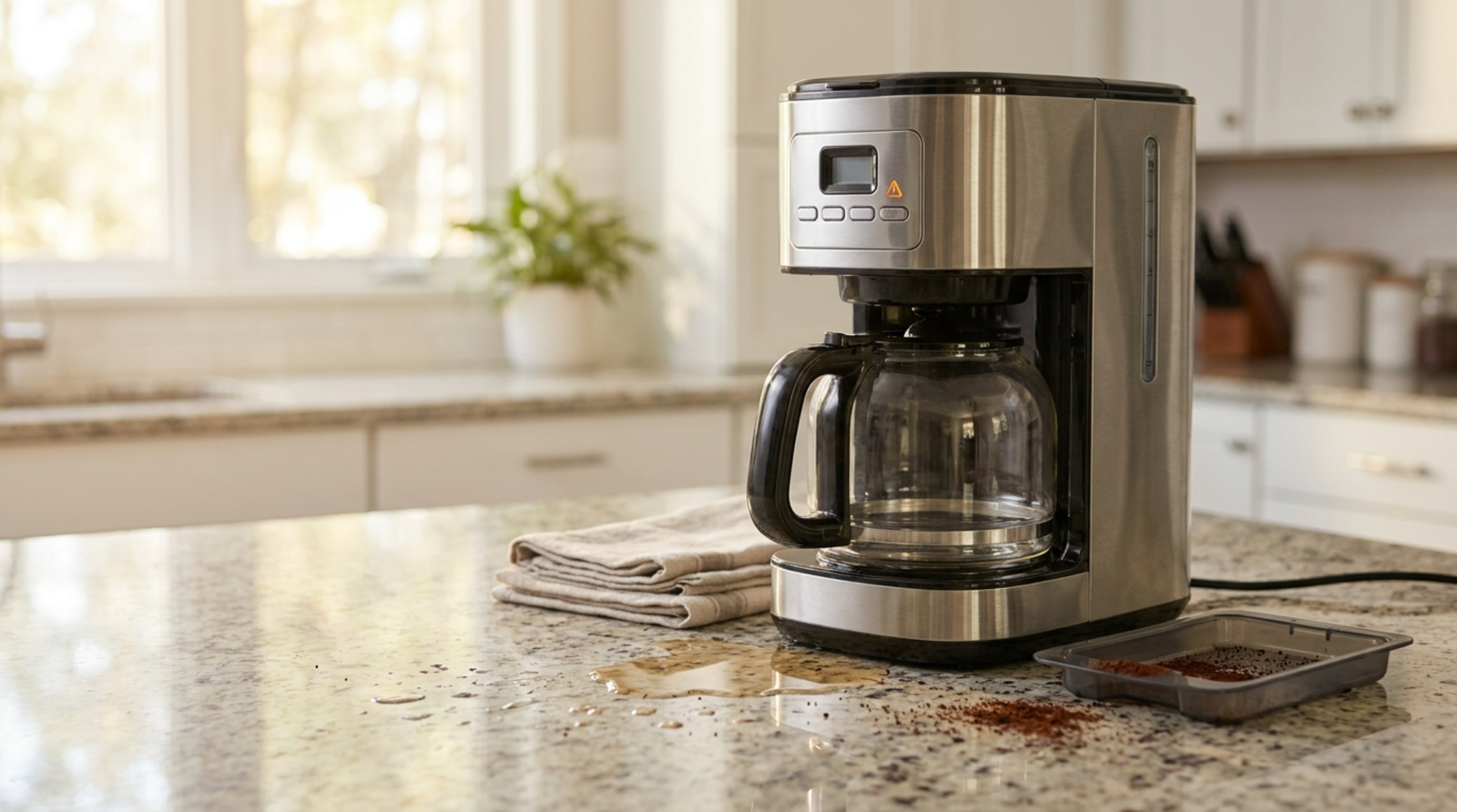
Why Is My Coffee Maker Leaking From the Bottom?
A puddle forming under your coffee maker is more than just annoying, it’s usually a sign that something inside has cracked, loosened, or worn out. The good news: bottom leaks are almost always traceable to a handful of causes, and most are simple to fix.
1. Overfilled Water Reservoir
Overflowing water can drip out the bottom instead of going where it’s supposed to if you fill it past the max line.
Fix: Only fill up to the line that says “maximum,” and make sure you can still see it after years of use
2. Cracked or Warped Water Reservoir
Plastic reservoirs can crack over time, especially if they’ve been dropped, exposed to heat, or are just plain old. Even a hairline crack will slowly leak water down through the body of the machine. Fix: When the reservoir is empty, look at it closely, including the bottom seams. Hold it up to a light to see small cracks. If you find any, the reservoir usually needs to be replaced.
3. A Damaged or Dislodged Seal/Gasket
Rubber seals or gaskets are used by coffee makers where the reservoir attaches to the internal tubing and heating chamber. They can dry out, crack, or move out of place over time.
Fix: Check the gasket at the bottom of the reservoir. If it looks flattened or cracked or misaligned it may need reseated or replaced with a manufacturer part.
4. Mineral Buildup Cracking Internal Components
Limescale buildup not only clogs up machines, it can also put pressure where it shouldn’t be, which can stress plastic parts until they break or leak.
Fix: Use a vinegar-water solution or a descaling product on a daily basis (every one to three months) to keep the buildup from putting stress on the inside parts.
5. Carafe Not Seated Correctly
If the carafe isn’t sitting flat and centered under the brew basket, coffee or water can miss it entirely and drip down the outside, pooling under the machine.
Fix: Make sure the carafe is pushed all the way back and centered on its warming plate before brewing.
6. Overflowing Filter Basket
Too many grounds, the wrong size filter, or a clogged basket can cause water to back up and overflow the basket instead of draining, causing it to run down the sides of the machine and pool at the base. Fix: Use the right size filter, don’t overfill with grounds, and make sure the basket is properly seated and not clogged with old coffee residue .
7. Cracked Internal Tubing
Mineral buildup or old age can make the tubing that moves water from the reservoir to the heating element break. This can cause leaks that go through the bottom of the housing and into the water.
Fix: To do this, you usually have to open the machine, which generally voids the warranty. If you’re not good at fixing things yourself, it’s usually better to just get a new one.
8. Drip Tray Issues (On Espresso or Pod Machines)
If your machine has a removable drip tray, it can overflow if you don’t empty it often enough, or it can leak if it’s broken, warped, or doesn’t click back into place after being cleaned.
Fix: Make sure the drip tray is always empty and clean, and that it snaps back into place securely after being washed.
9. Loose or Damaged Water Valve Connections
Over time, vibrations and changes in temperature can loosen the connections between the hose clamps and valves, letting a little water escape with each brew.
How to Fix It: If your machine is still under warranty, this is an internal repair that should only be done by a professional or the manufacturer.
10. Condensation, Not an Actual Leak
What looks like a leak is sometimes just condensation from the brewing process building up under the machine. This is especially true for machines with heating elements that are out in the open or that are kept in humid kitchens.
Fix: Dry the machine with a cloth, then run a brew cycle and carefully watch to see if water is actually leaking or just building up from the steam. If it’s just condensation, there’s no need to fix it.
Quick Troubleshooting Tip
Over a clean, dry counter or paper towel, run an empty brew cycle with just water. Do not add any coffee or filters. Keeping an eye on where the water is going will help you figure out if the problem.
The Bottom Line
Most bottom leaks are caused by a broken reservoir, a worn seal, or mineral buildup.
You can fix most of them yourself by cleaning them or getting a new part. But if you see leaks from cracked internal tubing or valve connections, you might want to think about whether it’s cheaper to just buy a new machine.
READ MORE ARTICLES 👇




1 comment