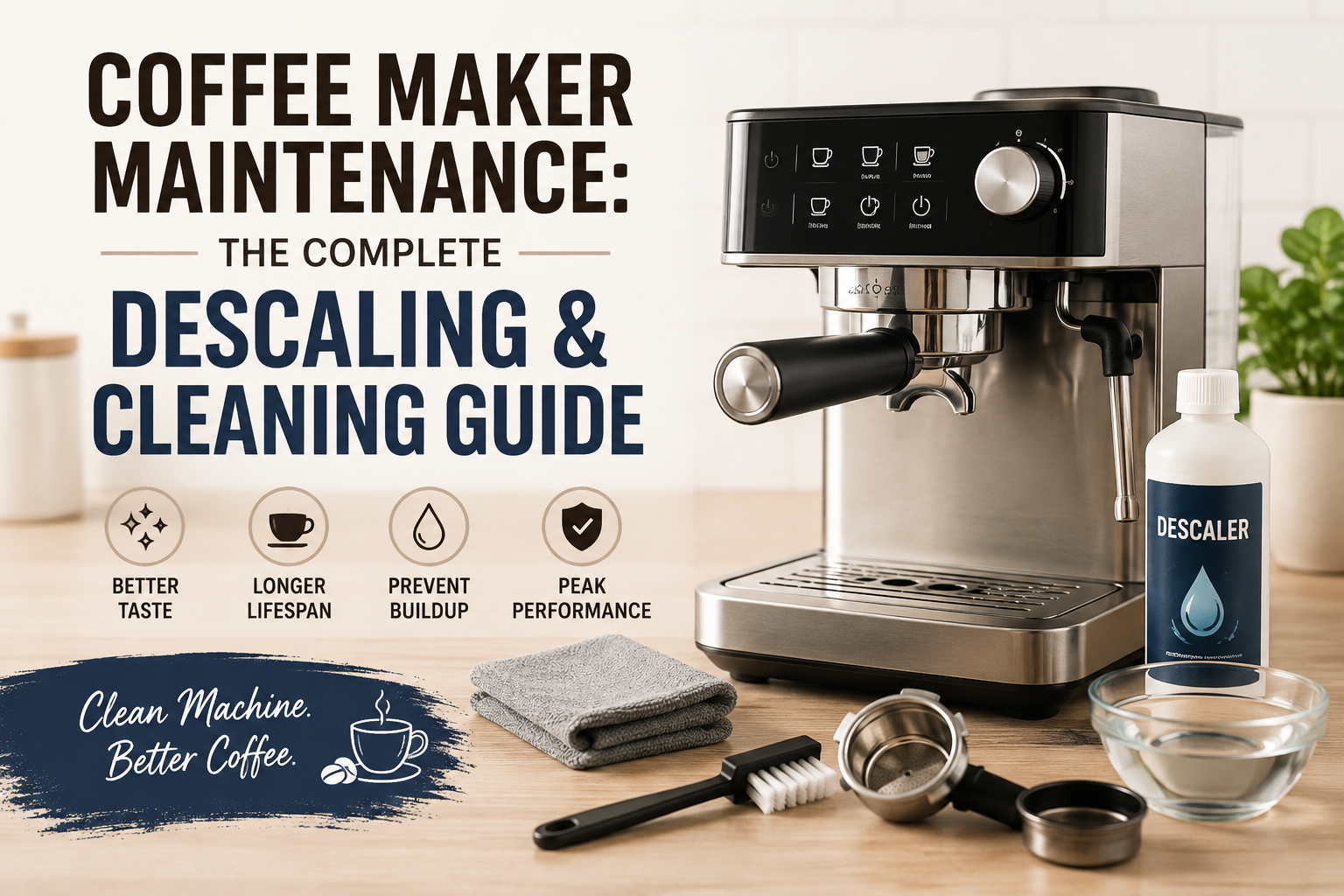

Coffee Maker Maintenance: The Complete Descaling & Cleaning Guide
A coffee maker that isn’t used doesn’t break down all at once; it gets worse over time.
As the brewing time goes on, the coffee starts to taste flat or bitter, and the machine stops heating water properly. A lot of that is caused by two things: mineral scale buildup and coffee residue that is left over. Every machine, whether it’s a drip, single-serve, or espresso, can run like new for years with just a few simple steps.
This guide applies broadly, whether you’re maintaining a machine from our coffee makers under $200 guide or an espresso machine.
The Two Types of Maintenance
- Weekly cleaning — Getting rid of coffee oil and residue from parts that come into direct contact with coffee, like carafes, filter baskets, and pod holders.
- Periodic descaling — Getting rid of mineral (limescale) buildup in the water lines and heating element of the machine. This is because minerals in tap water build up over time.
Cleaning keeps coffee from tasting stale or rancid; descaling keeps the machine itself functioning correctly. You need both, on different schedules.
Weekly Cleaning Routine
- Unplug the machine before cleaning anything.
- Remove all removable parts — carafe, filter basket, pod holder, drip tray — and wash them in warm, soapy water.
- Wipe the exterior with a damp cloth; avoid abrasive scrubbers, which can scratch finishes.
- Rinse and dry thoroughly before reassembling, so no soap residue ends up in your next brew.
For pod-based machines, clean the water reservoir and pod holder once a week. People forget to clean the parts they can’t see, so residue builds up there faster than they think.
How Often to Descale
As a general rule:
- Every 1–3 months if you use the machine daily, especially with harder tap water.
- Every 3–6 months if you use it occasionally or your water is naturally soft.
- Immediately, regardless of schedule, if you notice the warning signs below.
In this case, water hardness is more important than almost everything else.
If you live in an area with hard water, you might want to try brewing with filtered water. It will slow down scale buildup a lot and make it possible to go longer without descaling.
Signs Your Machine Needs Descaling Now
Don’t wait for the calendar if you notice:
- Noticeably longer brew times than usual
- Unusual gurgling or louder-than-normal noises during brewing
- Excess steam or sputtering
- A flat, metallic, or otherwise “off” taste in your coffee
- Visible white/chalky buildup around the water reservoir or spout
How to Descale a Drip Coffee Maker
- Empty the tank and take out the water filter cartridge if your machine has one.
- Mix your descaling solution. A descaler made just for coffee makers, which you can easily find for less than $10, is the better option. It’s made to dissolve limescale without hurting internal parts or leaving an unpleasant taste. A common alternative is white vinegar that has been diluted, but it is more acidic than water, so some manufacturers say you shouldn’t use it. Check your machine’s manual before you use it.
- Run a full brew cycle with the solution in the reservoir and no coffee grounds or filter in place.
- Let it sit briefly if your machine or solution’s instructions call for a pause partway through — this gives the solution time to break down deposits.
- After that, run two or three full rounds of clean water to get rid of any solution that is still there. Most people make the mistake of skipping this step, because any descaler that is left over can affect the next few cups.
- Wash the carafe and filter basket separately with warm, soapy water once you’re done.
How to Descale a Single-Serve (Pod) Machine
The process is similar but usually machine-guided:
- Remove the pod/K-cup holder and any water filter.
- Fill the reservoir with descaling solution mixed according to the package instructions.
- Run the machine’s dedicated descale mode if it has one (usually triggered by a specific button combination — check your manual), or run repeated hot-water cycles without a pod.
- Continue until the reservoir is empty, then discard the used solution.
- Refill with clean water and run several rinse cycles until no descaling smell or taste remains.
How to Descale an Espresso Machine
Espresso machines are more sensitive to buildup than drip machines because water is forced through narrow lines under pressure — scale restricts flow and pressure quickly.
- Remove the portafilter and empty the water tank.
- Prepare a descaling solution formulated for espresso machines specifically (concentration differs from drip-machine descalers).
- Run the solution through the group head and steam wand in short bursts, following your model’s manual — most manufacturers specify exact timing.
- Flush thoroughly with several tanks of clean water afterward, running it through both the group head and steam wand.
- Backflush with plain water (or a cleaning detergent, if your machine supports backflushing) to clear the group head of coffee oils separately from mineral scale.
If you’re shopping for a new espresso machine and want one that’s easier to maintain long-term, see our espresso machines under $300 guide — machines with removable, dishwasher-safe parts and a dedicated descale mode are noticeably less hassle over time.
A Simple Maintenance Schedule
- Daily: empty and rinse the drip tray or pod holder if visibly wet.
- Weekly: wash carafe, filter basket, and pod holder in warm soapy water.
- Monthly: wipe down the exterior and check the water reservoir for any visible buildup.
- Every 1–3 months: full descale cycle, adjusted based on your water hardness and usage.
Frequently Asked Questions
Is vinegar safe to use instead of a commercial descaler? While it works for many machines, some makers say not to use it because it is too acidic and can damage internal seals and leave a taste if not rinsed well. It’s safer to use a specific descaling solution, but check your machine’s manual to be sure..
What happens if I never descale my machine? As scale builds up, it slows down the flow of water and insulates the heating element. This makes the brewing process take longer, the heat gets weaker, and eventually the machine stops working at all. In the worst cases, it can damage internal parts in a way that can’t be fixed.
Does filtered water really make a difference? In a meaningful way. Filtered or softened water has fewer minerals dissolved in it, which slows the formation of scale and can make it easier to go longer without descaling, especially in places with hard water..
Keep the rest of your setup in shape too: check out our burr grinder guide and coffee bean storage guide for the other half of a great daily cup.
READ MORE ARTICLES 👇
- Why Does My Coffee Maker Make Bitter Coffee?
- Why Is My Coffee Maker Leaking From the Bottom?
- Coffee Maker Keeps Shutting Off: Troubleshooting Guide
- Coffee Maker Making Weak Coffee? How to Fix It
- Coffee Maker Not Heating Water: Causes and Fixes
- Coffee Maker Brewing Too Slowly: Causes and Solutions
- Coffee Maker Not Heating Water: Causes and Fixes
- Coffee Maker Not Brewing? 10 Common Problems and Fixes
- Coffee Maker Won’t Turn On After Cleaning: What to Do





6 comments